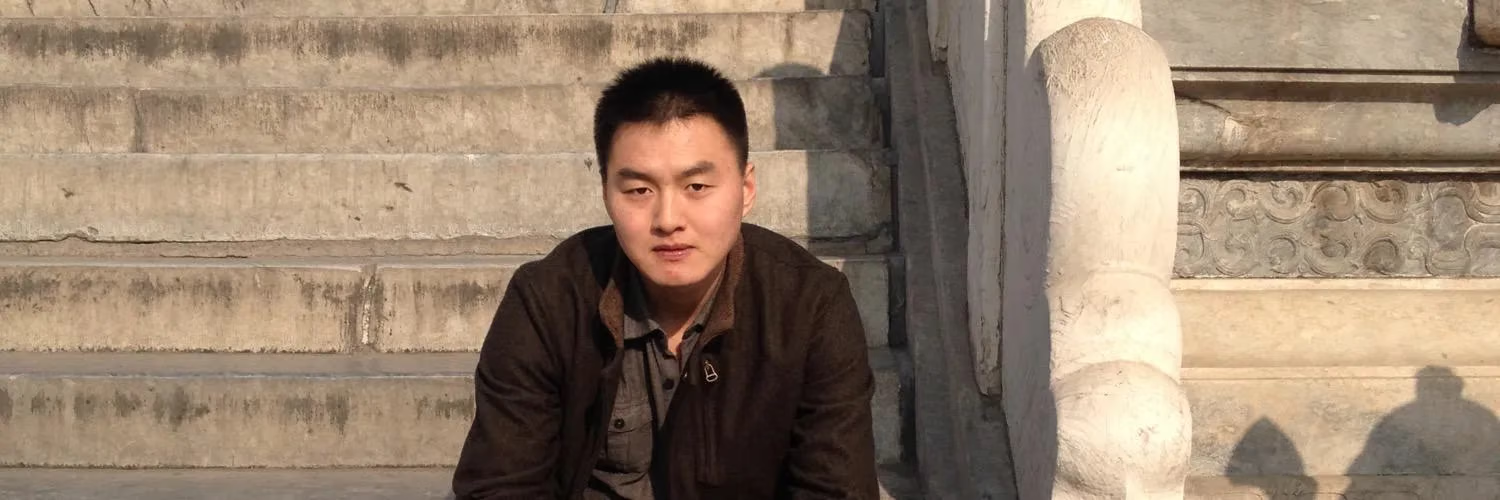
Preface
Five years of toiling head-down; at dawn, the mirror shows white hair first. A whole year passes without a tear, yet the seasons roll on and winter is cold. It feels like going back to 2013, standing before Beijing Railway Station, looking at the sky. From the moment I went north to seek my fortune, youth was gone from my life for good.
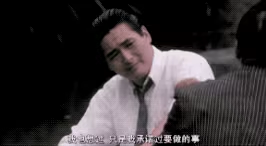
If only I could be as carefree as you. Sometimes there are things you can do that I can’t. I believe in justice, but nobody believes me…
This year passed as fast as internet speed. Watching the year-end arrive again, I still have to follow the routine and hand in my 2018 year-end summary.
2018 in Review
This year’s checklist:
- Work
- Concerts
- Reading
- Technology
- Persistence
- Life
- Stories
- A hundred years
- Summary
Quite eventful…
Work
This was a turbulent year for me: in April I moved from Kingsoft Cloud to Kuaishou, taking charge of developing the live-streaming business of Kuaishou’s iOS domestic app. I’m not someone who likes changing jobs. Coming all the way from Baidu and looking back — nothing but bitterness and welling tears…
Coming to Kuaishou, I felt this company is genuinely interesting — in my working life I consider it the most worthwhile company to join, because I work alongside Tsinghua graduates, shoulder to shoulder with buddies from BUPT. Roughly 50% of the people here are from Tsinghua. Honestly, when I interviewed from 10 a.m. until past 4 p.m. and had no idea how I passed, I really wanted to give up. An interview that doesn’t leave you exhausted is just small talk. The backbone of the team came from MIT, plus big shots from Facebook. This is truly a kind of gain — a chance to work alongside graduates of the world’s top universities. My own career record isn’t anything special, but I should feel honored to be in the company of such colleagues, and of course I can’t be too mediocre myself. There’s a lot in them worth learning. I don’t like comparing sideways; I only compare vertically — with those better than me.
BUPT (Beijing University of Posts and Telecommunications) is known as the “Whampoa Military Academy” of the computer world; its admission scores are just a few points below Tsinghua’s.
Now that I’ve shared my feelings, let me talk about this company’s values. From my superficial understanding of its values, this company truly deserves respect. I’ll just mention two points:
- First: it’s down to earth. If you like TikTok (Douyin), I can only say you’re being unrealistic, because the slim beauties on Douyin are achieved by AI through body recognition — in other words, you’re being fooled. And then there’s the content in Douyin videos: luxury cars, mansions, an elegant, lightly extravagant lifestyle, high-end restaurants… I just want to ask you: how many people in China can live the life you see in Douyin videos? Can you? Can you drive a Rolls-Royce and show off at every turn? Kuaishou is different. Here you can see people at the grassroots — working people taking real action toward a better life. They don’t have good backgrounds; all they have is their backs. Those backs are what you see in the videos they shoot — that is the true portrait of their real lives…
- Second: it doesn’t tilt traffic toward big streamers. It basically doesn’t sign celebrities or famous people, letting every ordinary person stand out on their own merits. Put another way, it uses the internet to help everyone get a fair shot. (Tilting traffic means pushing high-end celebrities at you so you follow them by default — like Weibo, where in the end you can’t speak or post normally, and it’s all plastered with intrusive ads.)
Now look back at BAT — which of them dares to stand up and claim they’ve achieved the two points above? If one has, type “1” in the comments below.
Two things at Kuaishou this year made me very happy:
- The Hangzhou trip
- Kuaishou hometown
Heading South to Hangzhou
Not long after joining the company, there was a Team Building trip to Hangzhou. I had never been to Hangzhou. The first stop was Haining.
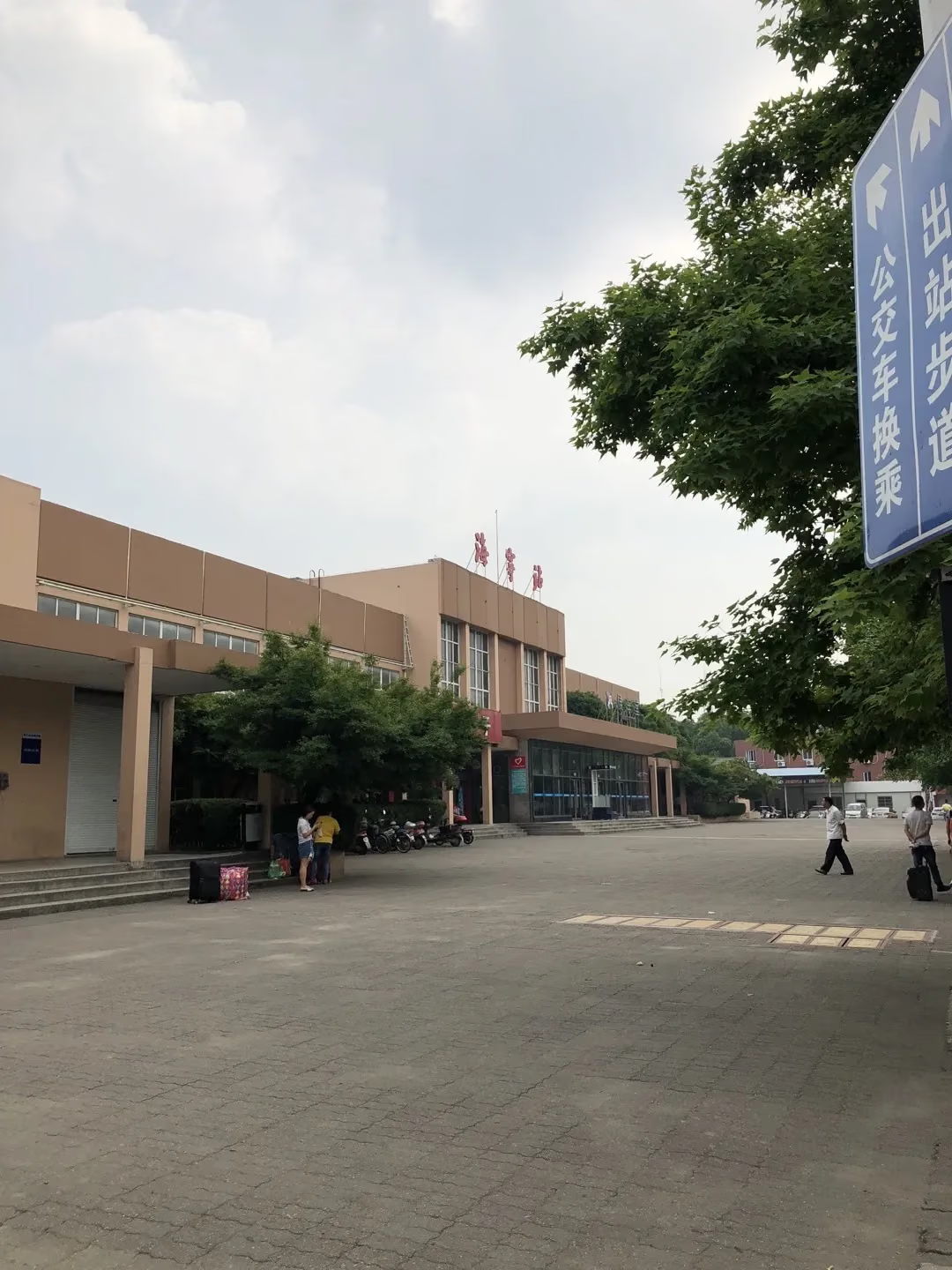
This is where Sun Yat-sen once got off the train to watch the Qiantang River tide.
Xitang. In my hometown I had grown used to 23 years of low, single-story houses and had never seen architectural styles like this. The white walls and tiled roofs of Hui-style architecture carry a distinctive regional Chinese character.
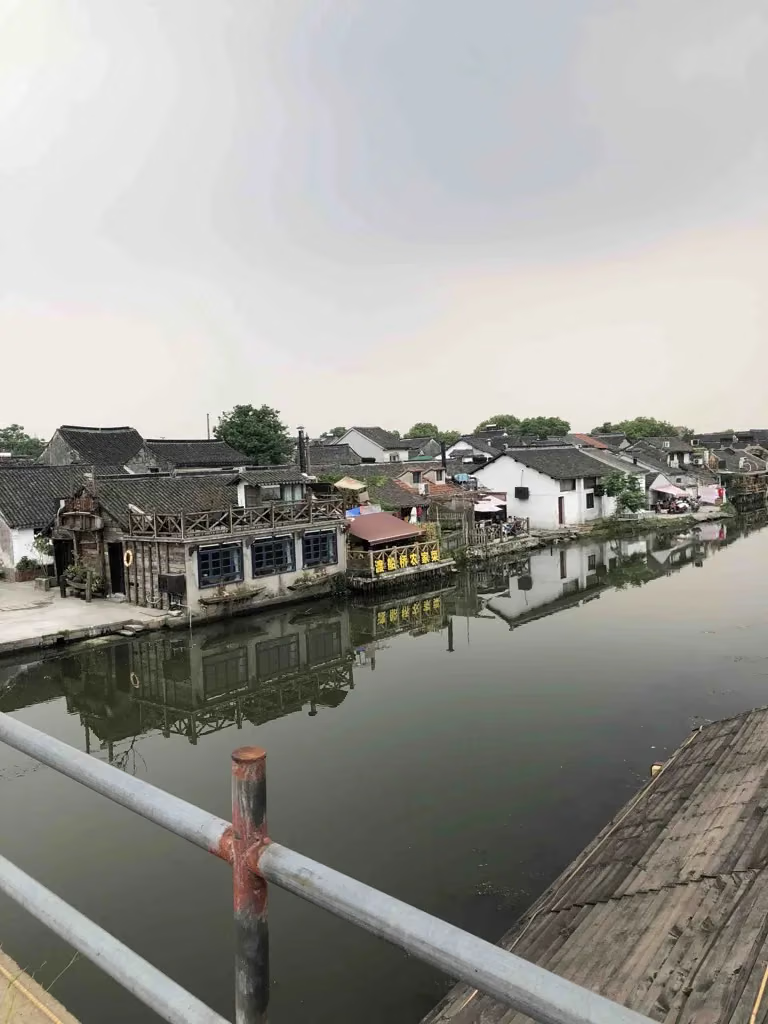
“I’ve patted the railing and gazed at my sword, yet no one understands my longing to climb high. Don’t tell me the perch is worth cooking while the west wind blows and Ji Ying has yet to return…”
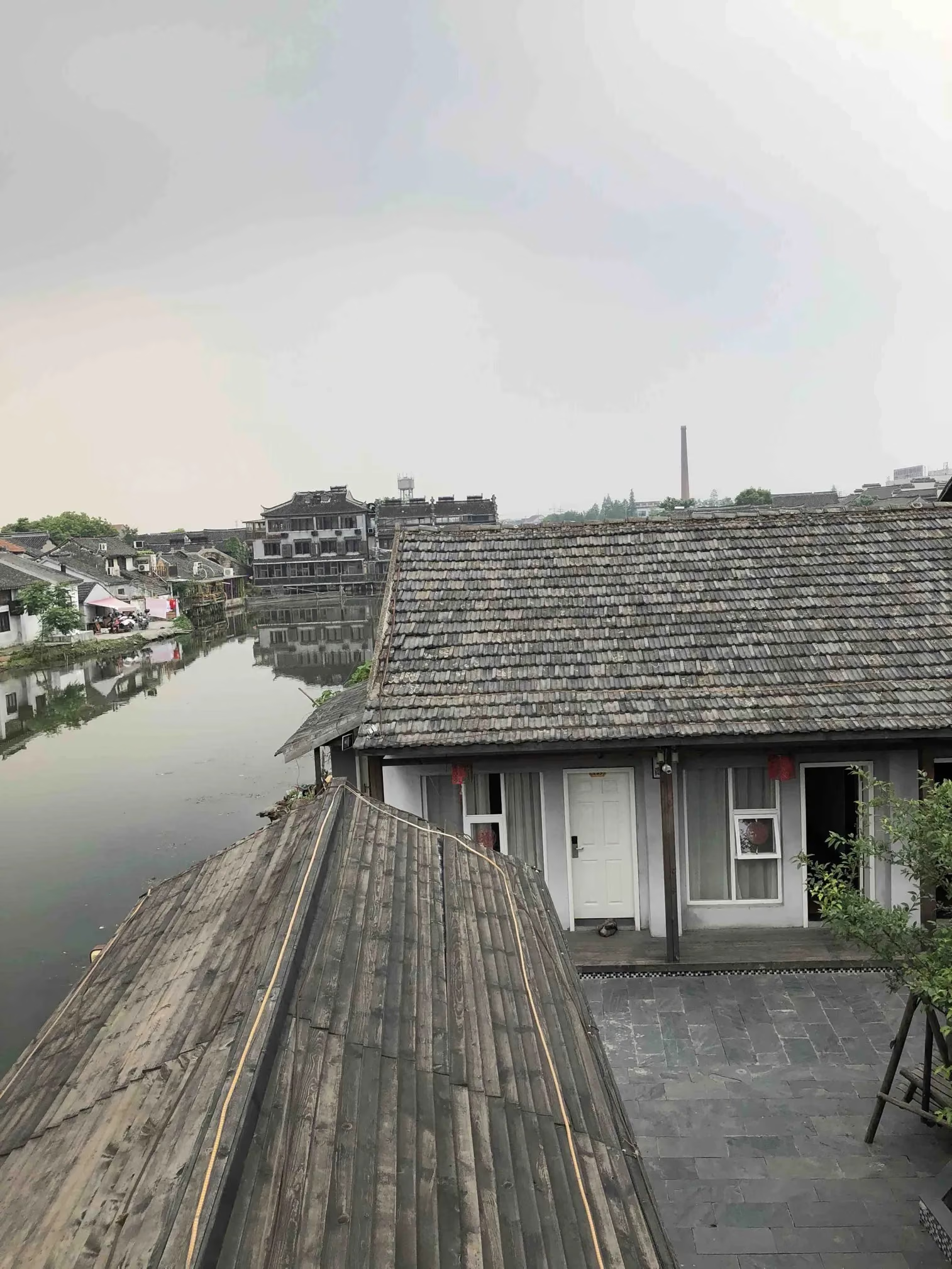
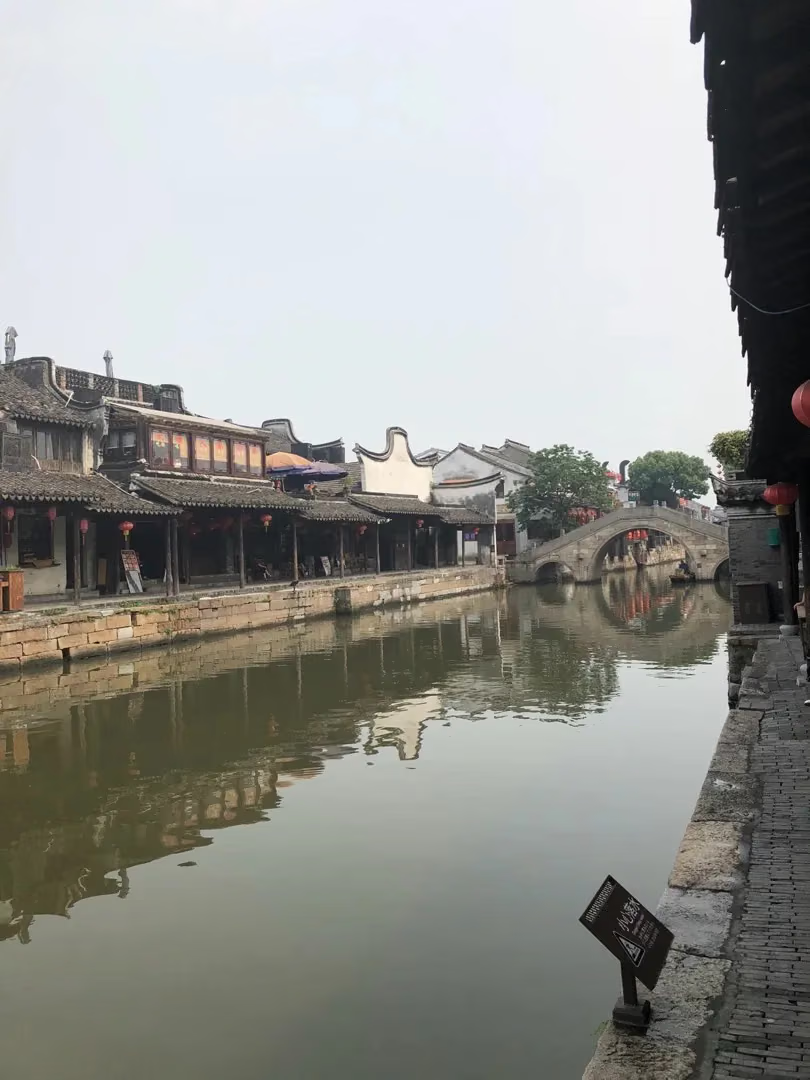
This was once a water conservancy project built by Wu Zixu (559 BC–484 BC, roughly the late Spring and Autumn period). I still remember the stories of King Fuchai of Wu and King Goujian of Yue from the late Spring and Autumn period, but my knowledge of the customs of the Wu kingdom was limited to what I read in the Records of the Grand Historian at school — I had never been here in person. Though my understanding is shallow, seeing the distinctive charm of Jiangnan still filled me with awe. On the train from Beijing to Hangzhou, we passed Mount Tai in Shandong, the old city of Gusu in Suzhou, and the Yangtze basin of Shanghai. The Yangtze River Delta is truly unlike my native Northeast: freight traffic here far exceeds any highway in the Northeast, and from that alone you can objectively tell that the Jiangsu-Zhejiang region’s economy is far more developed than the Northeast’s. I barely slept the whole trip; everywhere there was massive construction. As the train passed the outskirts of each city, you could clearly see tower cranes and buildings being erected, construction in full swing.
The Jiangnan scenery really is as picturesque as they say.
On my Hangzhou trip I passed by the Qiantang River
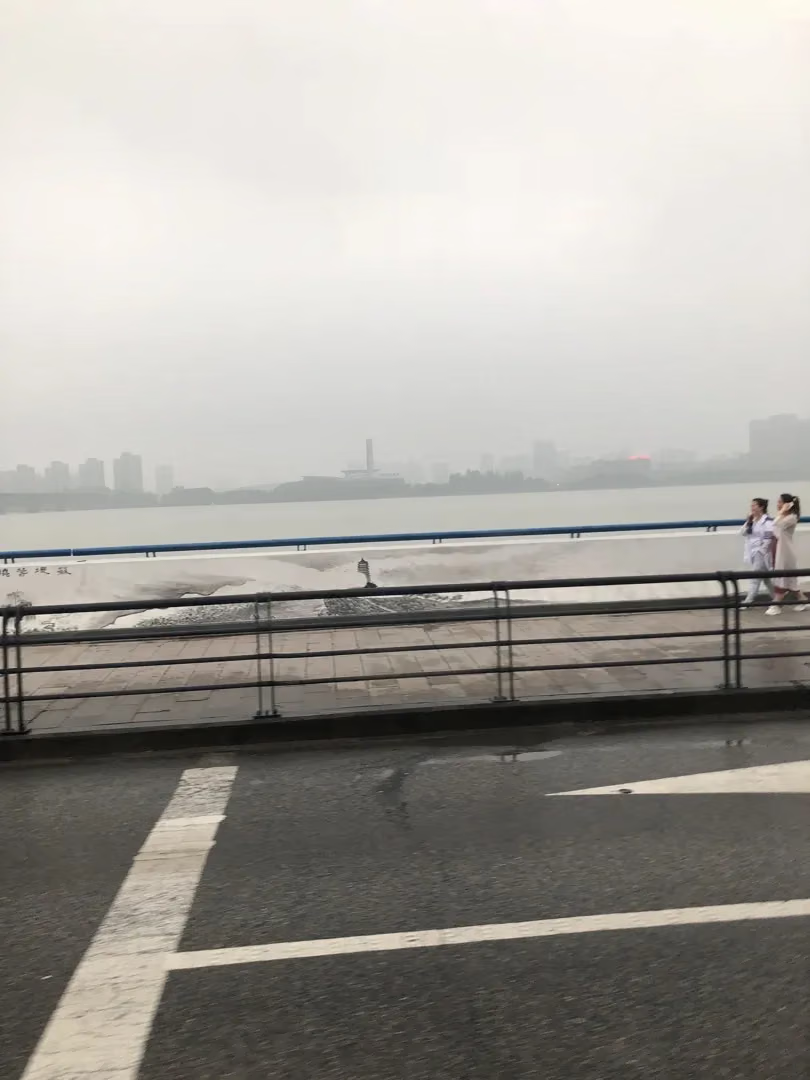
That scene immediately brought back the poem “Spring Outing at Qiantang Lake” by Bai Juyi that I recited on early mornings in seventh grade.
When I stood there experiencing the Qiantang River in person, I had only one thought: if I were Bai Juyi in that moment, I could have written a poem too. That is a scene you can hardly ever experience in the Northeast. For a kid from the Northeast, the prerequisite for a poet’s inspiration is having that kind of environment, culture, and history. I like comparing my hometown with every place I’ve been. In my hometown, with its ice and snow, there are no Jiangnan-style little bridges over flowing streams, no ancient roads with lean horses in the west wind, let alone “the setting sun sinking in the west, a heartbroken traveler at the end of the world”… My hometown has only black soil and forests, and endless plains; the one Songhua River we have could only be experienced through TV — our only touch of geography and culture. The regional cultural gaps are worlds apart, yet our middle school still required us to study Bai Juyi’s “Spring Outing at Qiantang Lake.” To me this kind of exam-driven assignment has been stripped of regional character and become meaningless. I’m not being extreme — broad knowledge is good, but I believe understanding your own region’s life and culture is more meaningful than memorizing “Spring Outing at Qiantang Lake.”
Kuaishou Hometown
Later this year, Kuaishou solicited opinions from all employees and put up billboards in the hometowns of a group of employees. I was lucky enough to be one of them.
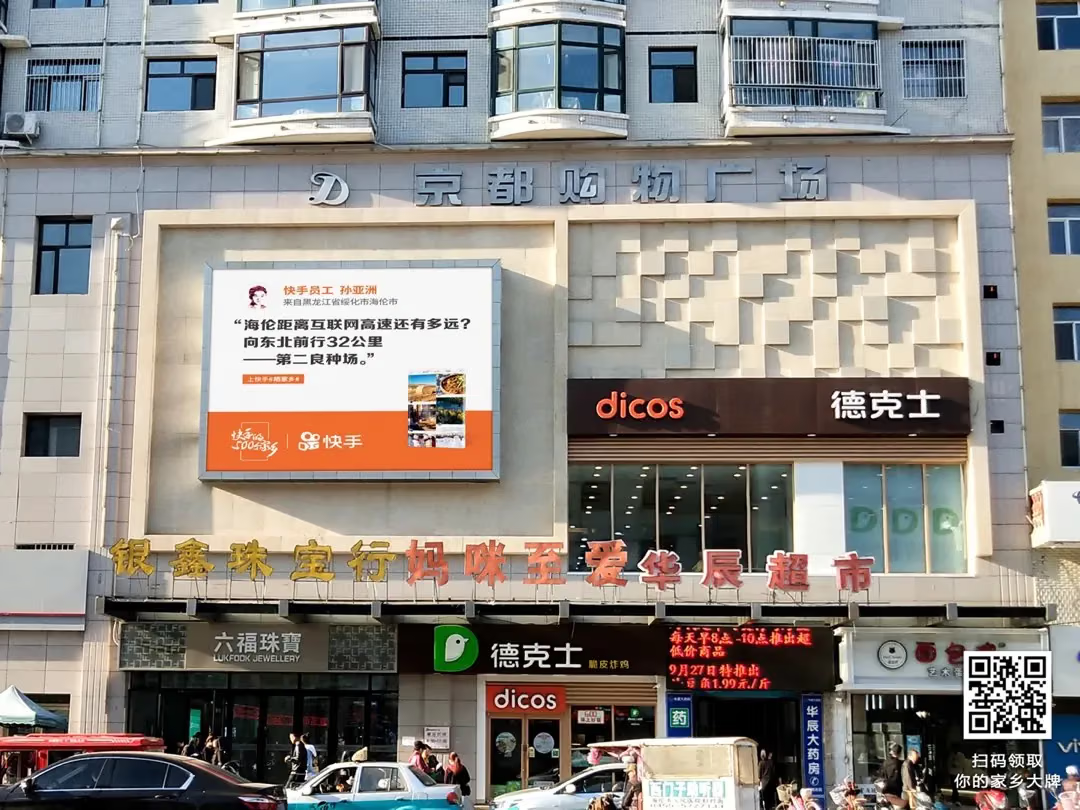
I had never imagined that one day I would appear on a billboard in Hailun, becoming one of the faces of Kuaishou. At Baidu, probably not even making it to T8 would have earned me treatment like this! I’m truly grateful to Kuaishou — this is a company with humanist spirit and artistic temperament.
That’s about all I’ll say about work! My current job and team are quite good. Like I said earlier: working alongside Tsinghua graduates, shoulder to shoulder with BUPT buddies. Not everyone gets to encounter this at work.
Concerts
This past summer, Wu Bai held a solo concert in Beijing at the Wukesong Arena — the Cadillac Center. For all these years I had never attended a real concert by any star. Back in 2013, Andy Lau held a solo concert in Beijing; because I couldn’t bring myself to spend the money on a ticket back then, I still feel it’s a regret. Andy Lau’s tickets were ¥980 each at the time. Now Wu Bai’s concert tickets were ¥680 each; I bought two. This time I was going no matter what. In the past, having just started working, I really didn’t dare spend freely.
Front grandstand:
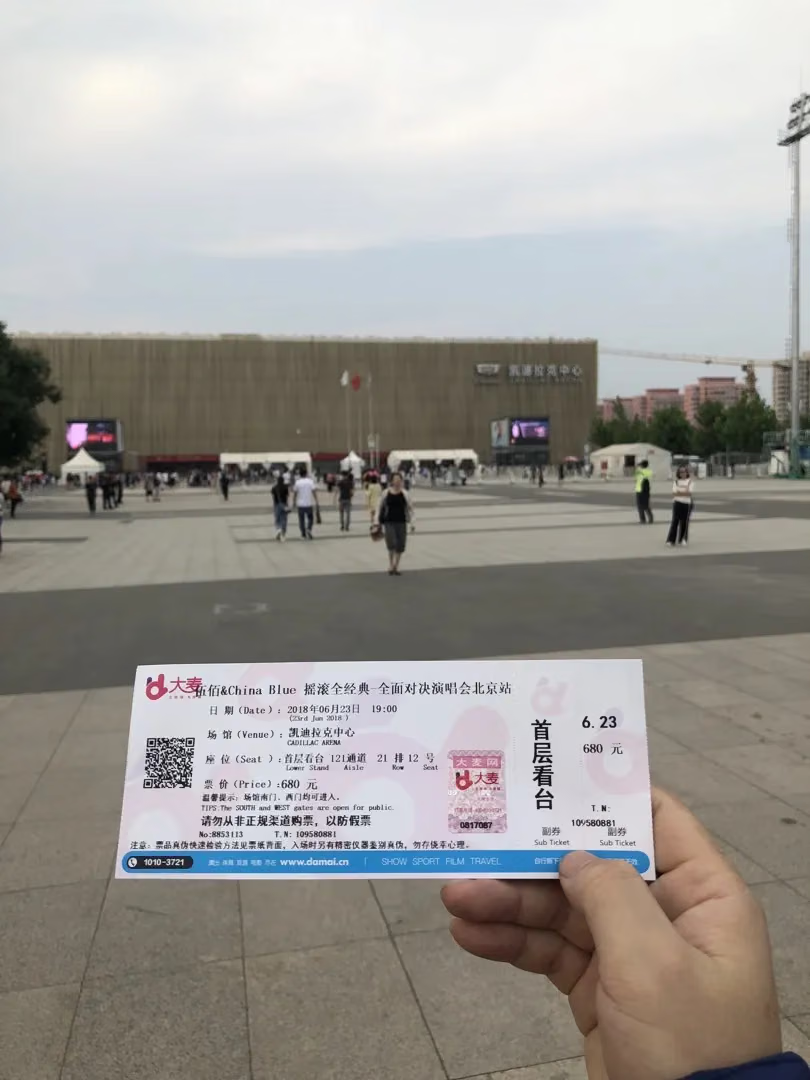
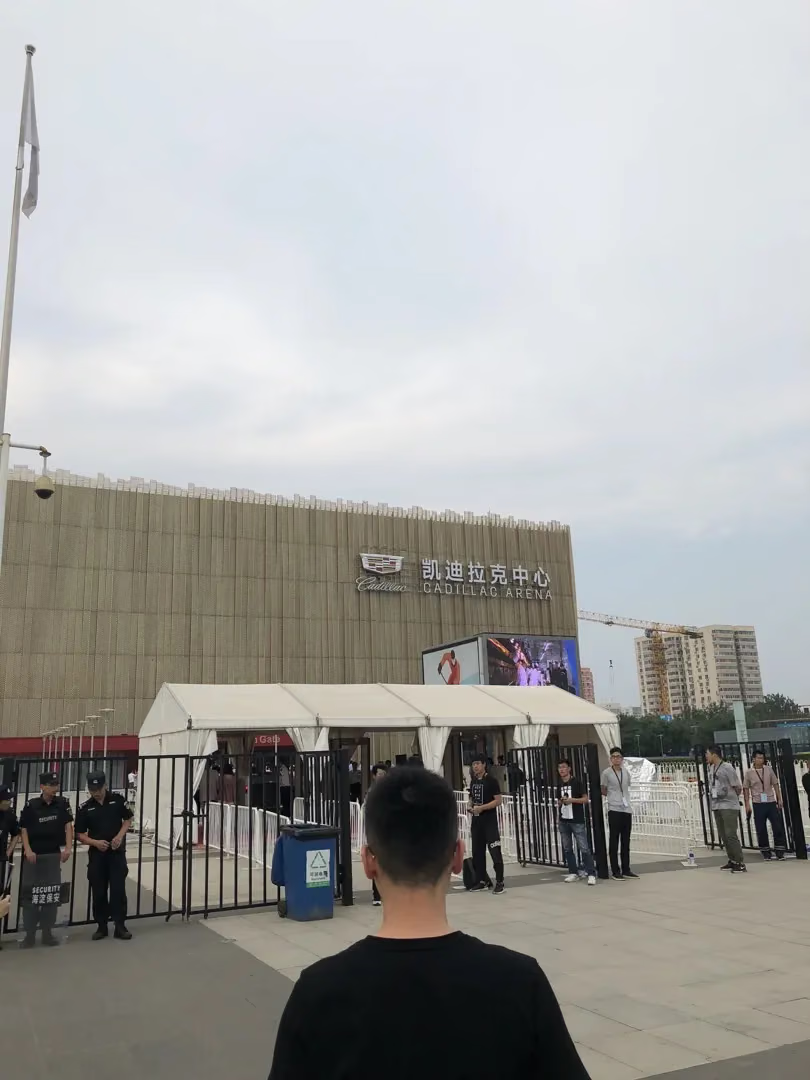
I remember the first time I heard Wu Bai’s songs — around 2000. Back then I was living under someone else’s roof at my uncle’s place in Dongsheng Village, going to Shuangsheng for the first year of middle school. Once, our whole class went to a place called Zhendong to watch a performance. I was sitting in the back of a trailer bed, singing Wu Bai’s “White Dove.” We didn’t even know what an MP3 was then; being able to listen to it on a recorded cassette tape was satisfying enough.

At Wu Bai’s concert, the second song of the opening was that very “White Dove,” singing out my middle school memories. We were poor back then; only later did I learn he had another signature song, “Norwegian Forest.”
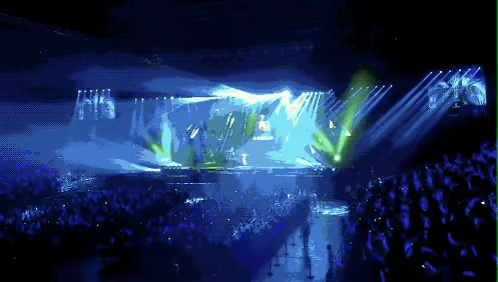
When the whole arena sang “Norwegian Forest” together, that atmosphere was absolutely better than karaoke. Truly unprecedented. Honestly, the live vocals counted as the raw, real sound. This concert was really worth it.
Wu Bai said, “99% of my songs are my own originals.” Listen carefully and you’ll find many classics among them. In the middle, Wu Bai sang a song I felt I’d never heard, but it was beautiful. Later I learned it was called “Passive” — I recommend you give it a listen.
Reading
Strictly speaking, this year my eyes were in pain — at least 14 hours a day facing a monitor. So here I list the books I read and listened to this year.
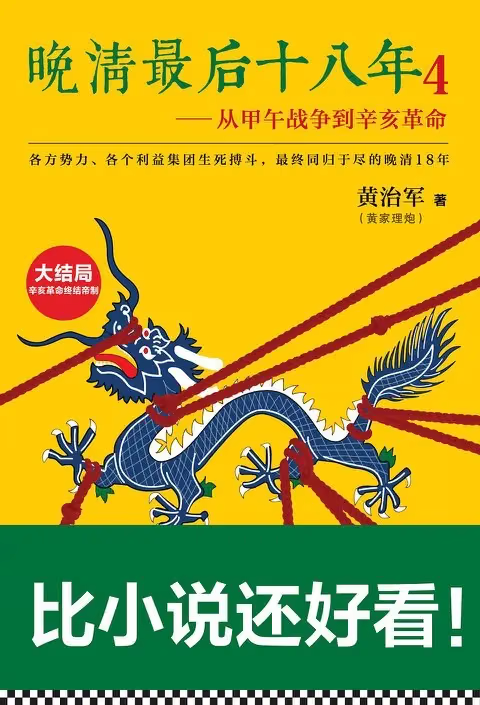
“The Last Eighteen Years of the Late Qing, Vol. 4”
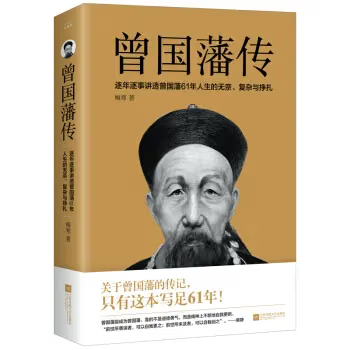
“Zeng Guofan”
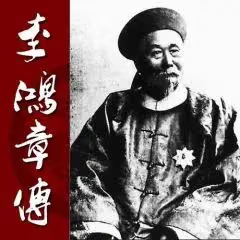
“Li Hongzhang, Late-Qing Grand Minister”
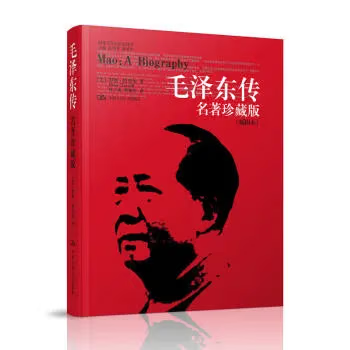
“Mao Zedong: A Biography”
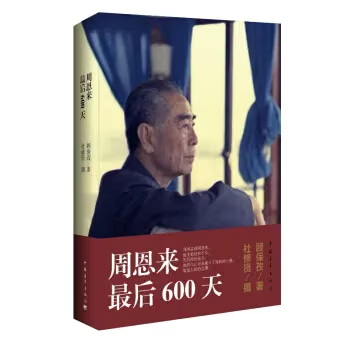
“Premier Zhou’s Last 600 Days”
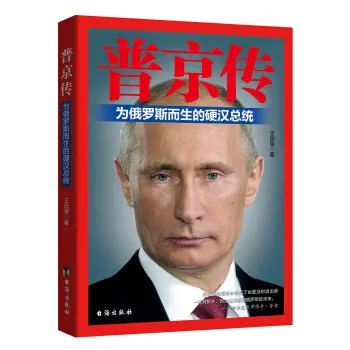
“A Biography of Putin”
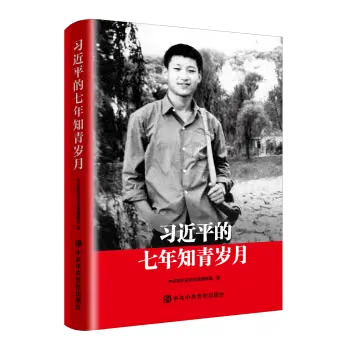
“Xi Jinping’s Seven Years as an Educated Youth”
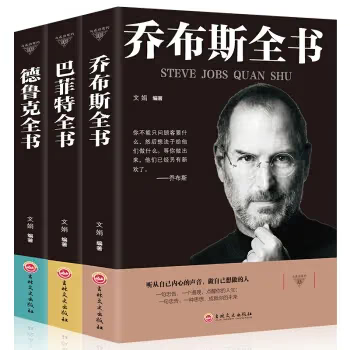
“The Biography of Steve Jobs”
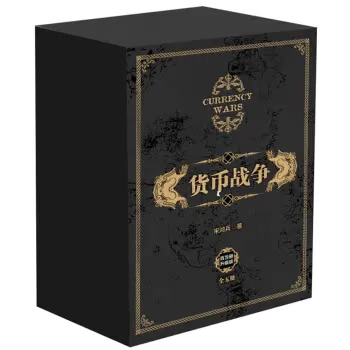
“Currency Wars, Parts 1–5”
“A Biography of Napoleon”

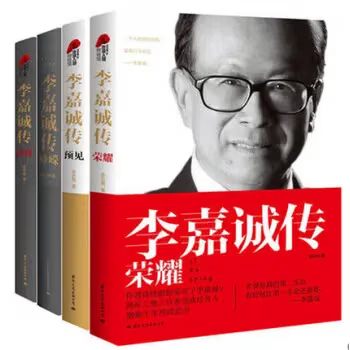
“A Biography of Li Ka-shing”
The Last Eighteen Years of the Late Qing, Part 4
Last year I finished parts 1–3, but the complete part 4 wasn’t out yet. This is a book personally recommended by Yu Minhong. The final volume is absolutely a monumental epic, second to none. Only after finishing the last part did I realize: it turns out Kang Youwei was someone who liked to slap his own face in everything he did, utterly unable to hold himself to strict standards. It turns out Sun Yat-sen wasn’t nearly as good as the textbooks claim — on the contrary, I think the Xinhai Revolution owed its success to Yuan Shikai. The late Qing was the most magnificent era of China’s march toward Western civilization; Yuan Shikai advocated constitutional monarchy to preserve the royal family’s dignity, while latecomers like Li Yuanhong advocated a republic to cover up the fact of rebellion. The person who buried the Qing dynasty fastest was Zaifeng (the Prince Gong’s Mansion in Beijing belonged to this man, and was eventually donated to the Chinese people’s government). He was the one who, on a visit to Germany, was told by the German Kaiser to kneel but kept the dignity of the Chinese nation and refused, earning the respect of the German emperor. This man was also the father of Puyi, China’s last emperor. In short, all these details are covered in this book.
From part 1 introducing the Beiyang Fleet to introductions of cruisers, destroyers, frigates, torpedo boats… these four volumes are practically a complete record of China’s late Qing from the First Sino-Japanese War to the Xinhai Revolution. Well worth reading — highly recommended.
If you insist on a reason for my recommendation, I can only explain with one photograph:
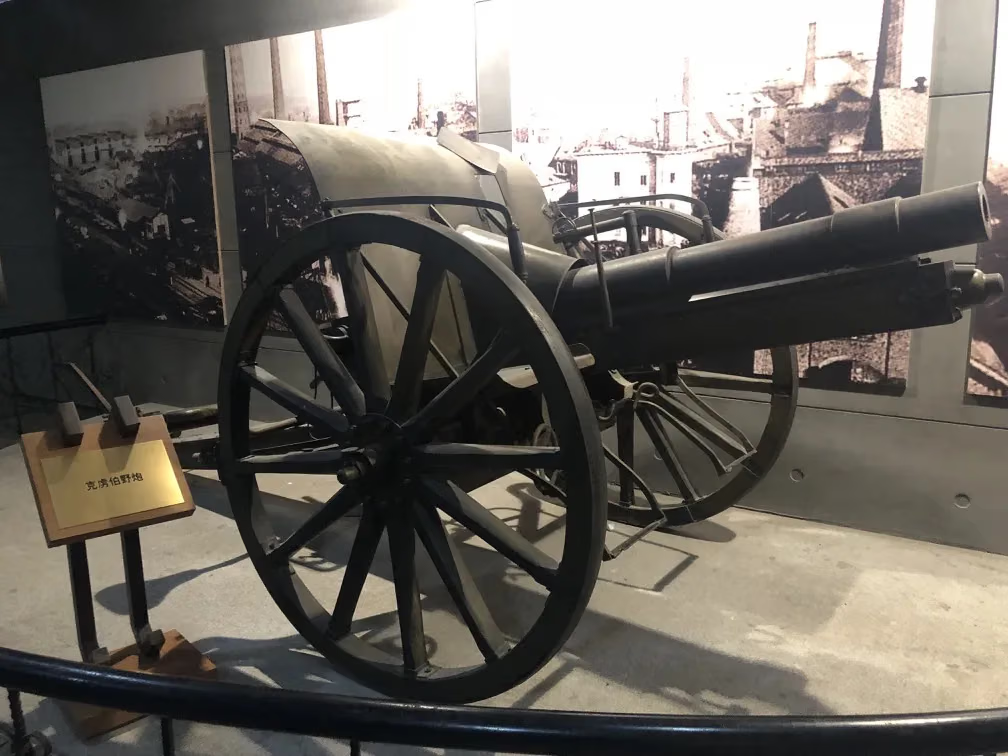
This is a field gun made around 1860 by the German company Krupp, which I photographed this October at Xiaozhan Drill Ground in Jinnan District, Tianjin (where Yuan Shikai once trained his troops).
Most of the Beiyang era’s warships and cruisers came from Germany’s Krupp. Judging by the manufacturing craftsmanship of this gun, the industrial capability of the time and the Beiyang navy’s military equipment basically made China the number-one power in Asia in modern history. It wasn’t that we couldn’t beat Japan — what we couldn’t beat was the corruption inside the Qing court.
The Biography of Zeng Guofan
If you ask why I recommend Zeng Guofan so highly, I can only say: I consider him one of the very few great ministers in Qing history. He served through the reigns of three emperors, a minister across three courts, dutiful and diligent. The Jiaqing Emperor said a minister of the Qing Empire must excel at everything he does. Zeng Guofan learned architecture from zero, learned Western civilization from zero, learned from zero anything others excelled at that he did not. A paragon among Confucian scholars, a descendant of Zengzi. He trained the new army and suppressed the Taiping Rebellion. His staff recruited basically the top talent of every field in China at the time. For example, the periodic table of elements we use in chemistry was created by the scientist Xu Shou, who served in Zeng Guofan’s private staff. Without him, the chemical elements we see today would be English symbols, not all carrying the metal radical. As a teacher, he produced Li Hongzhang, a great disciple who mastered both Chinese and Western learning in modern Chinese civilization — a man of outstanding achievements. Yet later generations harshly criticized Zeng Guofan for mishandling the Tianjin Massacre incident. I don’t think it was a failure to handle it — the real reason is that a weak nation has no diplomacy. It was Cixi who wanted Zeng Guofan to clean up the mess, deliberately making him the scapegoat. Put in today’s terms: to err is human, and he had to live with the controversy — clearly not Zeng’s intention. Given Lord Zeng’s principles and convictions, he would never have held back just because people threw stones at him over this. On the contrary, Lord Zeng dared to face a bleak life head-on, dared to look squarely at spilt blood. Had it been today’s China under President Xi, Lord Zeng, like the diplomat Wang Yi, would have dared to sit as an equal with any country in the world. That is the little-known side of this great man that I admire.
So, to express my respect for Lord Zeng, I offer him a couplet:
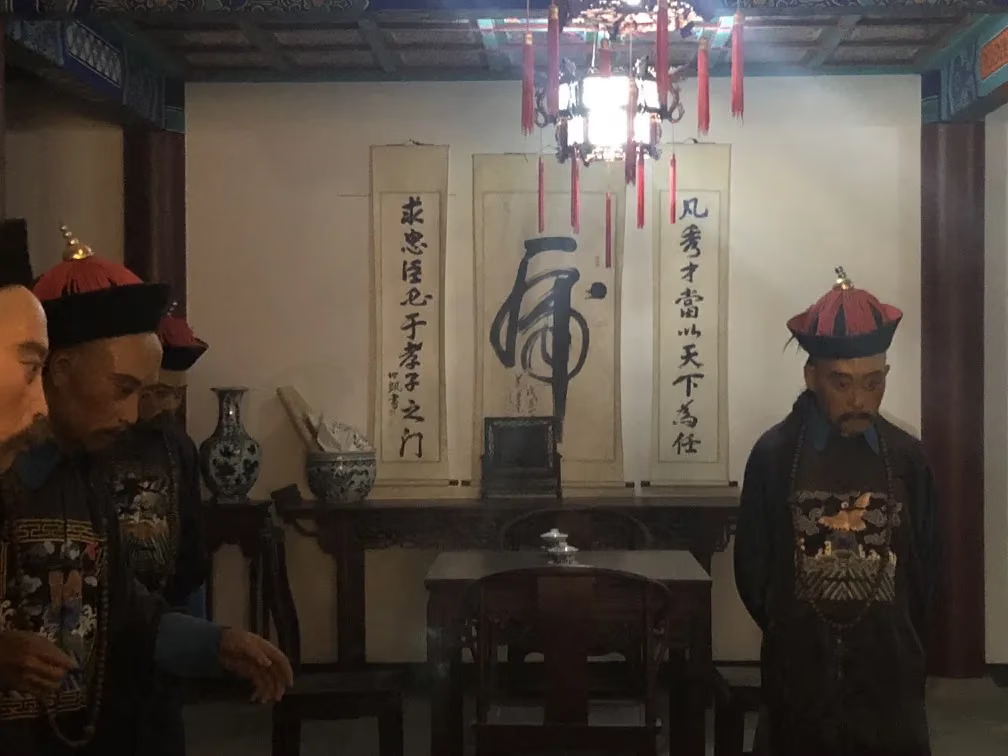
Seek loyal ministers at the gates of filial sons
Every scholar should take the world as his duty
Li Hongzhang, Late-Qing Grand Minister
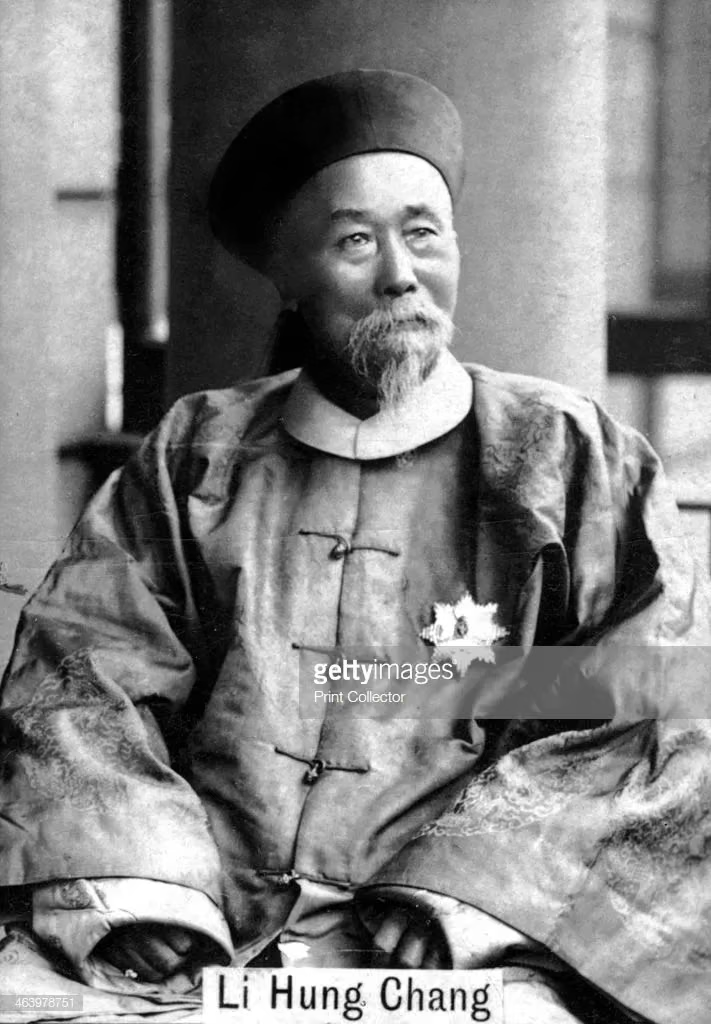
This kindly old man changed modern Chinese history. Hailed by Westerners as “the Bismarck of the East,” he was the first Chinese person on the cover of TIME magazine, the first in Chinese history to inspect Europe, the first to… In total he created 47 Chinese “firsts.”
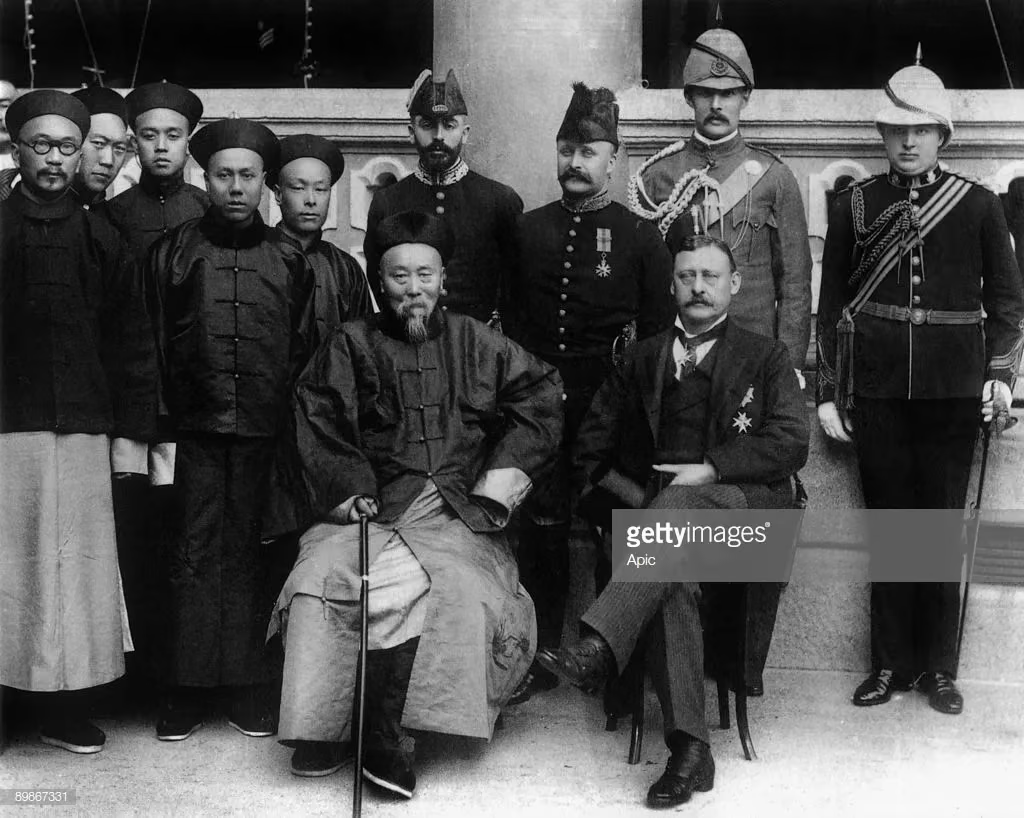
Li Hongzhang visiting Hong Kong meets Governor Henry Blake; standing to Li’s right is Liu Xunxun, July 1900.
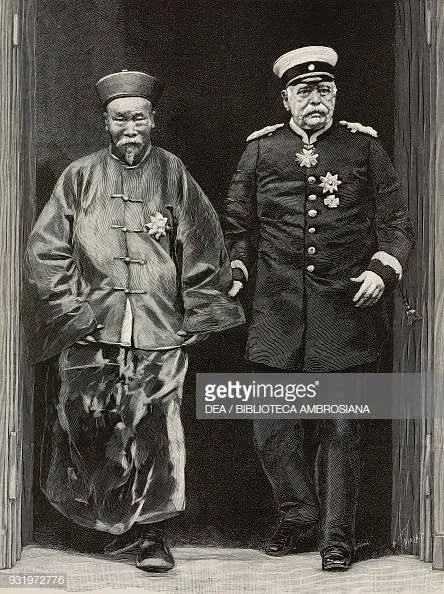
- To show respect and honor to Li Hongzhang, Bismarck dressed with extreme solemnity, wearing his rarely-worn ceremonial regalia — the jade crown bestowed by the German Emperor, the Grand Cross of the Red Eagle, holding the great jade, sword at his waist. Upon meeting, the two first exchanged pleasantries about each other’s health and discussed their physical and mental well-being.
Bismarck was known as Germany’s Iron Chancellor — practically identical to Li Hongzhang: he served three German emperors, and through years of bitter struggle amid European turmoil finally achieved German unification.

Li Hongzhang and Bismarck on the balcony of the Chancellor’s palace
Why have I used so much space to introduce this late-Qing grand minister? Why do I admire him so?
Yes, you’ve hit the key point — let me give you the answer.
In our work and life, the labor we engage in is basically all a product of Western civilization: computers, physics, chemistry, all kinds of high tech, circuits — which of these can we find in thousands of years of Chinese cultural tradition? We have read China’s Four Books and Five Classics cover to cover, but have we ever asked ourselves: after all these years of schooling, we never changed or improved productivity in essence or in practice. Computers and smartphones were all invented by the West; our era has entered a fully Westernized education model.
The English we learn — not a single letter of it can be found in our classical literature. The Hanyu Pinyin we use today is a product of the post-founding and Republican eras.
In my own work I often run into difficulties that are hard to overcome or solve in a short time. At those moments I ask myself: how is it that after all these years of schooling I can’t solve even a simple computer science problem? Think about it — computers have only existed for a few decades since their invention. We never grew up playing with computing, its principles, or its construction. In a sense, aren’t we behind Western civilization? The computer wasn’t invented by the Chinese. We first have to learn English, understand computer languages for talking to computers, and learn how to write those languages to communicate with the machine. At times like these, I feel fragile inside — my fragility comes from not understanding deeply enough what’s inside the computer. The books I read as a child were the Thousand Character Classic — nothing to do with this. I should find someone as my role model for moving forward. Who is this person? Who in Chinese history was the first to dare to learn Western civilization, to master both Chinese and Western learning, to learn the West’s advanced culture and technology… and to build computers for his own country? I believe that person can be none other than Li Hongzhang. He never built a computer, but every day of his work he faced enormously challenging tasks: dealing with foreign affairs daily, buying warships from Germany’s Krupp to build the Beiyang Fleet, founding the Jiangnan Manufacturing Bureau to produce firearms and weapons. In today’s terms: first you need machine tools, you need the craft of smelting metal, you need technology. Lord Li can fairly be called the first capable minister of China to dare to liberate his thinking and embrace Western culture and education, to use advanced Western civilization and technology to reform the Qing.
In the tide of Western learning flowing east, the one who dared to learn from the West — none other than Li Hongzhang. I admire such people in my heart. The difficulties I encounter in my work today all come from Western civilization and technology. Sometimes we feel fear in the face of difficulties, but fear stems from the unknown: you don’t know what an operation will lead to, so you feel unsure — mainly because we haven’t fully mastered all of this yet. Working hard to understand, digging deep, practicing, and reaching conclusions is the only way to solve it.
Win Others’ Respect Through Strength
To train an army (the Huai Army) and suppress the Taiping Rebellion, the late-Qing grand minister Li Hongzhang returned to Anhui and, without funds or authority, trained a new army. Every campaign against the Taiping ended in more defeats than victories; in the end, out of desperation, he disbanded the force and went to join his mentor Zeng Guofan. By then Zeng had trained his own new army — the Xiang Army. Lord Zeng was just as broke as Li, and among all the ministers who went home to train new armies, almost all failed like Li Hongzhang; only Zeng Guofan’s Xiang Army was different. When Li Hongzhang, down on his luck, came to join his mentor, Zeng Guofan was overjoyed inside — because on certain important decisions his disciple Li surpassed him. When Li arrived at the gate of the camp to see his mentor, Zeng deliberately acted as if nothing had happened, simply telling the gatekeeper: “I’m too busy; have Shaoquan (Li Hongzhang’s courtesy name) go rest at my humble quarters in the neighboring camp, and I’ll visit him when I’m free.” At Zeng Guofan’s staff headquarters, the arrival of a Qing minister required cannon salutes of so many rounds, with a grand welcoming ceremony. Li Hongzhang was still a rather minor official then, and by court etiquette should have been received with cannon salutes and grand ceremony. At Zeng Guofan’s camp, it was as if a common soldier had shown up — no reaction at all. Li felt terrible. Early the next morning, Zuo Zongtang returned from pacifying the rebellion in the northwest and came to see Zeng Guofan; the welcome was far more grand than imagined — cannon salutes of so many rounds… a very ceremonial reception. Li saw it all with his eyes and swallowed the bitterness: Zuo Zongtang held less than half my official rank, yet my mentor receives him so grandly — while when I arrived, my mentor acted as if nothing happened. My mentor was the one who lifted me to the rank of Grand Academician of letters, the one who disciplined me strictly through the imperial examinations and taught me the skills to survive. How can this scene not break my heart? Ah, I see — I still need my own army; I must win a few battles. Only with real strength can I earn my mentor’s recognition and win others’ respect. Right now I have nothing, while Zuo Zongtang struts about leading a band of soldiers… When I read this story I deeply understood Li Hongzhang’s heartache at the time, and I believe you reading this feel it too.
In fact, Li Hongzhang hadn’t yet perceived Zeng Guofan’s painstaking good intentions. No one understood Li Hongzhang better than Zeng Guofan, his own disciple’s mentor. Zeng let him taste such bitterness to grind down Li’s rough edges — to make him understand that one must win others’ respect through real strength.
The story of Zeng Guofan and Li Hongzhang: from initial resistance to Western civilization, to struggling to cope, to striking out proactively, to mastering both Chinese and Western learning — without the foreigners’ strong ships and sharp cannons, there would have been no Li Hongzhang, no birth of “China’s Iron Chancellor, the Bismarck of the East.” How many firsts did Li Hongzhang create in the Self-Strengthening Movement? Look back at my own growth: how many firsts have I created? The first time leaving home, the first time joining Baidu, getting into iOS development fairly early, the first time using a blog to record knowledge and craft, the first time stepping out of the countryside and using computer technology to change my fate, becoming the hope of my village. I am walking exactly the same road Li Hongzhang walked, hoping to walk the road toward sagehood. On this road there will certainly be no “speed camera in 300 meters”; having predecessors’ experience makes me lucky, but further along I will encounter things even my predecessors never experienced — I will become someone else’s predecessor.
The story is told.
Now let’s look at ourselves today. Following Wang Yangming’s “unity of knowledge and action,” we all admire people with real ability too, don’t we? If a rich kid — whose parents bought him a house in a first- or second-tier city and smoothed out everything he needs — has no proper job and lives a pampered life every day, would you admire him? Aren’t these the kinds of people around us? I believe you definitely wouldn’t admire him. What you’d admire is that he has parents who have their act together.
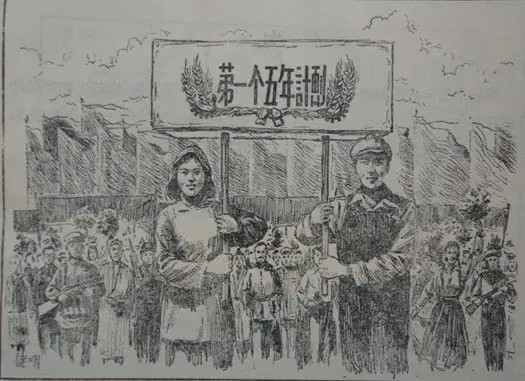
I set my first five-year plan in 2013. Now it’s 2018, and I haven’t handed myself a satisfactory answer sheet. Looking at my five-year plan, barely 70% complete — I’m ashamed. I admit I talked big. To everyone who saw my five-year plan, and to my high school teacher, I sincerely apologize. Indeed, I can’t hold my head up in front of rich kids — my father didn’t have his act together, and I have to build everything from scratch by myself.
So I wrote myself a motto: Ten years of toiling head-down, then meet the rich kids eye to eye.
Mao Zedong: A Biography
This was my fourth book this year. After finishing it, I felt Grandpa Mao’s story was truly not easy — a man of great boldness and poetic talent. In a new China beset by difficulties inside and out, taking on from scratch the tasks of the coming decades was not easy, and he did it. Growing up in a landlord’s family, he was not swayed by his father’s small-peasant mindset.
Premier Zhou’s Last 600 Days
This is a voice you need to hear — it was also the first time I heard Premier Zhou’s original voice recording. In his final 600-odd days, this premier was utterly devoted, handling a thousand affairs a day, matching wits against the Jiang Qing clique, working hard to correct the errors of the Cultural Revolution, and step by step handing the burden of the republic to Deng Xiaoping. Without Grandpa Deng’s reform and opening up, you might not be reading this blog post summarizing my 2018 today. Premier Zhou’s frugality is worth my learning. Because medical conditions were incomplete — the new China then couldn’t yet manufacture many advanced medicines — Premier Zhou’s medicines were all imported. Yet this premier was so frugal that when a tablet dropped on the floor, he would pick it up and cherish it, saying: how I wish our republic could manufacture this medicine too, to help the people who suffer from illness like me. In his final days, he fought bravely against illness.
To commemorate this great man, I listened carefully to the account of Premier Zhou’s final years. I was honored to find several of the premier’s belongings at the National Museum of China, to look upon and reflect on this republican premier’s spirit of devotion to the people.
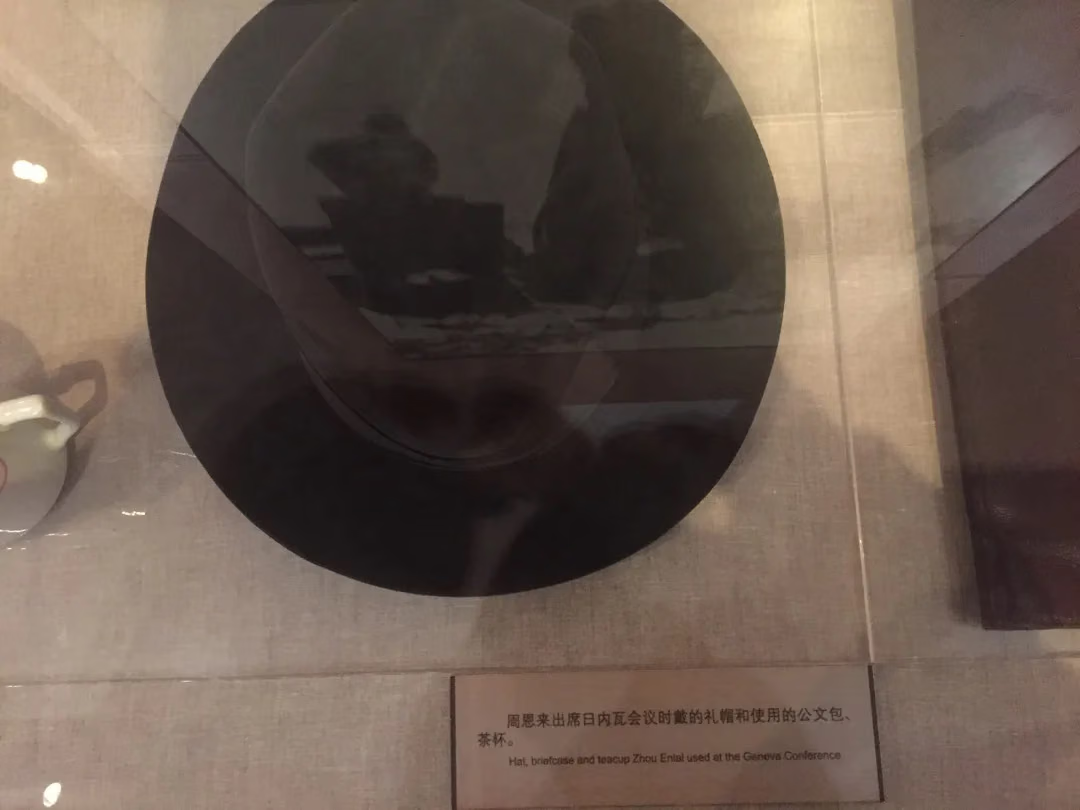
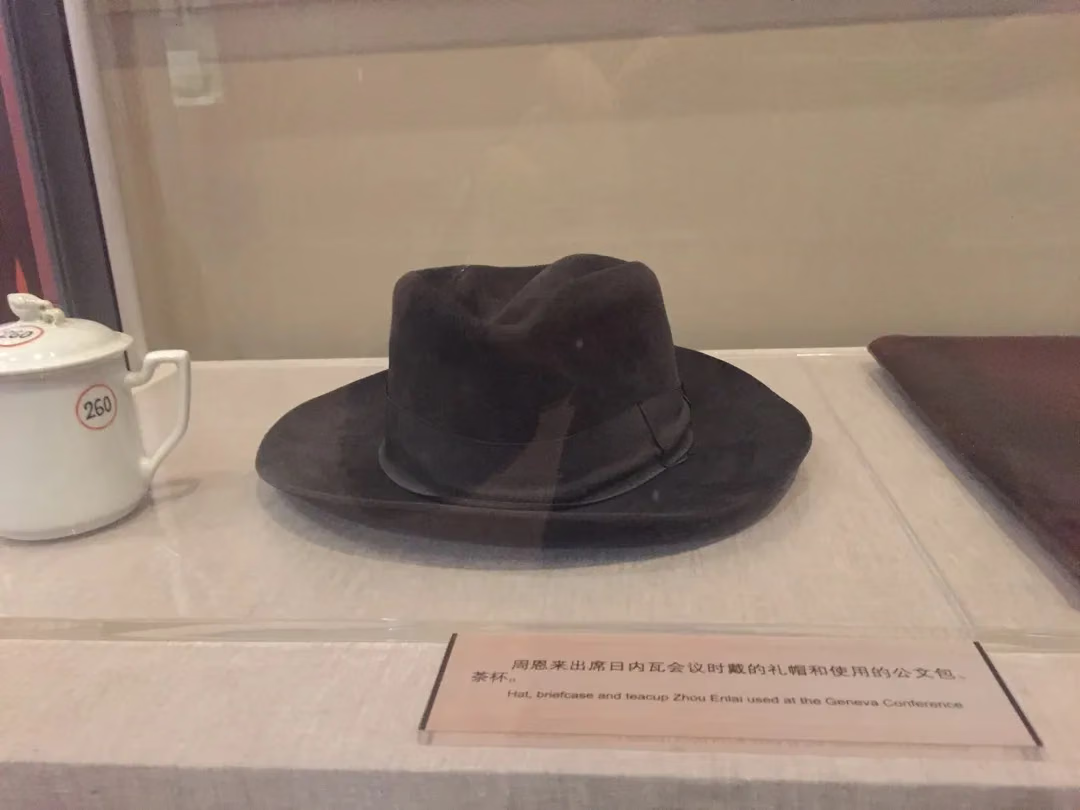
This is the formal hat Premier Zhou wore to the Geneva Conference — the one in the photo below that we often saw in our middle and high school history textbooks.
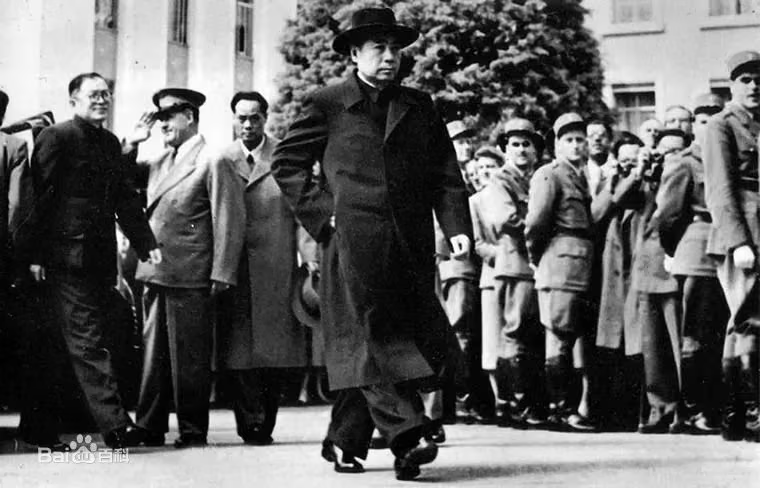
Image quoted from Baidu Baike
I believe that seeing this premier of the republic, you too would be moved to tears. His voice is one you need to hear.
A Biography of Putin
This former KGB agent, Russia’s tough guy: economic reconstruction after the Soviet collapse, cracking down with an iron fist on the financial hegemony of the Russian oligarchs, ending the Chechen wars, showing international mettle over Crimea, daring to confront the United States head-on in the world. The Putin biography is indeed very detailed. In my personal view, though, Russia’s national economy hasn’t improved much — it’s still a two-cart economy. To understand world history and European geography, I studied a lot of European content this year, and this book was within that scope.
Xi Jinping’s Seven Years as an Educated Youth
When I was little, my parents often told me that if I didn’t study well I’d end up hauling manure. But I have to say: this current President of the People’s Republic of China once did haul manure. In Liangjiahe, northern Shaanxi, he went step by step from a sent-down educated youth, to village party secretary, to joining the Communist Party, then after the restoration of the college entrance exam went on to study at Tsinghua, ultimately becoming President of the People’s Republic of China. That road was truly extraordinary. One story from this book remains fresh in my memory and is worth everyone learning from.
When President Xi first went down to the countryside as an educated youth, he didn’t understand rural people’s lives, and northern Shaanxi was extremely poor. The educated youths had to learn to cook for themselves and gather firewood. Lacking experience at first, soon after arriving in Liangjiahe they hit a stretch of rain in northern Shaanxi, and the cooking firewood all got soaked — no way to start a fire. The youths looked at each other, at a loss. Those days were truly hard. When President Xi went to the countryside, his luggage was stuffed full, bag after bag, with books. During that time he worked the fields by day, and after dinner kept studying at night. There wasn’t much to eat; studying late into the night, they’d get hungry, so they’d simply put some water in the pot with a bit of broken corn. Firewood was a limited resource, so whether the corn was cooked or not, they ate it. I believe the young people reading this article probably can’t comprehend this kind of life, but it was unimaginably hard. Because northern Shaanxi’s terrain is full of mountains and steep slopes that can’t hold water, and farmland was limited, President Xi led all the villagers to build dams to store water for irrigation, and then opened up new farmland. President Xi understood deeply why northern Shaanxi was poor: the people simply had too little land — you could only ask the earth for grain. After building the dams, they carved open the mountains to expand the fields, and built biogas digesters. There was no good machinery back then; everything was done by hand, hauling manure to fill the biogas pits. Biogas digesters required know-how, so President Xi traveled to Sichuan to learn the experience of running biogas. Before a digester first went into use, you had to open a hole to test whether the gas was up to standard. President Xi opened the hole himself; the pressure inside the pit was so great that he was sprayed all over with manure slurry. Reading that, I couldn’t help but sigh: how lucky China is to have such a president — a man who truly labored at the grassroots, daring to do the dirtiest, most exhausting work. Anyone who does such work surely knows the hardships of the people at the bottom, and surely knows how to lead the broad masses of the nation out of poverty and toward prosperity.
Put it in the present: take a young person to the countryside, let rain soak all their cooking firewood so they can’t light a fire to cook — very few young people have ever tasted that kind of hardship, let alone hauling manure for biogas pits.
No matter how corrupt you think the government is in your mind, I don’t believe President Xi is. He has tasted hardships most people never have, and was affected by the Cultural Revolution through his father, applying to join the Party N times before finally succeeding. That experience was extraordinary. Without knowing this national leader’s history, we won’t understand how hard-won today’s happiness is. Things now are actually much better than President Xi’s past; but such is the primary stage of socialism — first solve food and clothing, escape poverty, and only then research getting moderately prosperous and building wealth. I hope everyone can know President Xi’s life experience, so I strongly recommend this book.
The Biography of Steve Jobs
As an Apple developer, not understanding the person who created Apple would be a real pity. Jobs’s personality was extremely intense, pursuing absolute perfection. Without such exacting demands there would be no iPhone today. Of course, temperament alone isn’t enough — you need technology to drive it, and Wozniak was one such driver: a math genius. The first Apple I was hand-built by this master, stacking chips, designing circuits…
Jobs was a person with an extreme “reality distortion field” (to put it plainly, he could talk you into anything). An orphan, Jobs was deeply influenced by his adoptive father, a carpenter, who said: “Making anything is just like making furniture. The back panel of a wardrobe is rarely seen, but the quality of the outside must match the quality of the hidden back panel.” So today, open up any Apple device and look at the circuit board: black PCB printing, the internal circuit layout and components all extremely neat — truly the same quality as a wardrobe’s back panel. For example: the iPhone 4/4s.
These are the only two products released in Jobs’s lifetime… the last two things he released. But today’s Cook perhaps hasn’t 100% followed Jobs’s character, habits, and pursuit of perfection, so nowadays Apple phones keep having quality problems. In the Jobs era, I believe even if issues arose, they’d all be replaced with new units and problems would be rare.
Because of his extreme personality and pursuit of perfection, Apple colleagues called colleagues who had been hurt by Jobs “low-pass filters” (no matter how loud or fierce the shouting, they handled it all quietly and calmly).
I don’t know whether Jobs’s life counts as legendary, but I do know that with this Apple keyboard I’ve typed out a 1M+ RMB apartment building.
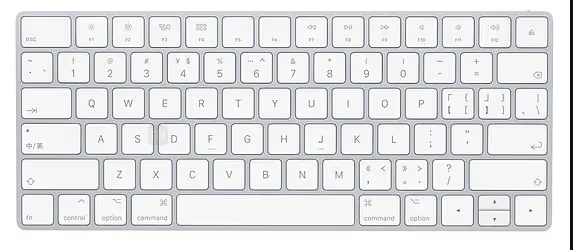
Yes — I’m an Apple iOS Developer. The little-known sides of this great man are worth learning from.
Currency Wars, Parts 1–5
These volumes of Currency Wars are excellent. Though written as novels, the author says that if the material appeared as fact, the bankers would basically never let the book be published; the novel form can often slip past that.
A must-read classic of world economics: the Bank of England… the Rothschild family… the Bretton Woods system… the gold standard and silver standard of the world economy, and our own renminbi once backed by goods and materials — the value behind all of these is laid out one by one in this book.
A Biography of Napoleon
This founder of France who dominated Europe for half a century was active roughly during the mid-to-late Qing dynasty in China. Napoleon, born on the island of Corsica in southern France, galloped across and conquered the whole of Western Europe, ending nearly every campaign in victory — but one final battle, Waterloo, undid his life’s work. Really, we should appreciate this warrior with the attitude that “heroes aren’t judged by success or failure alone.”
To understand Europe better, I needed to know its people and geography, so this book is worth reading.
A Biography of Li Ka-shing
Finally I must speak of this inspirational great man, Li Ka-shing. “Superman Li” utterly dominated Hong Kong, yet remained gentle and refined. In fact, Superman Li’s ancestors were “bagong” civil officials in the Qing era (you can think of them as cultured, learned scholars). This great man conquered all of Hong Kong — conscientious and down-to-earth in conduct and in business — from a plastic-flower manufacturer to acquiring Hongkong Electric, British-funded firms, becoming HSBC’s long-term partner, Jardine Matheson Land, then Hong Kong real estate… and acquiring the Hilton Hotel… Too much to tell in a few words.
Here I should mention Jardine Matheson Land. Its predecessor was Jardine Matheson (a British firm), founded in Guangzhou, China by two Scotsmen, William Jardine (1784–1843) and James Matheson (1796–1878). Back when Lin Zexu destroyed opium at Humen, smashing the East India Company’s opium, it was actually Jardine Matheson pulling the strings behind the scenes — Lin Zexu had harmed Jardine’s interests in China, and boss Jardine lobbied before the British Queen, provoking the Opium War of 1840.
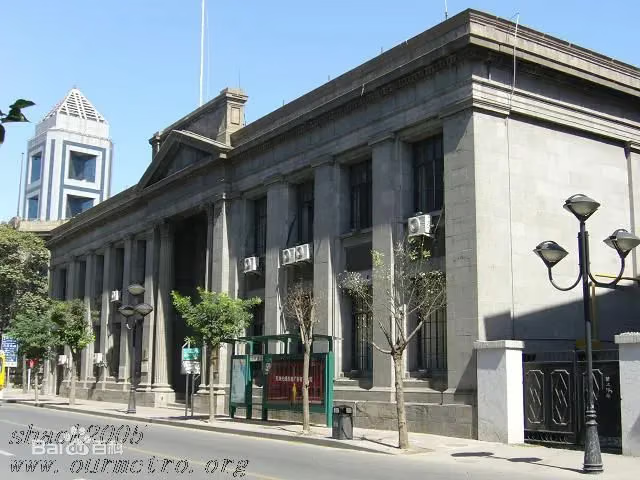
The former site of Jardine Matheson image quoted from Baidu Baike
Li Ka-shing’s life truly went from nothing, through hardships, advancing steadily, swallowing and acquiring step by step.
What impressed me deeply was the cooperation between Jardine’s taipan, Keswick, and Li Ka-shing…
An absolutely inspirational life story of struggle — worth reading.
Technology
This year, my investment and gains in technology didn’t improve markedly. But the OKR I set for myself (Objectives and Key Results — a way of achieving work goals, similar to KPI) was to guarantee two technical articles per month, at least one of high quality. After a year of technical writing, it’s been quite rewarding. I never thought I could use a blog to record the little things in my life — mostly technical, rarely about my personal life. Apart from the year-end summaries, basically everything is iOS-related. Overall I still feel it’s rather shallow; 2019 needs more quality and depth than now.
To reward a year of technical progress and persistence in writing, in 2018 I bought myself a BOSE noise-cancelling headset (¥1888). As a programmer, there are only a few treasures:
- A mechanical keyboard
- Noise-cancelling headphones
This year I kept learning Python and machine learning, but progress was limited — just a slight understanding of data mining and data processing. However, being responsible for Kuaishou’s live-streaming business has trained me a lot. I note down every problem I encounter in development, write demos in my spare time, and publish articles to my blog — recording the world, recording you.
But compared to last year’s KPI targets:
Last year’s KPI was:
- Finish Swift 4 Advanced
- Finish iOS Core Animation
- Write several blog posts on Learn AV Foundation, continuing from where I left off last time
- Learn Python and data mining to lay the groundwork for machine learning
- Deep-dive into multimedia technologies
- Raise my English level by one more level
Clearly I completed less than 30% — quite ashamed. So I switched my goal-setting method from KPI to OKR, for flexible goal attainment, so I can better achieve my 2019 goals.
This year I was quite the spendthrift, buying a pile of junk and spending quite a lot of money.
Mechanical keyboard
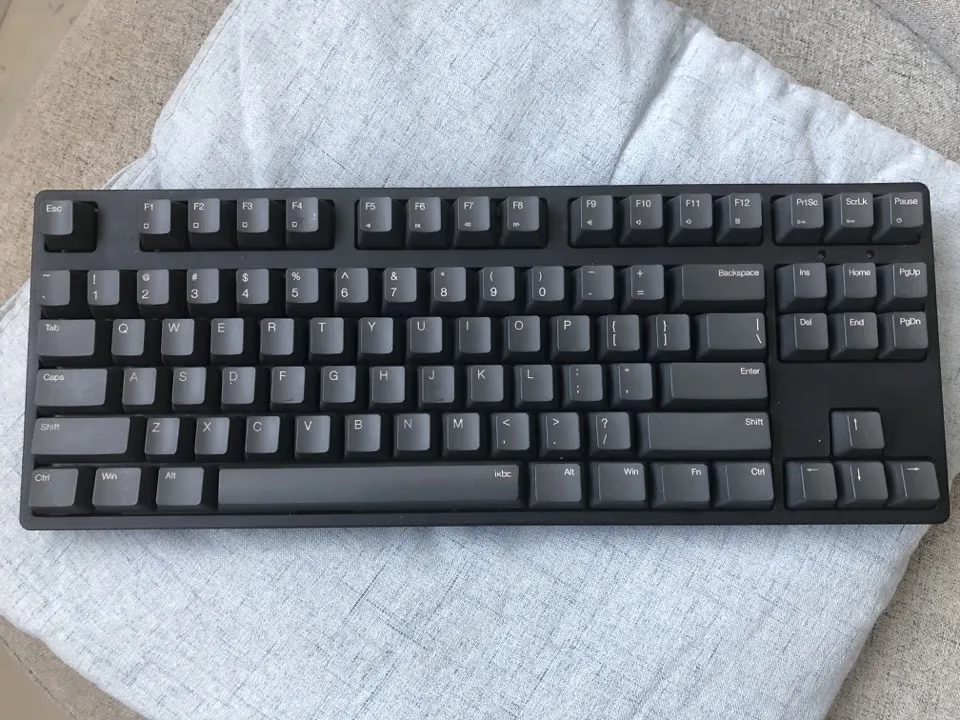
This mechanical keyboard is really good — writing code at home on weekends is smooth and comfortable. ¥519
iPhone X 256G US version
A colleague bought it for me while visiting the US. As an iOS developer, I put up with an iPhone 6 for four years — it really got unbearably laggy. ¥8000
Apple Watch 3
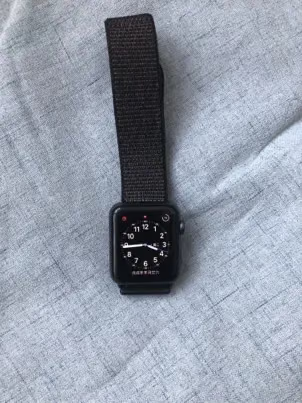
This one I consider basically useless — you can wear it on your wrist to check the time, and that’s about it; none of the other features are usable. ¥3188
PC
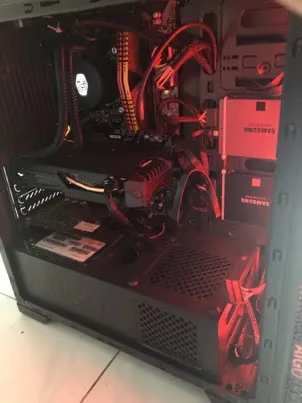
Bought a 1050 Ti to learn machine learning. I hadn’t done DIY in a long time — bought and assembled the whole thing myself: 16G DDR4 2400 RAM, 240G+120G two Samsung SSDs, i5 8400 CPU, Gigabyte Z370 motherboard, total cost ¥5547.
I sold off the old one for a little over 200.
BOSE noise-cancelling headphones
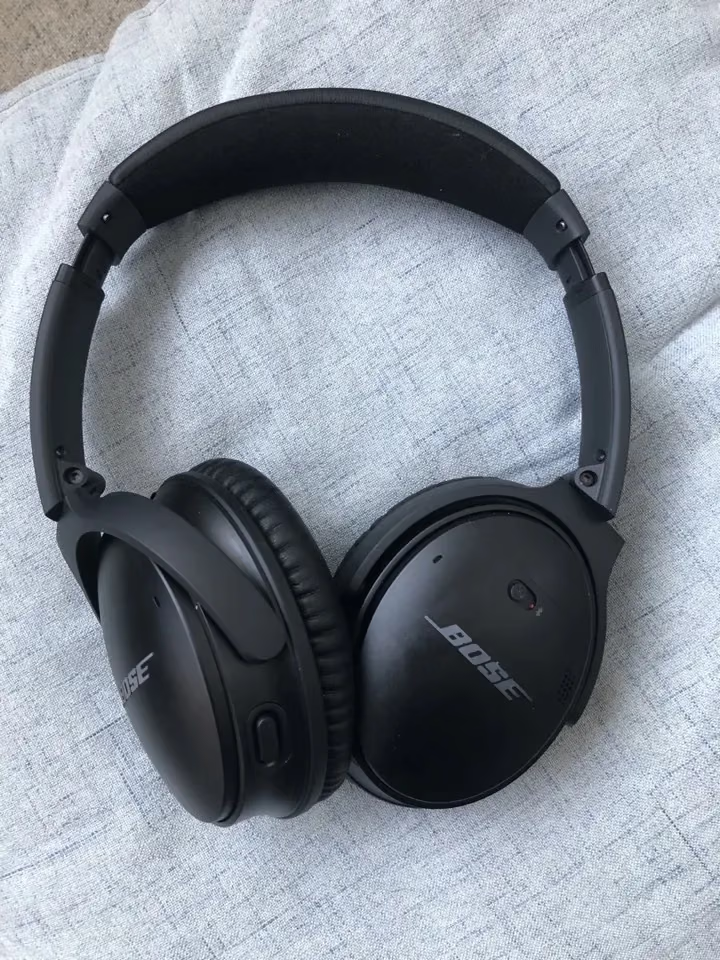
For Double 11 I planned to buy the headphones of a programmer’s dreams. ¥1888
Niu N1s Sport
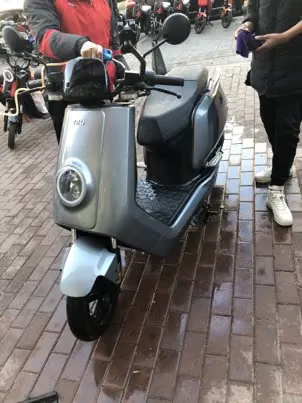
My commuting vehicle. ¥7399
This year’s splurge totaled ¥26,541.
Of all these, I find the most useful are the Niu electric scooter and the noise-cancelling headphones. As for the phone — for someone like me wearing ¥31 Lindian shoes, holding an ¥8000+ iPhone X is undeniably vivid proof that I’m a thoroughgoing loser. The electric scooter really has spared me a lot of hassle — commuting anywhere is convenient. The noise-cancelling headphones let me work quietly and with focus. As for the mechanical keyboard, it’s clearly not much use, but Apple’s keyboards are even more expensive, so on reflection, fine — it counts as worth it. The most useless things are the PC and that watch — those two purchases were my buying blunders.
Having bought so much junk and spent so much money, I’ve realized some things must be used to their full potential. Spending a lot of money without realizing useful value is clearly an irrational kind of consumption…
Persistence
Every Teacher’s Day I call a middle school Chinese teacher of mine to send greetings — I’ve kept this up for 11 consecutive years. I feel my middle school performance was really poor and I never left this teacher much of an impression; I want to make up for it. I want to set a record — to be the student among this teacher’s students who kept up a greeting for the most consecutive years. Whether I’m the only one, I don’t know. In the future, if I can, I’ll keep persisting as long as possible. I hope this teacher remembers that this student was ordinary, but did something extraordinary. I hope this teacher remembers that this student came from the Second Improved Seed Farm.
Among my life goals, I need to establish a role model that everyone from Erliang admires. This role model comes from a village that barely has navigation routes on the map and is overlooked by China. I dream that one day, when I return home in glory, I can build a computer museum for Erliang — a museum where you can freely study computer science books, and like me, use what you learn to change your own destiny.
Because at the Hongguang Farm Middle School I attended, students from Erliang suffered far too much unequal, unjust treatment — it still brings me to tears. Why couldn’t we hold our heads up in Hongguang Farm, that neighboring farm village? Because we were behind. The backward get beaten; the backward get unjust treatment. To change all this, we must endure “Han Xin’s humiliation of crawling between a bully’s legs.”
At that middle school, the teachers were responsible only for their own favorites’ children, then the children of the farm’s own staff, and only then the good students among the transfer students from places like Erliang. For a student like me — no background, no connections, poor grades — that discrimination was bone-deep. Even after starting work, I still haven’t forgotten. Why must fellow Chinese practice such specific regional discrimination?
I hope to prove through my own actions to this teacher whether it’s a Hongguang student or an Erliang student who can persist in calling you for 11 years. Live your life winning others’ admiration and respect through real strength. I hope that although the economic gap between Erliang and Hongguang is wide, every region has its own uniqueness — nowhere is inherently nobler or lowlier than anywhere else; we should integrate with and respect each other.
A little less tilting of educational resources, so every student can receive fair and equal treatment.
Life
I believe life has two elective courses:
- Home renovation
- Cooking
Renovation
I bought my home in 2017 and it still hasn’t been delivered. If it’s a bare-shell unit, I’ll need to learn renovation myself.
Kitchen: integrated stove, sterilizer cabinet, steam-oven, sink, water purifier, garbage disposal…
Only two kinds of people can skip this course:
- The rich
- Those who buy a pre-owned home
Clearly I’m neither — no money and no pre-owned home — so I’ll have to endure renovation on a tight budget, stretching every yuan.
Before the home is delivered, I often carve out time to learn relevant renovation know-how. After renovating, I’ll probably be half a renovation worker.
Cooking
This is a chore that as long as you’re a person, you need to do.
If you don’t learn how to cook, you may live a mediocre life. If you don’t find out whether shallots, scallions, or large green onions taste better in cooking, or which onion suits which dish, then you won’t grow much.
Clearly, I skipped neither of the two courses above.
As for life: some young people think, “We don’t need to be successful people — isn’t enjoying the present tranquility enough?” Yes, if you can enjoy today’s beauty, then someone must be forging ahead through hardship for you — that person is either your parents or your partner.
There are only two possibilities if life hasn’t beaten you down yet:
- First: someone is bearing it for you
- Second: don’t worry — your turn hasn’t come
Family always has moments when money is needed. In China, one serious illness can destroy a middle-class family. Even with today’s strong medical insurance coverage, it still can’t weather major storms.
The elders at home always say money can’t buy happiness. I say: “Money can’t buy 100% of happiness, but after you grow up, 99% of your troubles come from not having money.”
I now understand what “choice matters more than effort” means — effort is to give yourself more right to choose.
Stories
There’s a classmate I hadn’t contacted for 4 years and 2 months. Time flies — nearly 5 years in a blink. I re-added them on WeChat. To commemorate this classmate, I wrote a script titled “The Boat and the Lighthouse.”
The truth I’ve distilled over all these years is: “Parents must have their act together. If they don’t, the children must pay the bill for their parents’ aimlessness. Because the parents failed to accumulate the economic foundation their children need for the coming decades, the children obviously have to start from scratch, empty-handed.”
A Hundred Years
During this year’s National Day holiday I went to Tianjin, back after 11 years away, to see the places I’d been in 2007. Eleven years ago there were no GPS-positioned maps, yet I could still find my way.
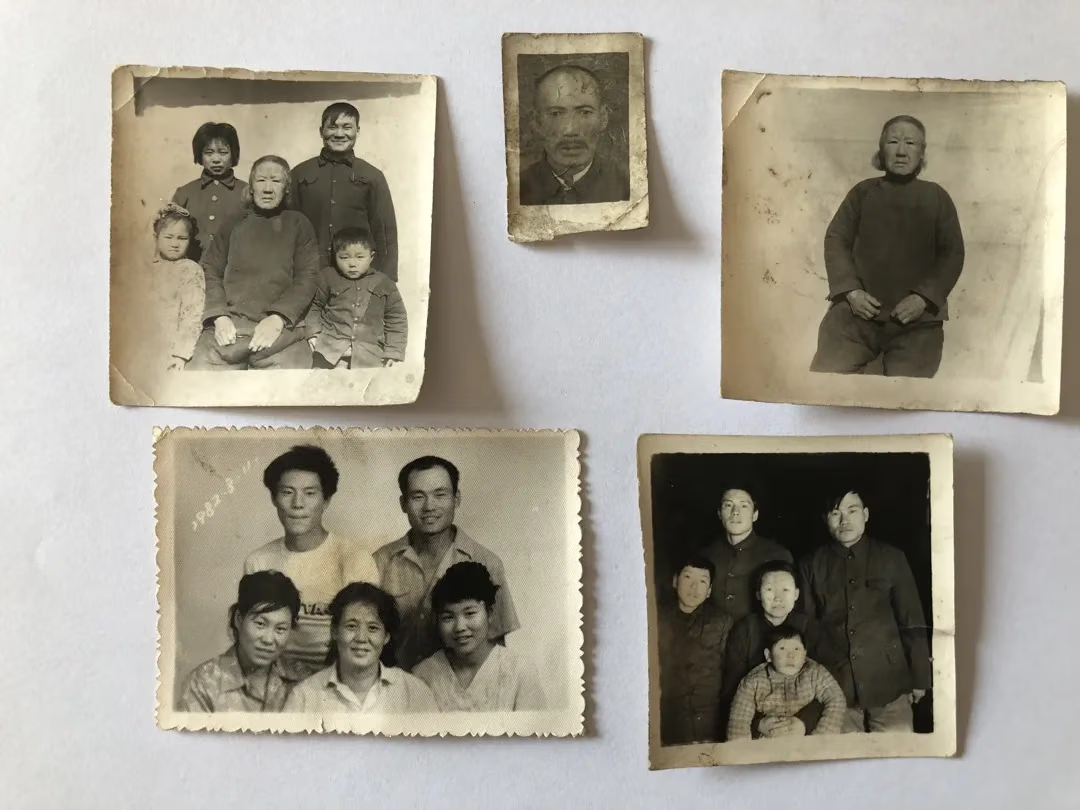
This is the only surviving handful of photographs of my family from the past hundred years that I found in Tianjin: my great-grandfather, great-grandmother, my father, and my aunt. Seeing them now feels priceless.
My ancestors went northeast as part of the “Chuang Guandong” migration. The family genealogy records the address: Sun Family Temple, Shouguang County, Qingzhou Prefecture, Shandong Province, living north of the dianzi (river flat).
That is today’s: Sunjia Village, Shouguang, Qingzhou City, Weifang, Shandong Province.
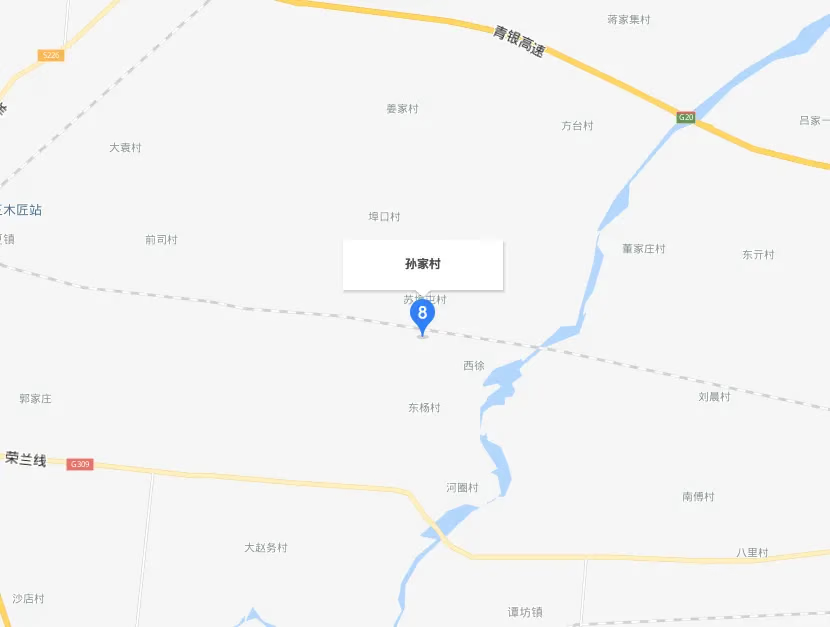
But when I searched the map, I found at least 3 possible places.
The first:
The second:
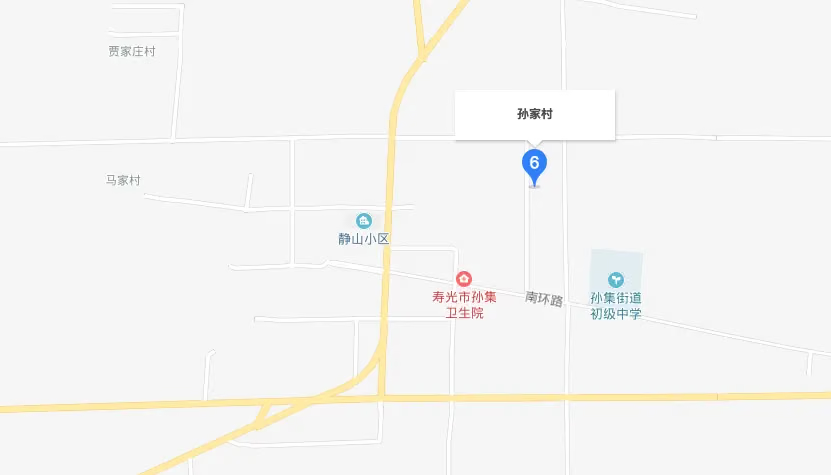
The third:
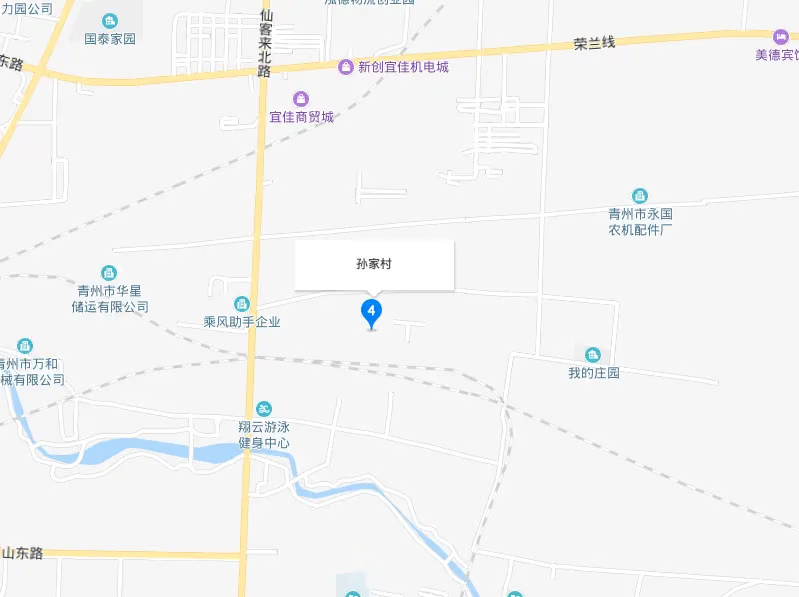
The most likely is the first, because it’s near a river with a river flat transition zone (dianzi). After a century of geographic change, the river’s flow may have decreased, the land rose above the water, and over time it formed villages and farmland.
Today a high-speed rail line has been built here, and it has become the nation’s vegetable hometown — this comforts me. Perhaps around 1900 my ancestors once lived here.
When my great-grandfather came to the Northeast, it coincided with the Japanese occupation of the three northeastern provinces. Perhaps driven by livelihood and the nation’s subjugation, he had to work for the Japanese — in what is now Shisanjingzi Village, Haibei Town, Hailun City, Heilongjiang Province, where the Japanese raised army horses, with the Dongfanghong reservoir in front. My great-grandfather mastered the blacksmith’s craft, shoeing the army horses — the Northeast is very cold, the roads ice over, and preventing the horses from slipping was one of the tasks. The middle photo above is the only surviving photograph the Japanese took of the craftsmen back then.
Think of that time: the nation broken, yet mountains and rivers remained; a letter from home was worth ten thousand in gold. This old man may have lived through the fall of the late Qing, the founding of the Republic of China, the warlord chaos, and on to the founding of New China — through the change of three dynasties.
An ordinary person might not have survived even one dynasty’s fall.
The blacksmith’s craft, though, passed down through three generations: my grandfather, my uncle, and now my older brother. In modern times they would be called artisans. I hope that one day, in my computer museum, there will be a place preserving the final flourish of my family’s blacksmithing craft.
My great-grandfather’s generation did not live easy lives.
Summary
This year I wrote many technical articles. I didn’t want to talk technology again in the year-end summary — I should record some beautiful memories of life.
At this time last year, the KPI I set myself clearly wasn’t completed this year.
In 2019, I hope to keep learning, keep up with the times, and master more useful knowledge to grow my influence.
Finally: happiness is achieved through struggle. Roll up your sleeves and keep working hard. Dare to face a bleak life head-on, dare to win others’ respect through real strength — only then can you become the person you yourself envy.