
Preface
This post carries strong personal sentiment; if you feel uncomfortable reading it, please close it as soon as possible. This post is only a personal learning record. Reposting or sharing within the license terms is welcome; please respect copyright and keep the original link. Thank you for your understanding and cooperation. If you find this site helpful, you can subscribe via RSS. Thanks for your support!
三十几岁想从前,人生已经太艰难.
增效增笑增增笑,裁员裁源裁剩闲.
轻舟想过万重山,必将此舟卷上天.
重振旗鼓卷巨浪,破壁前行勇向前.
This isn’t an AI-written poem, haha — chatGPT still can’t produce poetry of my low(ly) caliber.
This year, I want to use a classic PUA quote from Zhou Yu (the famous strategist of the Three Kingdoms) that I found very nice on Bilibili to express my feelings about the unbearable-to-look-back-on 2023: “Recently, while recovering from an injury, I’ve felt deeply the hardship of life. It is like the ceaseless long river — though it has the will to flow east to the sea, its course is slow and its journey full of difficulties. Alas! Yet the river’s waters will eventually reach the sea, while the ambitions of life are often hard to fulfill, leaving one with lifelong regret.”
I’ve lost count of how many consecutive years I’ve been writing a year-end summary. If I had to give this year’s summary a theme, in my shallow opinion, this quote fits best: “Commander-in-Chief, let’s skip the small talk. This old Sun here only wants to keep his job and barely scrape by. Only after achieving that goal can I possibly discuss your life ambitions with you, Commander. I don’t harbor ambitions like yours; mine are very shallow — only after holding on to my job can I finally look you, Gongjin, in the eye.”
- 2022 Year-End Summary
- 2021 Year-End Summary
- 2020 Year-End Summary
- 2019 Year-End Summary
- 2018 Year-End Summary
- 2017 Year-End Summary
Looking back on 2023
- Peace in the world
- Ridiculous current events
- A mediocre life
- Hard work
- Not being good at learning
- A shallow hobby
- Things I blew money on that are actually great
I’ve always considered myself a shallow person. If you, dear reader, are generous, please keep reading. Even though it’s all just a pile of mundane accounts, maybe even a shallow life has its shining moments — maybe it can light your way as you keep correcting your shortcomings on the road of shallowness and raise your awareness.
Peace in the world

This year was truly unbearable to look back on. The three-year pandemic finally came to an end, everyone dared to take off their masks, and everyone had antibodies (until now, December 2023, when I’m writing this, everyone has put their masks back on — forced to take precautions against influenza A, influenza B, mycoplasma, and other infections). While the Russia-Ukraine war shows no sign of stopping, the Israel-Palestine conflict has repeated the same mistakes as Russia and Ukraine. Even we, who live in a peaceful country, are not necessarily happy. Perhaps peace truly only exists within the range of cannons, and truth truly only lies between the edges of swords! Peace will ultimately only be achieved through the rise of China.
Because the world situation has been turbulent, our lives have become difficult. Corporate layoffs and employee unemployment have become the theme of this era. Consumption is sluggish, the dollar keeps raising interest rates, currency depreciation is severe, and sky-high housing prices have become a luxury my shallow self wouldn’t dare to comment on. All because the world has lost peace, and the economy has stalled. Stagnation would be fine, but Robin has also teamed up with Leg-basin Chicken (Japan), Little Creek, and the Little Kangaroo (Australia) to impose indiscriminate sanctions on us across various international trade fronts, pushing us into economic internal circulation. As for our current standard of living, I can only say, “Peaks clustering, billows raging — all my efforts are worth less than dirt (land finance). Rise, the people suffer; fall, the people suffer.” Don’t laugh at Zhang Yanghao — I know you suffer too, which is exactly why you wrote “Hill Sheep · Recalling the Past at Tong Pass”.
Science used to have no borders; now the competition between great powers has given science borders too. If they say you can’t produce the RTX 4090 GPU, you can’t; if they say they won’t sell us the A100 GPU, they won’t. Even Musk said buying a GPU is as hard as buying contraband. Without these high-end GPUs, we may not be able to develop artificial intelligence, autonomous driving, facial recognition, computer vision, and medical image processing quickly. A single lousy GPU can strangle us by the neck; a single GPU can plunge our lives into an endless swamp.
I like to look past appearances to the essence. The essence is that we still don’t have enough fundamental science to back our technological accumulation; the knowledge we possess is still insufficient to beat the world’s best chip-making level. The essence is still our ignorance — we cannot arm ourselves with existing knowledge to become top-chip engineers, and that’s the only way to maintain the world’s peaceful order.
In an environment where we can’t even keep our own jobs, peace in the global village is a bit laughable. What’s even more laughable is that I wonder how the university that’s choking us is doing now. If I could, I’d really like to email old Cao and ask: what’s the progress on Fuyao University of Science and Technology? Could you report to me? I’ve saved 34 neck-stuck specialties waiting for your university to start and break through them one by one!
I hope that through my better-than-nothing efforts, I can contribute — to whatever degree — to world peace in the future. I’d like to encourage everyone, but I’m afraid it’d come across as PUA. Forget it, actions speak louder than words.
Ridiculous current events
This year has seen an endless stream of ridiculous events. I’ll only mention the two most concerning to the people: the real estate meltdown and the lifting of housing purchase restrictions.
Evergrande’s collapse
Back in 2021, when Xu Jiayin was building cars, I said this rich man wouldn’t know how to spend his money if he had it. In 2023, that was finally proven. Evergrande Real Estate was the first to collapse — it’s done. Evergrande’s car brand Hengchi didn’t escape either. I really can’t read Xu Jiayin on this move — was it money laundering, or did he truly not know how to spend money? At the time, I said: build a university for the country instead, one that specializes in the technologies that choke China, training graduates with real expertise; and if it doesn’t work out, declare the assets bankrupt and hand them to the state. Not to mention anything else — spending a few billion on a few world-class laboratories would surely be more promising than building cars. Now look — I don’t know if you’re laundering money or what, but you’ve gone and landed yourself behind bars.
If Xu Jiayin had even a bit of my shallow sensibility, he wouldn’t have ended up where he is today. Maybe it was the downward economic pressure and CPI-driven consumption downgrade that caused the real estate collapse. But the people who bought Evergrande’s houses are mostly common folks like me. You eat your fill every day — did you ever care about the livelihood of bottom-level people like us? Will the projects stay stalled and unfinished? Even the “ensure home delivery” pledge is nonsense! With greedy capitalists like you in this country, how are ordinary people supposed to achieve common prosperity, to reach a moderately prosperous society, to solve the problems of food and clothing?
I hope old Xu hasn’t completely lost his conscience and will give the owners who bought Evergrande properties some closure. I didn’t buy their houses — I’m just passing along a message on behalf of those owners, to prove that a surge of justice rose in my heart.
Lifting housing purchase restrictions
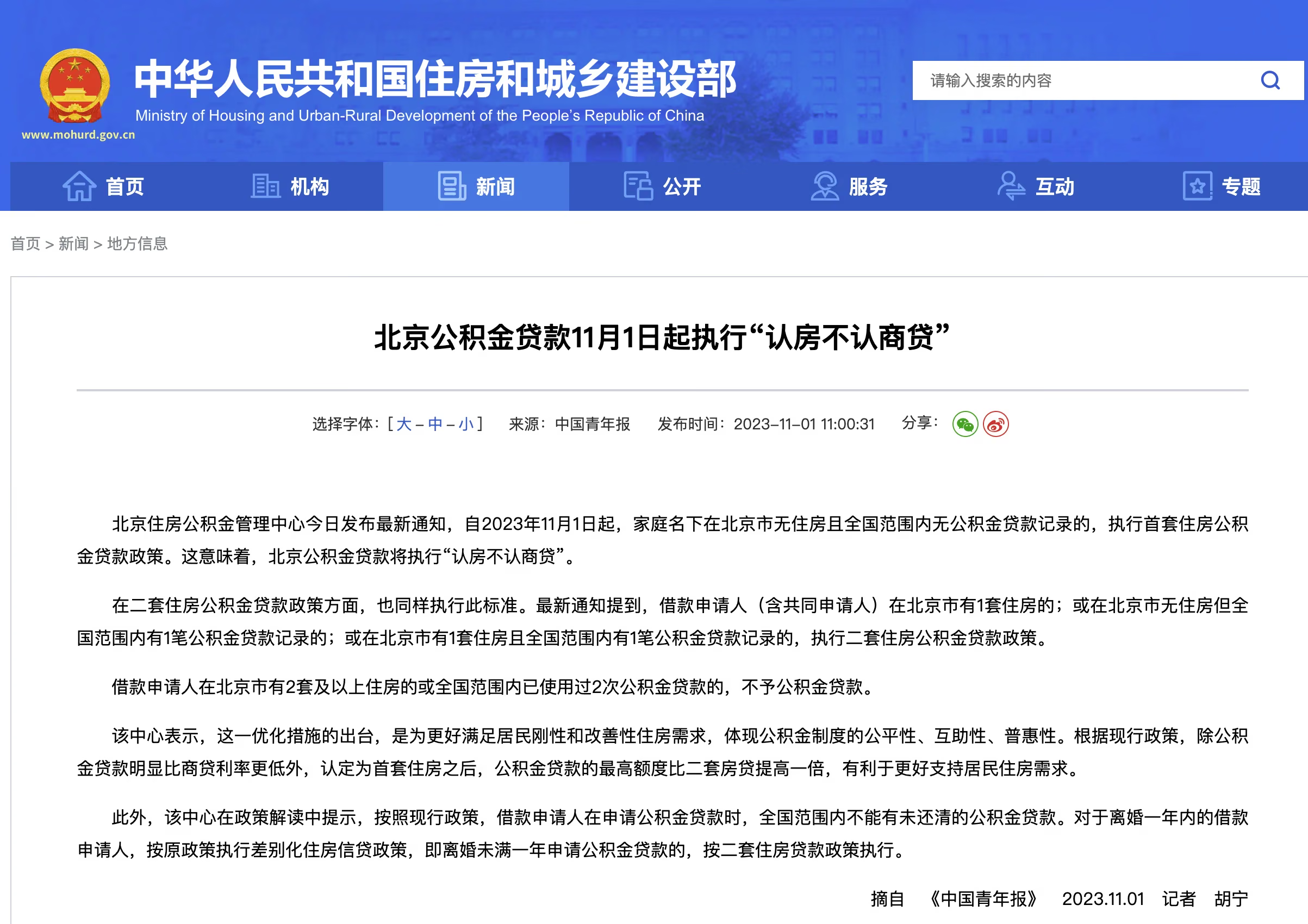
Beijing finally lifted the restriction of “limiting houses but not loans” — no longer haunted by out-of-town home purchase loan records. Beijing’s property de-restriction may have started this year. The capital has few good cards left in its hand. To reverse the economic downturn, the housing provident fund finally achieved “recognizing the house, not the commercial loan” this November. That means someone like me, who bought a house back in my hometown in 2017 and never had the chance to use Beijing’s provident fund with a commercial loan, now still counts as a first-time home buyer in Beijing and can enjoy the first-home provident fund loan rate.
This is perhaps the best policy of the year. But it seems to be of little use. People with unstable jobs think the government is just scratching an itch. Jobs are unstable and companies are laying off; nobody dares to buy a house easily. Right — after three years of pandemic consumption, everyone has come to recognize reality: save money, don’t consume, consume less, buy only what’s sufficient, no need to pursue the best. The consumption mindset has become very pragmatic. This is both good and bad. The good part is everyone understands frugality. The bad part is that with sluggish consumption, economic growth slows, and employment becomes even harder. When one of the “three carriages” of the economy fails, the side effects are very hard for people to bear.
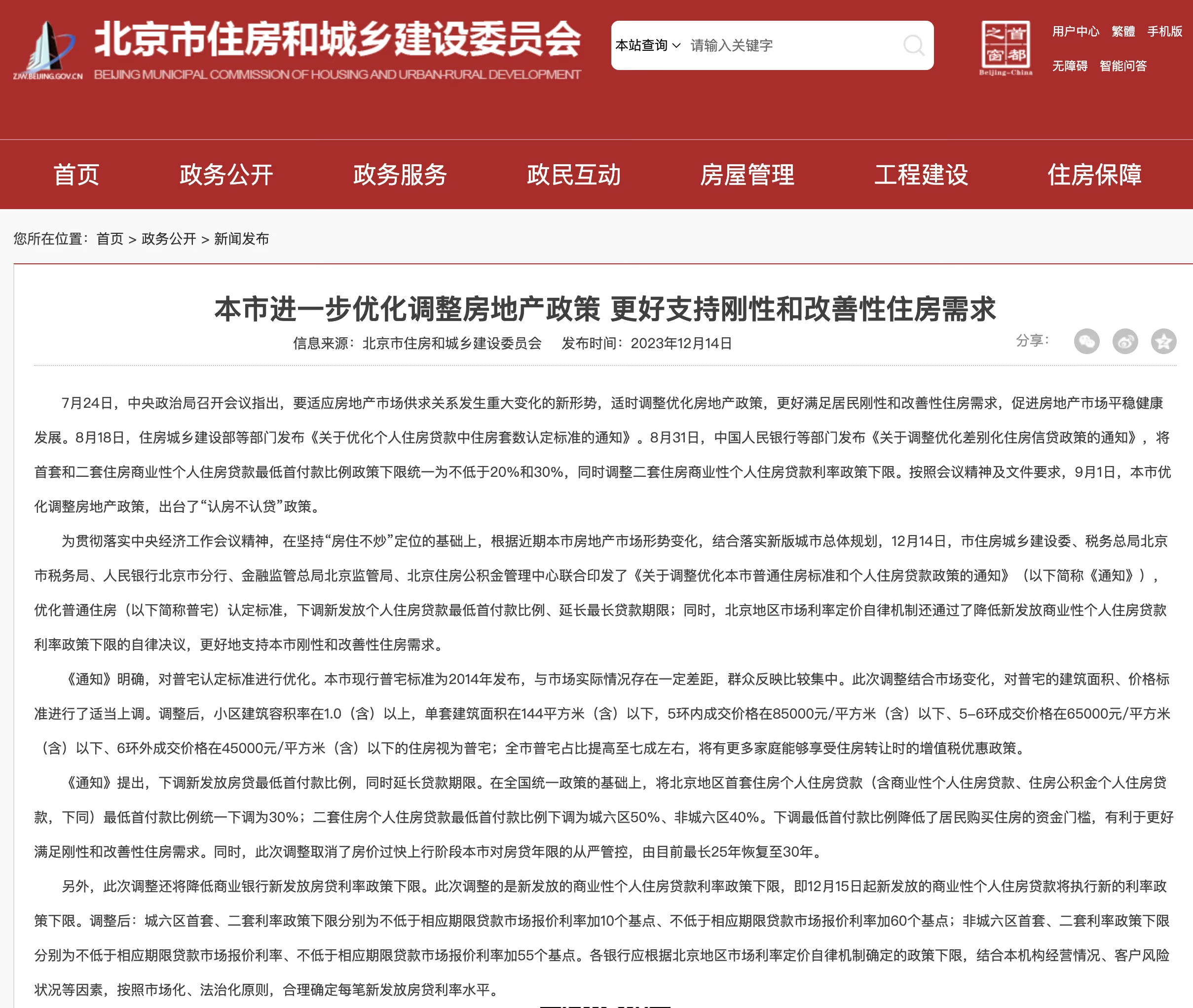
Good policies came one after another: the down payment dropped to 30%, and commercial loan rates dropped to 4.2%. In my view, this is because houses won’t sell — to stimulate the economy, they’re now harvesting leeks down to the roots.
I don’t know since when I started to enjoy browsing government official websites and following their moves. Sometimes I feel there’s a lack of a secondary website that can clearly interpret official websites — one that explains every government move in plain language. That’s actually a pretty good market opportunity.
A mediocre life
My father’s passing
This year, my father passed away. I was very saddened. His departure left me dispirited. I’ve always been a highly dependent child. Sometimes I miss my childhood, when my father was in charge of pumping water for the village’s water tower, tidying up the courtyard and preparing firewood every winter during the New Year, and lighting up the courtyard with waste engine oil on the fifteenth day of the first lunar month. In summer, Dad fixed up the roads and street corners around the house. Those years, the family was really poor, still using a 12-horsepower tractor made by FAW in Changchun. Maybe that tractor was like my father’s soul — shabby, but kept so clean it was only a step away from being skim-coated and repainted to look brand new.
Whenever I think of my father’s back, maybe only Jonathan Lee’s “Newly Written Old Song” can express the bond between my father and me. All these years I only cared about myself; sometimes my pursuits were beyond his ability to take part in. When the days of mediocre idleness quietly arrived as scheduled, I only cared about my own humble gasping, and didn’t even accompany him through his last breaths. Dad, when one day I ride the wind to see you, let’s catch up on the thousand words this article couldn’t fit.
Honestly, even when I was in college, I didn’t realize these scenes would become an unreturnable past. Only after working all these years and going home for the New Year did I gradually realize that the migration from rural areas to cities is accelerating. I really love the vegetables grown at my rural home. When I went back in the summer to pay respects at my father’s grave, I returned home and took some vegetables. The garden and courtyard at home can now only be left to the neighboring folks who haven’t moved to the city yet.
The little one at home
A few months after my father left, the little one at home was born — a little boy. The little one was quite chubby at birth, probably just like me as a kid. The little guy is very lively. My wife insisted on giving birth back in our hometown. Even the naming was decided by two senior medical doctors from my wife’s family exchanging opinions. Unfortunately, Dad never got to see him.
The remaining task, perhaps, is to accompany him growing up healthy and to learn English together with me. The arrival of this little one brought something unexpected — my relatives adore him. My wife’s relatives, from old to young, stay by his side every day.
Work and residence permit
Over this past year, I successfully obtained the Work & Residence Permit that I’d lost for a long time. Buying a house in Beijing and entering the license-plate lottery no longer require 5 years of social insurance. The moment the permit was issued, I first handled the medical insurance card for the little one — the “one old, one young” program — and then applied for the license-plate lottery eligibility.
I never expected the little one, only a few months old, to already have the social insurance card that we only got when we started working. In terms of medical care, as a taxpayer, I’ve enjoyed the welfare I’m entitled to.
Shared-ownership housing
With the Work & Residence Permit in hand, the first thing on the agenda was Beijing’s shared-ownership housing. Public housing in Beijing is the only kind of house someone like me can possibly get on board. The layout and size both require trade-offs, and that goes for future selling and renting as well. 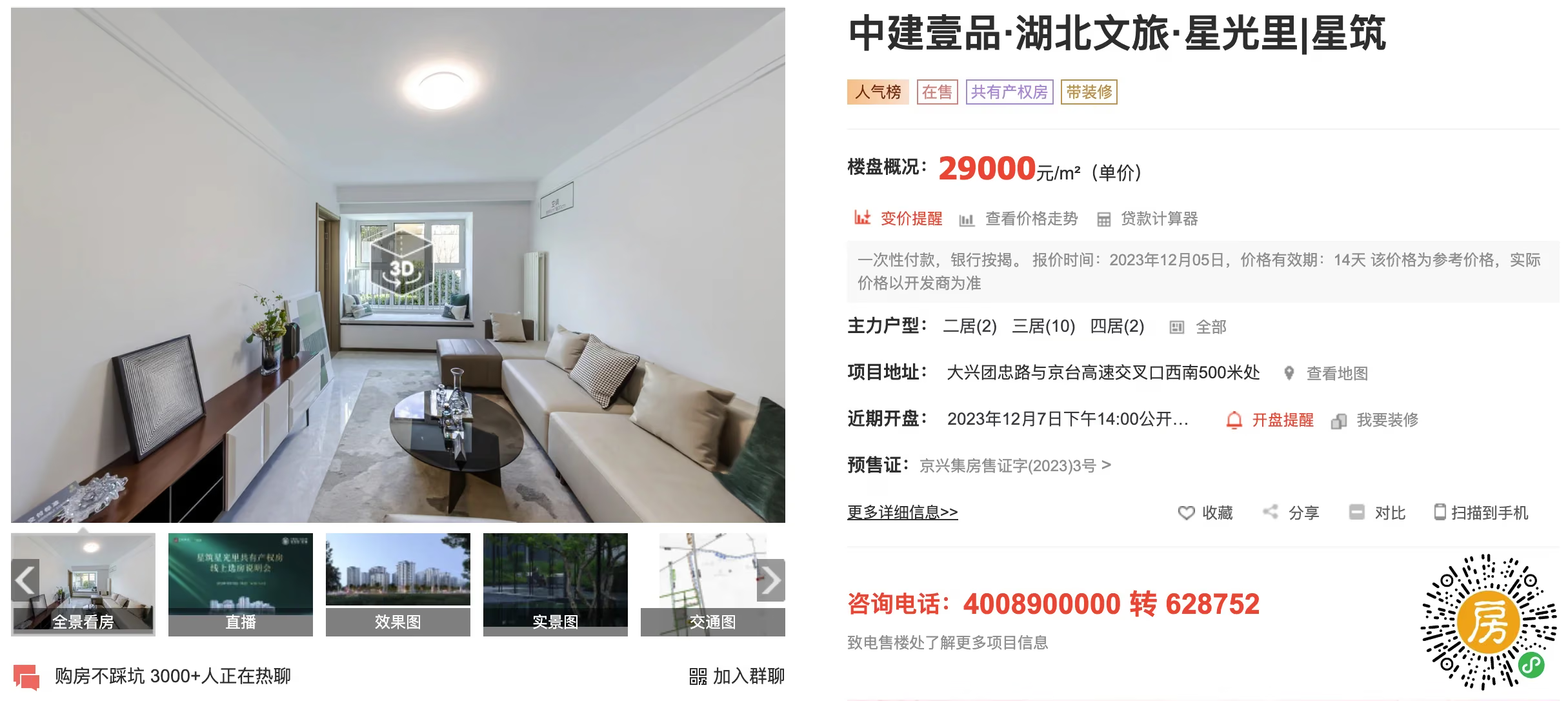
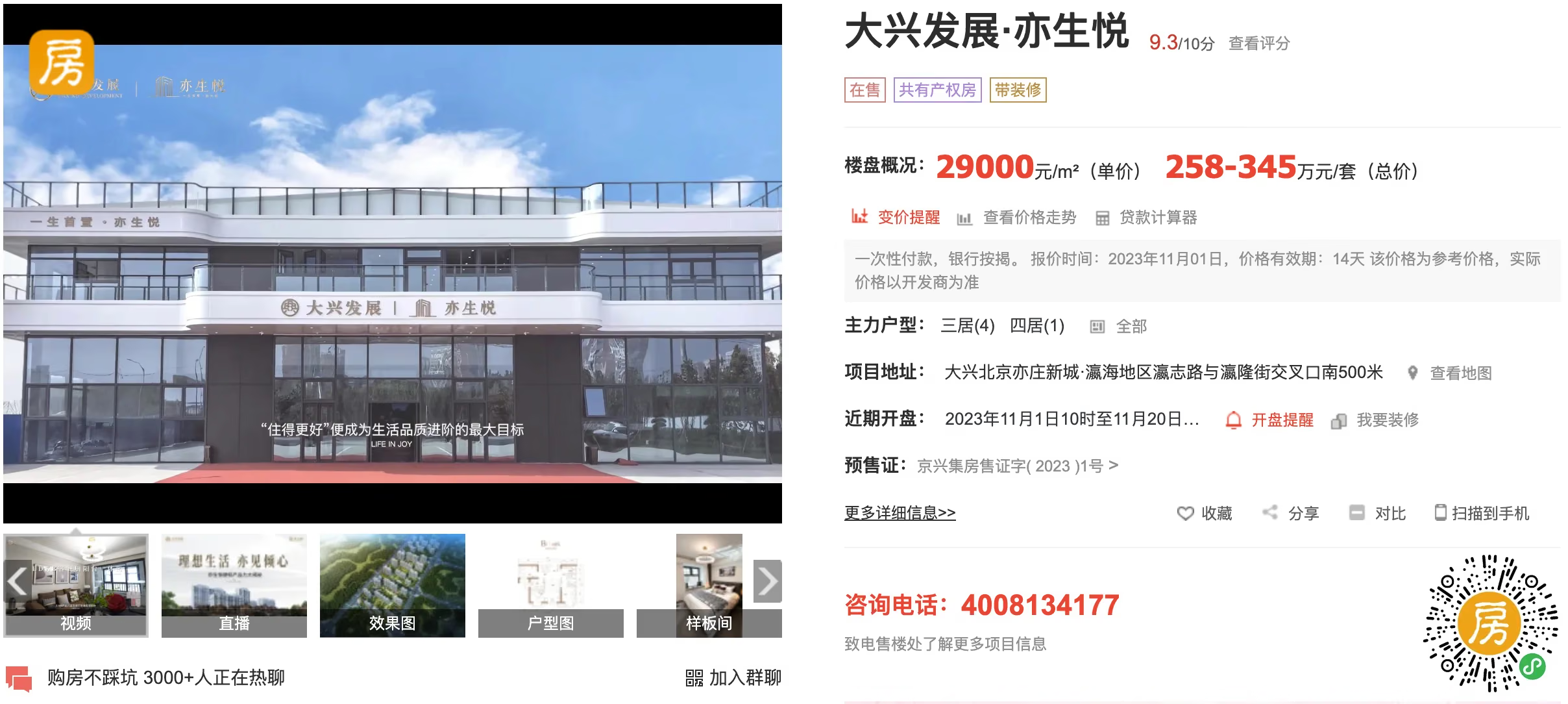
This shared-ownership housing has very strict requirements for buyers. It’s not just about having money — you must never have had any housing transaction record in Beijing, and singles must be over 30. Ever since Beijing lifted the “limit houses but not loans” policy, and with the recent policy lowering the down payment ratio to 30%, buyers might have a little more confidence. Non-Beijing-registered buyers are also divided into several groups, mainly based on the number of applicants and the supply of units. In short, there are a lot of rules and restrictions. If you’re interested, you can refer to the Daxing District Yisheng Yue Community shared-ownership housing project application notice to see what shared-ownership housing is all about in Beijing. Basically, there’s a high probability that non-Beijing buyers face restrictions like five consecutive years of social insurance, workplace location, social insurance payment district, and whether you’re a talent introduced by the district — those go into the priority group. Someone like me whose social insurance is paid in Haidian District can only end up in the last group of non-Beijing-registered buyers for selection. Good houses go to Beijing natives first and to people paying social insurance in the district where the plot is located. The six central districts are basically just there for the show.
Through this shared-ownership housing experience, I discovered two things:
- There’s also regional discrimination among Beijing’s districts. For example, for the Daxing plot, people paying social insurance in Daxing get to pick houses in the first group with priority in the lottery. Other districts basically have no chance — just spectators.
- Wherever Beijing natives are involved, policies are tilted toward them. The people who pay taxes and contribute to the capital don’t receive the most basic respect. Basically, anywhere there are Beijing natives, there’s no fairness for outsiders.
This shared-ownership housing embodies both points to the fullest. This humiliating blow may be a bitter experience that most of us must taste at some point in life. I hope those who are like me can come out of their depression and keep looking forward to the sun that hasn’t risen yet. I actually really wish Beijing could be given back to Beijingers. If our own hometowns had even a sliver of development opportunity, none of us would be stooping to fight over houses with Beijingers in Beijing. Let GDP and CPI rely on Beijingers then. Outsiders can just contribute consumption and GDP to their own hometowns. Then other regions can adopt policies like Beijing’s — buying shared-ownership housing with outsiders in the last lottery group and locals getting priority.
This is 21st-century China. Society’s civilization hasn’t yet reached a point where everyone is equal. Freedom of speech has been suppressed to the point where only the sound of gasping remains. At this point, everyone should understand why so many middle-class people who got rich have gone to other countries — Singapore, Canada, Australia, and the like. Because citizens are not granted equal rights. There’s no equal human rights or freedom of speech — only suppression, policy tilting, and disguised transfer of benefits to locals. The three years of masks gradually made everyone realize that this country of ours still has many lagging social services that can’t keep up with the pace of the times.
At the time this post is published, the shared-ownership housing lottery is still underway. I basically hold no hope — I’m just joining in to experience the process. When Beijingers stop being the last ones holding the bag, maybe I’ll still have a chance to get on board.
Going through this shared-ownership housing purchase made me deeply realize one thing: the capital will gradually split into rich districts and poor districts. Cities prefer to absorb high-income, highly educated rich people — raising housing prices and various thresholds just so these people contribute more to the city, while weeding out the poor who can’t contribute more. The rich will enjoy better education and living environments, forming monopolies and capital in the city and enjoying more resources, while ordinary people who can’t get a foothold will slowly be squeezed back to their hometowns. Going home puts pressure and burden on the local government’s finances and elderly care. In small cities, a family works hard to raise a top student, who then goes to developed cities and better countries; the hometown can’t retain talent because it lacks better resources, so it can’t develop. Small cities develop worse and worse, big cities better and better — forming a vicious cycle. The capital, through its welfare, has attracted all of China’s rich and knowledgeable people, forming monopoly and prosperity. Talents from all over the country supply the capital. More than 80% of the financial resources in the city’s banks are concentrated in the hands of less than 5% of the people. Big cities form solid social classes, occupying outstanding cultural resources and vast wealth, while other small cities and small towns ultimately become the capital’s sacrificial offering. My house-grabbing experience in Beijing taught me that a city’s prosperity comes from absorbing many different groups of people from all corners of the country, who build the city and extract wealth from it. When a city loses fairness, forms classes and monopolies, and arbitrarily mocks and seizes others’ rights, it will eventually face retribution. Even if Beijing becomes an international metropolis, the quiet and desolate lands of other provinces beside it have been witnessing everything that once happened here. I truly hope this mega-city of Beijing can give the people striving within it more warmth and a foothold, letting them share in the fruits of the city’s development, and create a fair modern civilization — treat us Beijing drifters kindly, because these are nameless strivers, the embodiment of countless ordinary people. Don’t let us be driven away after contributing, vanishing without a trace.
Hard work

Over this past year and a half, I’ve spent almost all of my time working for and surviving at Tencent Music Entertainment’s Kuwo Music team. The company used to be in the National Convention Center; this July it moved to Dongsi Shitiao, from outside the 4th Ring Road to inside the 2nd Ring Road. The most direct pain point is that my commute went from a 30-minute motorcycle ride to a 1-hour subway ride. The worst part is I can’t ride my motorcycle anymore. Quite sad. But there’s a silver lining: with more time on the subway, I now have a lot of time to study. I get about 2 hours of study time each day commuting to and from work, though conditions are tough — it’s crowded, and I stand almost the whole way.
Sometimes I don’t even want to tell my classmates and teachers back home about this, but some things need to be faced; even without saying it, they understand. It’s just that in recent years, as job opportunities shrank, many people on the subway have picked up books and watched tutorials on their phones. I’m really not exaggerating — you’ll feel it when you ride the Beijing subway. Only continuous learning and raising your awareness can make you stand out. Most people are working hard; if you stay put, aren’t you just coasting through life waiting to die? Saying this might sound like it’s competitive to the point of being “involutionary,” but this isn’t involution — at most it’s everyone reasonably using their spare time to recharge.
The team recently lost two people to layoffs. At work, many colleagues are stepping on the brakes; sometimes I step on the gas, sometimes on the brakes. Sometimes I feel: this is just a job, don’t overthink it. For an obsessive, neurotic programmer, I’ve gradually learned to compromise and stay quiet. The company’s various cost-cutting and efficiency-boosting measures have worn employees down to the point where nobody has the mood to work hard anymore. The feeling is like waiting to be laid off and walking away with the severance package. I’ve lost too much confidence in the development skills I was once good at.
Still, I can do some technical accumulation in certain development areas, preserving that once-passionate love for technology and the drive to increase my influence.
In October, I developed a widget and submitted an article to the Tencent Music technical team’s official account introducing some development details. 
When the internal reviewers went through the manuscript, they cut it down to nothing but details with no technical substance. The core content wasn’t allowed to be made public, mainly to maintain the industry-leading position of the tech. I’d like to record here my thoughts on having my submission cut down:
Sometimes I feel ashamed to be an iOS developer at TME. It makes me feel selfish — we keep taking in knowledge from the internet without ever contributing valuable content outward, with no open-source spirit. The main reason for this problem is that anything valuable you make isn’t allowed to be public, purely to maintain this technology’s leading position in the industry — though of course this kind of “technology” is limited to content without much technical substance. This kind of closed leading position strikes me as both laughable and pitiful. Laughable because we always emphasize “leading” in trivial skills and details; pitiful because we all grow in a closed-source environment, building behind closed doors — which is exactly what created today’s industry involution, and we’ve never led in fundamental science. We all know deep down that we stand on the shoulders of open-source giants to be where we are today, yet we have to compromise with the reality forced by today’s job market. Being open source means giving up your leading position, means not following orders, means being laid off.
At this moment I understand that the biggest enemy preventing me from becoming a developer with an open-source spirit is “poverty of wealth” — in plain terms, being short on money. In essence, it’s poverty that forces us to have no right to choose. In other words, we lack the knowledge to break out of the restrictions poverty imposes. So I still need to improve my knowledge and awareness through learning, to work toward financial freedom down the road.
In 2023, I shallowly believe that the basic content of work is exchanging my cheap technical skills for basic life security. There’s nothing much to say — it’s all kinds of dazed bewilderment. No career planning, no grand ideals, only the tenacity of burying my head in hard work.
Not being good at learning
Courses I studied in 2023:
- Flutter development tutorial
- SwiftUI development tutorial
- HarmonyOS 4.0 development tutorial
At the beginning of the year, to save Bodian Music, the app whose growth was about to slow down, I was seconded to support Flutter development. The main work was migrating the live-streaming SDK provided by the group and interacting with Flutter. If there was no infrastructure, build infrastructure; no CI/CD, build CI/CD; no routing library, develop and integrate a hybrid navigation stack. Seizing this time, I spent my spare weekends learning Flutter — it took about 6 weekends to finish the whole tutorial and understand what it’s all about. The remaining work was doing Flutter work for Bodian.

Sharing a Flutter tutorial from Bilibili — The latest Dart and Flutter tutorial — take you into the world of Flutter
After studying for a while, I found its framework is too good — it basically does all the work for you.
In the second half of the year, I got the task of developing an iOS 17 widget, and the widget had to use SwiftUI. Right after finishing Flutter, I spent at least 10 or more weekends learning SwiftUI. 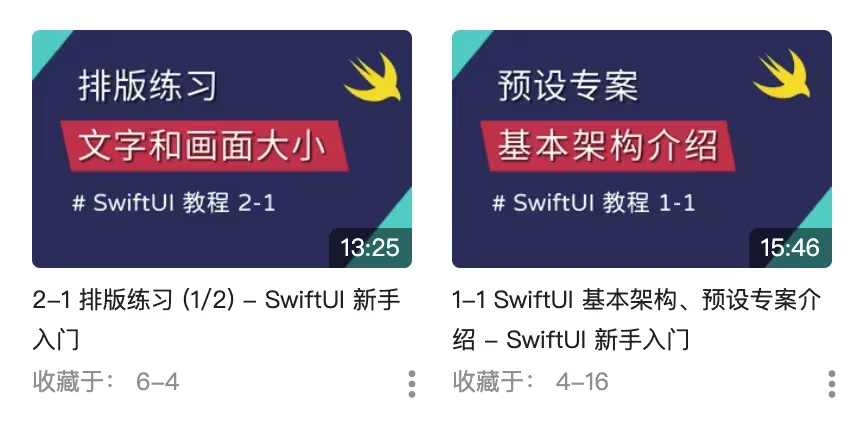
This is a tutorial by a Taiwanese beauty; it feels like it’s been out for over half a year. Some new SwiftUI content isn’t covered. The overall train of thought is fairly clear, though her teaching style jumps around a lot — be mentally prepared before you start.
In the end, I used SwiftUI to develop the Kuwo Music widget — going from learning all the way to actual code, completing a landmark leap.
There’s also HarmonyOS development: HarmonyOS 4.0 tutorial HarmonyOS explained clearly (HarmonyOS 4) — developing apps from the basics For HarmonyOS, I only covered the basics.
Official materials: ArkUI practice documentation: Developer guide: https://developer.harmonyos.com/cn/docs/documentation/doc-guides-V3/start-overview-0000001478061421-V3?catalogVersion=V3
The unreleased SDK, IDE, and simulator provided internally by the official side.
I’ve been learning HarmonyOS for quite a while. My understanding is to just practice diligently and grasp the general framework and underlying services. For deeper content, learn by doing, fighting as you go.
Bilibili is really great now — you can learn all kinds of courses, no ads, and free. Truly conscientious. I remember finishing the Swift course last year and feeling it was nothing special. But Swift and SwiftUI release a new version every year and I have to study it all over again each time — there are so many changes that I simply can’t keep up.
This is how my study time kept getting disrupted. Because my study tasks were so often preempted, I couldn’t continuously finish reading this book. Here’s my current progress: 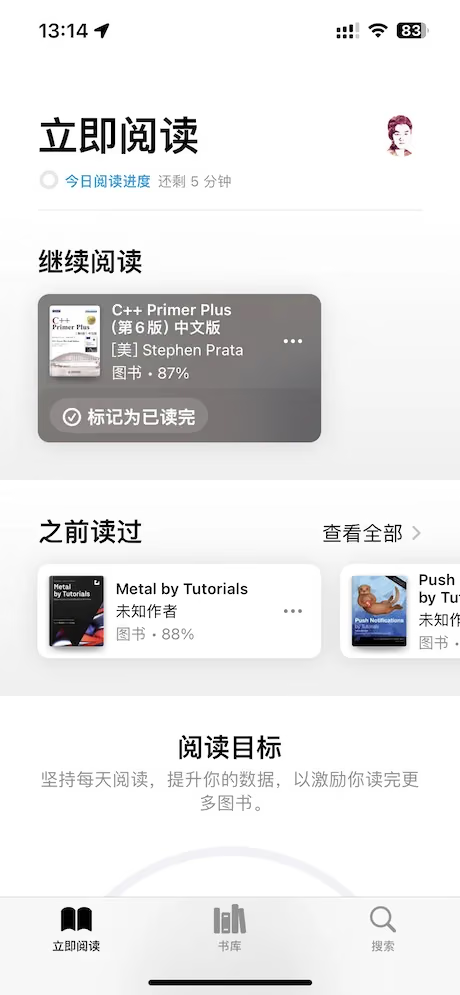 Let me explain what
 preemptive scheduling means: originally I planned to read this book during my daily commute. But often, halfway through or at some other point in progress, I’d be interrupted by new technologies like the HarmonyOS development tutorial videos, forcing me to first finish the work-related technical study tasks and then squeeze in time to learn the remaining tasks. Just like that, various preemptive scheduling kept occupying a lot of my spare time. If you’re like me, then congratulations — so far I haven’t found an optimal solution to solve how time gets preempted. I can only say that maybe I’ll have one when I achieve financial freedom.
A pile of books I have no time to read — stacked up almost as tall as a PS5! 
This year felt very tiring. There’s more and more to learn — from Flutter to SwiftUI, from SwiftUI to HarmonyOS, and then a pile of unfinished iBooks. And the drone development direction I like hasn’t even started its study plan. Working in the computer industry might just inherently require this much exhaustion. There’s always an endless pile of courses, books, articles, and tutorials to learn.
A shallow hobby — billiards
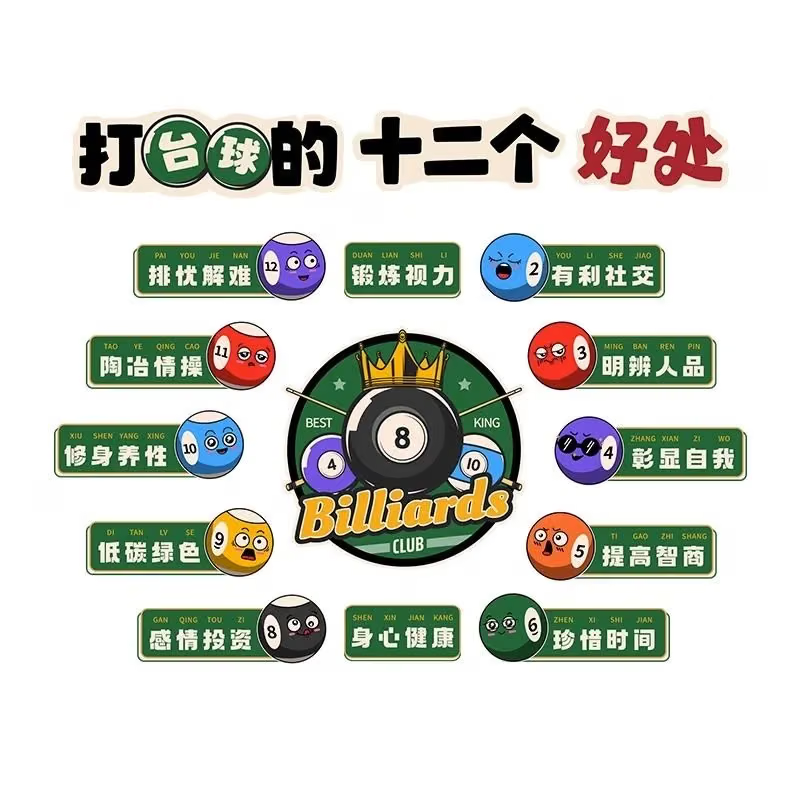
Over this past year, the company had club activities, and I gradually learned billiards with my colleagues. To this day I still organize the company’s billiards events. Billiards has a magic that keeps me — a person with no hobbies at all — hooked. My skills have been improving day by day. Every time I see the green felt my eyes feel comfortable, and when I pick up the cue, some of the unhappiness from work and life is forgotten.
Before, my understanding of billiards was only superficial. This year, by watching billiards tutorials and matches on Bilibili, I gradually developed a strong interest in this sport of ball-on-ball impact. From stance retreat, positioning, addressing, posture, grip, aiming, stroke, and power, to shot types — high, middle, low cue ball; left and right spin; control of large, medium, and small power. The 5-point drill, jump shots, english, position play and clearance, and K balls — I’ve tried and trained on all of them one by one. This year, I invested a lot of time and effort in the billiards field, though only in my spare time.
During this period, I also gradually learned about many billiards stars, equipment brands, and the sport’s development. Right now only Joy Billiards is vigorously pushing billiards toward the Olympics — it’s basically a national-level sport. In the world of billiards, only strength counts; there’s no discrimination based on education.
In recent years, billiards has gradually become one of the public’s leisure and entertainment sports. Unlike badminton or other sports, it doesn’t drain your physical energy, but its challenge level and spectator appeal are very much on point.
Here I’d like to recommend some billiards tutorials from Bilibili.
To learn billiards, you can first check out these Bilibili billiards lessons:
- Xie Zhaohui billiards tutorial
- Shi Xin billiards tutorial
- Champion Dai Yong billiards tutorial
- Gareth Potts billiards tutorial
This sport will eventually become a competitive event. There are some smoke-free pool halls in Beijing; if you like it, you can give it a try.
Let me talk about why I spend time on this. These past few years everyone has been living under pressure. Most young people can’t see hope for the future, and most choose to lie flat and seize the day. This sport is perfect for seizing the day — the cost is reasonable, affordable for the general public, and there’s a lot of fun. Maybe this is the awakening of young people: involution is brutally competitive, housing prices are absurdly high, hard work can’t make you rich, and the future holds no way out. Since life is this hard, why bother hustling? Rather than striving, lie flat.
This is how I view the current layoff wave and the problem of involution and lying flat with no way out — just three words: "let it be". Don’t fret over these things, because they’re completely beyond your ability; you simply can’t influence them. No matter how things develop, you can only accept it. Even if you feel pain and worry, will it change the situation? Our time is precious — don’t spend it on things you can’t change, but on things you can. And these years of layoffs are a contraction across the entire industry; it’s not the employees’ fault — industry problems exceed your personal efforts. If a company cuts an entire department or business line, even the best employee in it will inevitably be affected. Don’t lose heart or be anxious, and don’t doubt yourself. Since it’s already happened, all you can do is let it be. Don’t spend your time sighing and being cynical — keep learning and sharpening your skills. When the industry warms up again, you’ll be rewarded. These industries contract precisely because the earlier market demand was strong and expansion too fast; that shows their market demand is real. As long as the demand remains, there’s room to develop. Hone your skills, and you won’t have to worry about having no place to use them in the future.
Billiards keeps my spare time from being lonely, and the green felt lets my eyes, tired from a week of work, relax. It’s really just a healthy way of exercising body and mind — more interesting than going out to eat and drink with colleagues and friends after work.
Great things I blew money on
This year I used PDD (Pinduoduo) very heavily for shopping, and everything I bought was very practical. PDD is my first choice when it’s more cost-effective than other platforms. Now I’ve developed a habit when buying things that I call stalking the goods: if I really want to buy something, I hold back for half a month to watch its price. If it drops, I buy; if it rises, I don’t. Buy whenever it drops. After several rounds of stalking the goods, I found that if you buy something expensive on PDD and complain to the official customer service, they’ll definitely refund the difference — just take the complaint all the way to the end.
This year I bought fewer frivolous things. With consumption downgrading, I rarely even buy daily necessities. The following are purely amateur hobbies.
- QNAP NAS
- Billiards cue
- HomePod
- Apple Watch
- Apple Trackpad
- PS5 game discs
- Motorcycle helmet
- Messenger bag
- Monitor retrofit controller board
- Vegetable grater
QNAP NAS 464C-8G
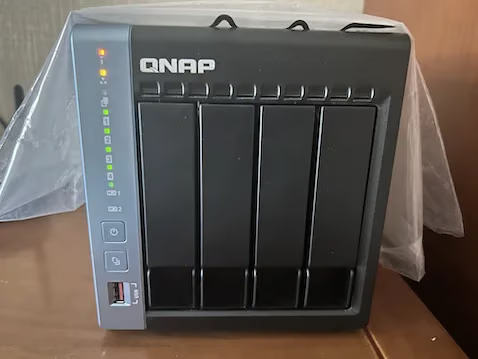
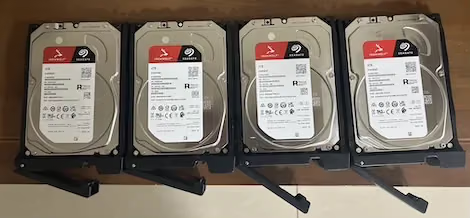
This gear is enough to store a lifetime of materials, right? It was on JD.com’s special promotion before Double 11 — bought at the member price of 1823. After getting it, I added four 4TB Seagate IronWolf NAS-specific hard drives, mainly to store materials and study content. You can set up a git server on it, run a personal blog site as cloud storage, and more — maybe only developers truly understand its value. No more worrying about changing computers: upload local materials from the cloud to the NAS, and other computers can access them easily.
Billiards cue
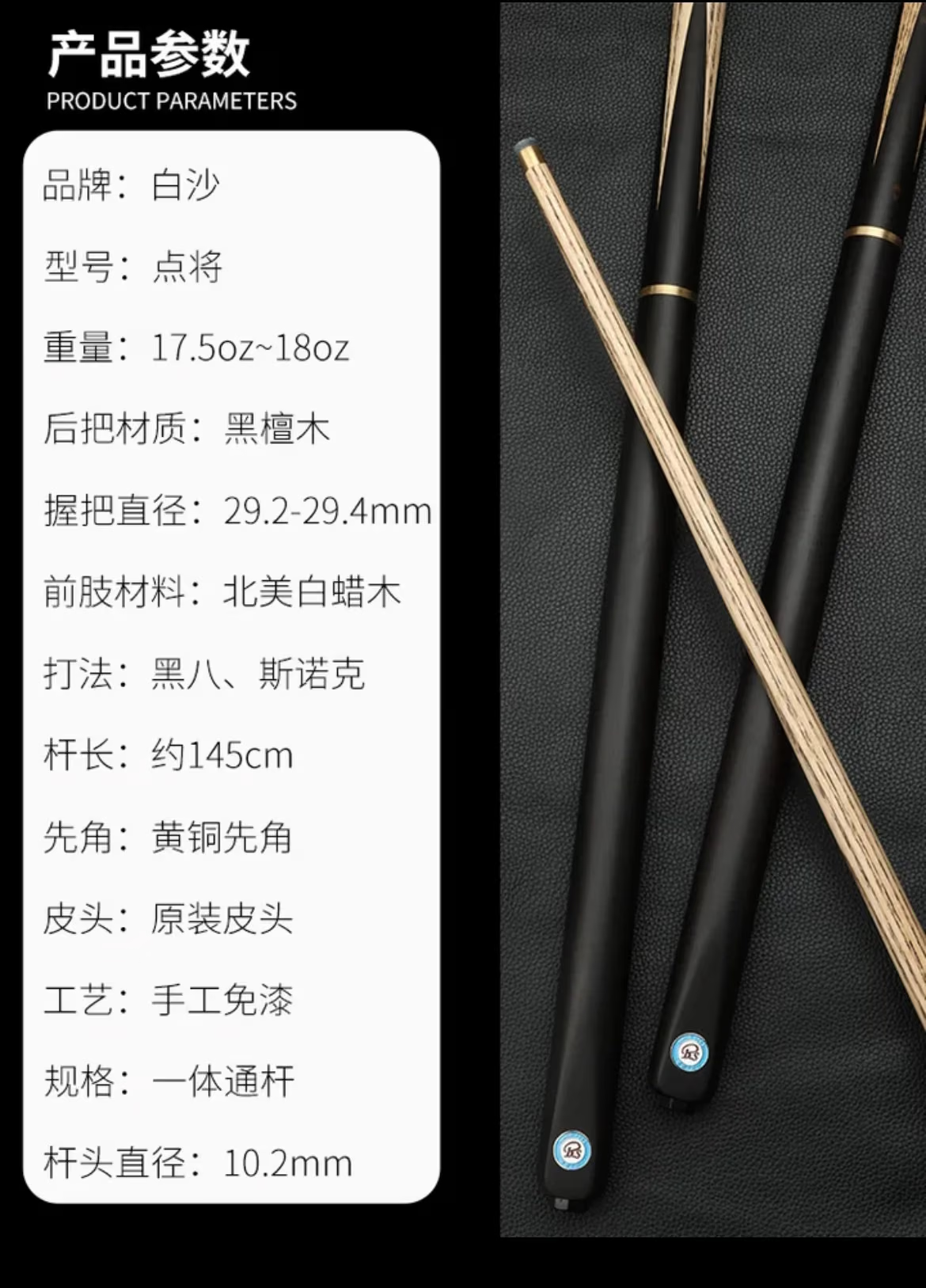
This cue can be said to give double the joy at half the price. I chose a handmade cue costing a few hundred yuan — not a famous brand, but from a very old handmade cue brand in Taishan, Guangdong: Baisha. The feel and playing experience are excellent. I really love this cue. It has accompanied me through many games with plenty of luck on its side.
HomePod

For Double 12, I’d been stalking the goods for several months; after observing the price drop below its regular level, I decisively pulled the trigger. The sound quality is excellent; the only issue is the high latency — not as low-latency as Bluetooth. This one has poor value for money, so I don’t recommend buying it — it’s very expensive. Wealthy folks buy several and set them up as stereo. The upside is you can control them individually or as a group, and also split control separately. Controlling it is simple — just say “hi siri…” to it.
Apple Watch

My old watch’s battery was done for, so I bought a battery on PDD. But when I tried to fix it myself, I found the screen coil has an NFC contact circuit, which ended up breaking the old watch. After checking, I found repairing it cost more than buying a used one, so I decisively gave up and bought the cheapest SE on PDD.
Apple Trackpad
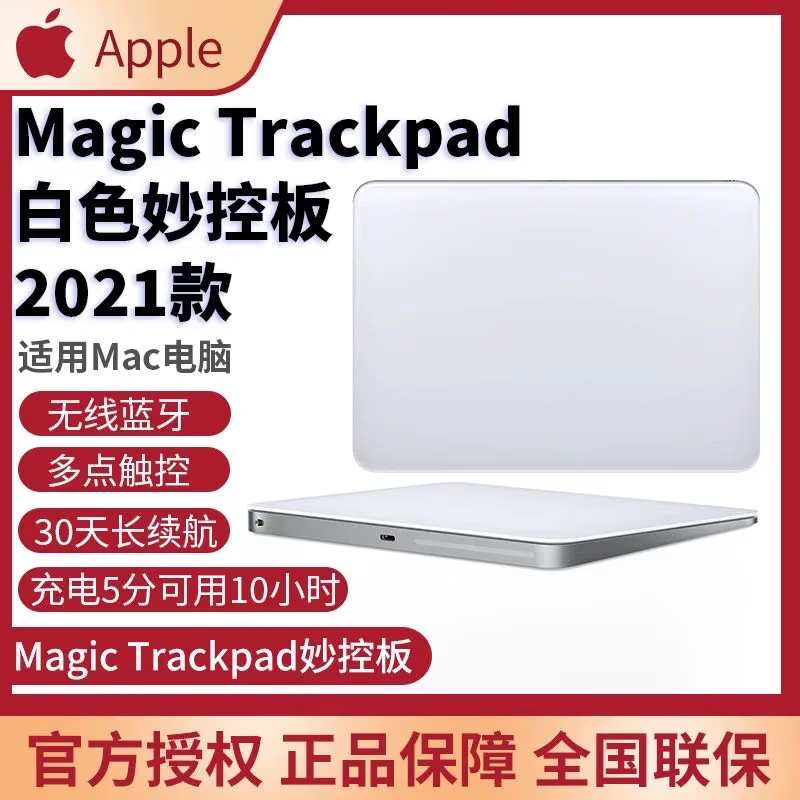
For Apple devices, the trackpad is still the easiest to use. For studying, working, and writing code, the trackpad beats the Magic Mouse by far. So I retired the old Magic Mouse and switched to the trackpad.
PS5 game discs
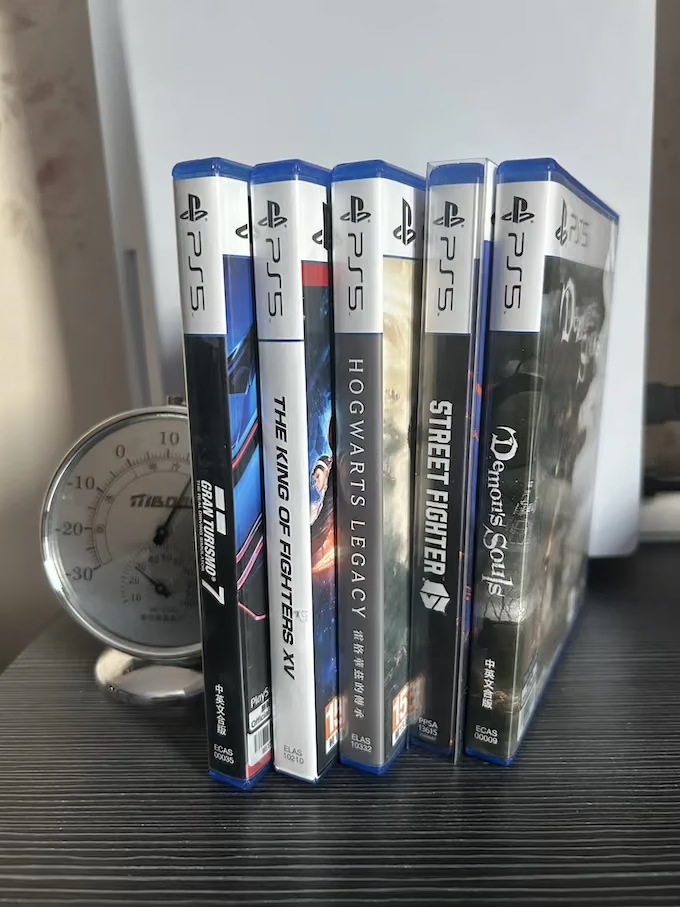
As an amateur indulgence, I bought a few DVD-style physical game discs. Consider it a collection!
Motorcycle helmet

Riding a motorcycle is relatively unsafe, so I bought a better helmet. Safety matters.
Messenger bag

To fix my pockets — which looked terrible, bulging and anything but elegant from all the stuff I carried every time I went out — and since I’m getting older and gradually caring more about my appearance and image, I bought myself a messenger bag. Actually, I bought three — the other two went to a classmate and a friend. When my father passed away, I borrowed my buddy’s car for several days and he wouldn’t take a single cent. To express my gratitude, I gave each of them a bag.
Monitor retrofit
 I had an old Apple computer that was too old and laggy. After taking it apart, I found the screen was still good. I searched online and found you can buy an MVDS driver board to turn it into a monitor. So I spent a bit over 200 yuan on a driver board, installed it, and sure enough it worked great. Turning waste into treasure — putting household electronics to good use.
Vegetable grater
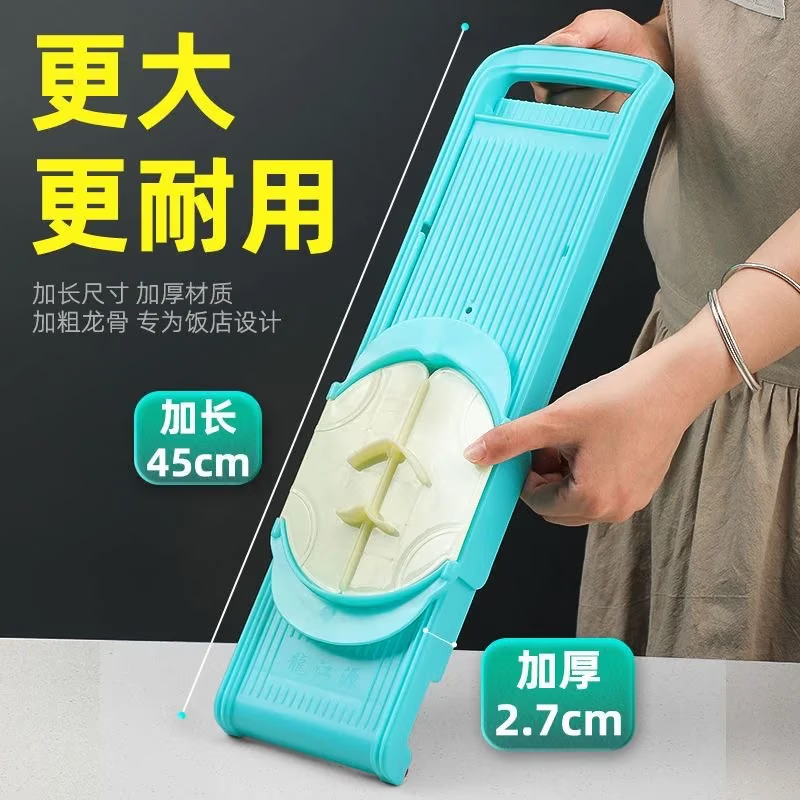
I believe you won’t realize how important this is unless you cook. I cook often and care a lot about kitchen tools. Cutting potato shreds is a real hassle. Unless you’re practicing your knife skills, I’d recommend buying the kind of grater restaurants use — the tool in the picture above. After buying it, I found even restaurant chefs seem less impressive — the tool cuts beautifully.
Summary
2023 quietly reached its end. Sometimes I really sigh: I got to live through years starting with 1 and years starting with 2 — I lived through the turn of the century. Time passes so fast that a year ends before it really begins. I hope 2024 lets me start a new study plan, keep publishing high-precision technical articles, broaden my awareness, and achieve common prosperity as early as possible. May 2024 pass smoothly — see you next year!