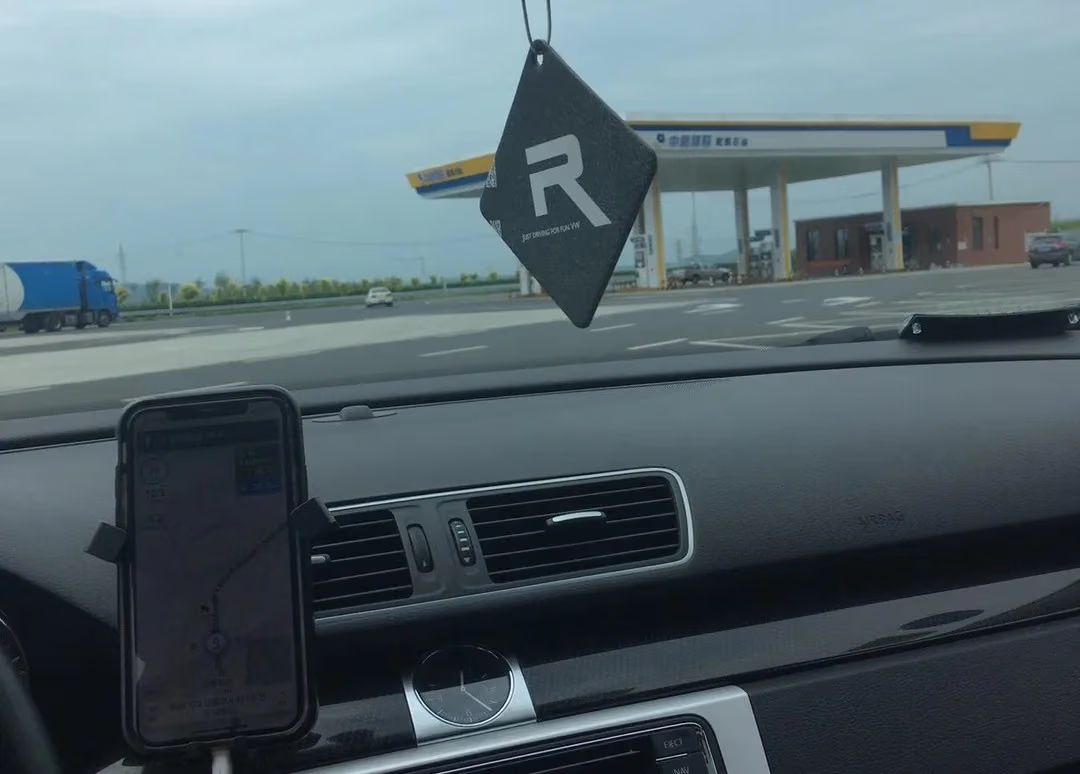
 August 2020, Shulan Service Area. On the road home, ending my years of working in Beijing.
Preface
This article carries strong personal sentiments. If you find it uncomfortable to read, please close it. This article is for personal learning records only. You’re welcome to repost or share it within the scope of the license — please respect the copyright and keep the original link. Thank you for your understanding and cooperation. If you find this site helpful, you can subscribe via RSS. Thanks for your support!
Seven years of hard work in Beijing, returning home in a single day. If someone asks about it one day, dust-covered and road-weary. Looking back, success or failure aside, what score would I give myself. Words need not be true, speech need not be real, even as a blade, I remain silent and unknown.
It’s 2020 — my 7th year of working. Recording my life and delivering my year-end summary. Every year around this time, I calm down and reflect on what I’ve experienced. Writing a year-end summary is every technical engineer’s earnest pursuit of truth in technology and passion for learning. It tests our original intention of building a tech blog and tempers our souls to move forward.
As a worker, you need to learn to entertain yourself. Writing summaries — I learned this from iOS tech leader Tang Qiao and top iOS developer Neko (onevcat). Seeing these two outstanding iOS developers publish year-end summaries on their blogs every year, as a latecomer, I should learn from them and record my personal growth.
2020 Review
This year’s events:
- Pandemic
- Return to work
- Kuaishou Speed Edition
- Selling my motorcycle
- Leaving my job and ending my Beijing years
- Going home
- Jonathan Lee
- What I consider greatness
- Sun Yazhou’s Second Theory
- Good things
- Summary
Pandemic
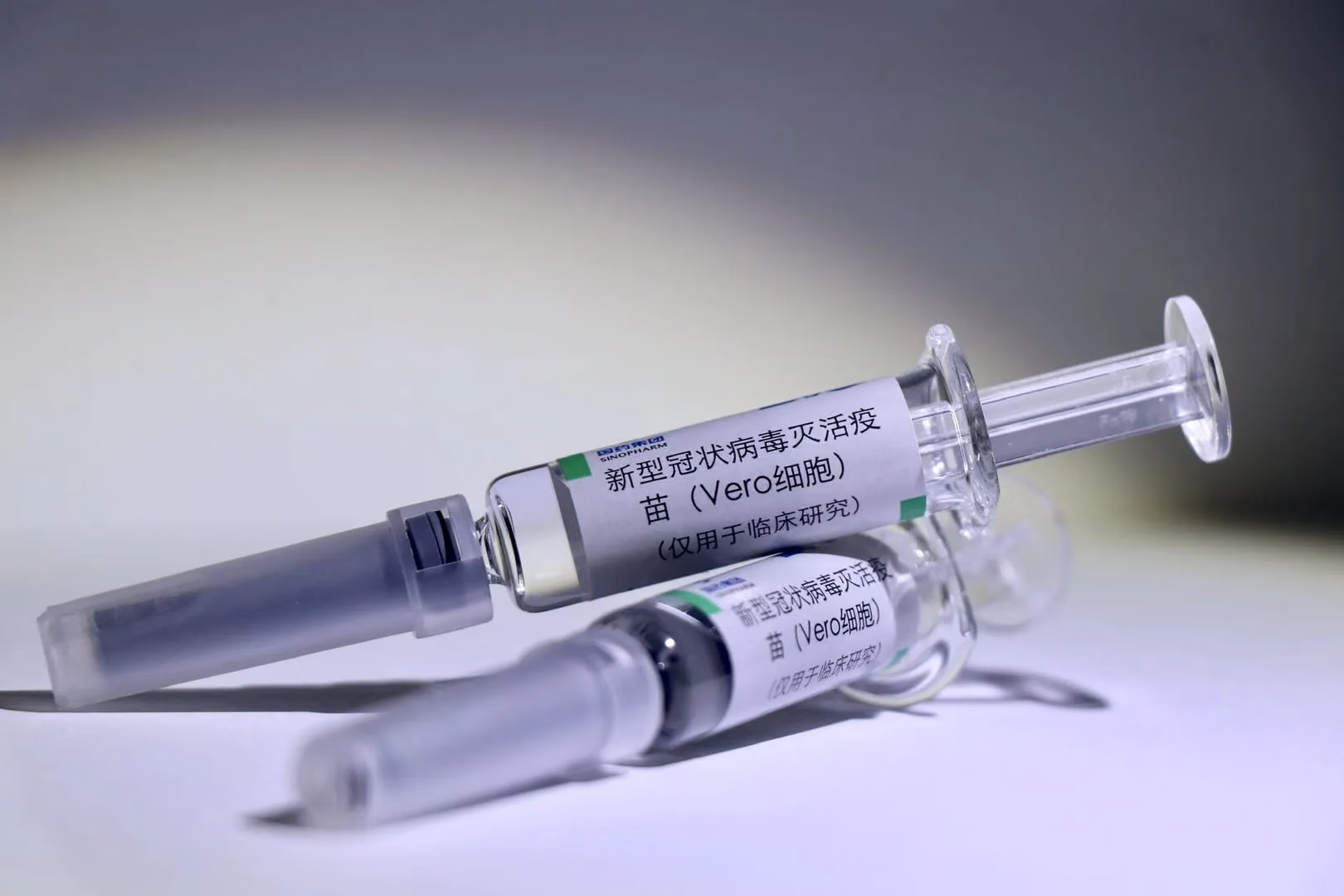
Shortly after I finished writing my 2019 year-end summary, a pandemic disease began spreading rapidly across China. We later learned it was COVID-19. In early 2020, it became even more severe. I remember our X6 team going to Chunlahao Chongqing Hotpot (Shangdi 7th Street) for a hotpot dinner, and the topic of discussion was how to buy masks. On the drive home for the New Year along the Beijing-Harbin Expressway, every service area was filled with anxiety. By the fourth day of the New Year, cities, neighborhoods, and villages began locking down. Masks, disinfectants, disposable gloves, and goggles — medical supplies were in short supply and sold out.
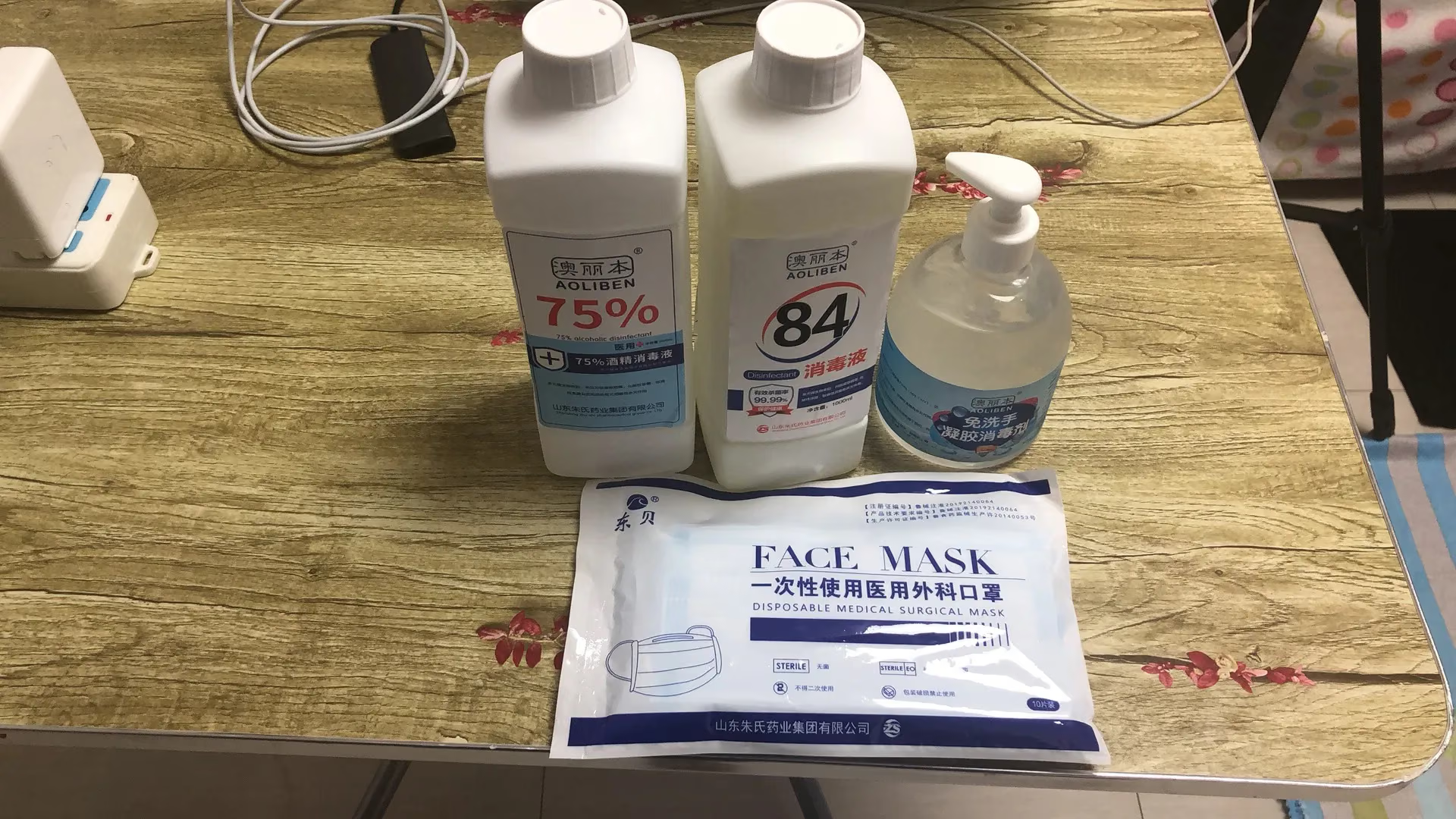
The situation became quite serious. Starting from the eighth day, neighborhoods were fully locked down. And so began a long epidemic prevention battle that lasted the entire year. As of this writing, many countries outside China are still struggling with or even losing control of the pandemic. The US is hit hard, the UK has a mutated virus spreading, frozen food products repeatedly test positive for the virus, and environmental transmission has become a possibility. All these negative developments have severely dragged down industrial production, affecting every aspect of our lives. The direct impacts include shortages of imported goods, rising living costs, increased employment pressure, economic downturn, and a noticeable decrease in per capita income.
During this year: February-March saw the peak of COVID-19, April-May saw a resurgence in second-tier cities, July-August was relatively calm and controlled, and by year-end, vaccines entered phase three clinical trials.
Perhaps this pandemic finally pushed the tech industry to break convention, making remote work a possibility. Starting from the February outbreak, I gradually started opening my laptop at home to code. But the facts proved that centralized office work is more efficient, while distributed work is relatively inefficient.
This year, China’s epidemic prevention efforts truly earned the people’s approval and praise. Outside of China, almost every other country kept reporting negative news about their pandemic response. I hope the pandemic passes soon, so our lives can return to normal. After all, we’re just ordinary folks relying on our skills to make a living.
The world I can perceive is growing larger, but the circle I actually live in is shrinking. The world is changing dramatically, and swept along by the tide of the times, it’s hard for us to resist macro-level forces. The scope of our understanding of the world often determines where we’ll go in this changing landscape. Meanwhile, the iOS development field I work in almost cost me my job. Huawei is an Android phone manufacturer, and on the corresponding mobile side, iOS — Apple — is the only manufacturer.
Return to Work
With the pandemic effectively controlled, and based on Sun Yazhou’s Theory that this country’s development requires productivity, we tech enterprises devoted to national technology construction responded to the call and returned to Beijing to resume work. After working from home for a month, let me share my feelings. I did two smart things: first, in 2019 I bought a cheap car and drove 1500 km from Beijing to my hometown, perfectly avoiding crowded pandemic areas; second, I brought my work laptop, test devices, and complete equipment home, so I could work remotely without troubling colleagues to mail equipment.
When I returned to Beijing, it was already mid-March. The drive back was exhausting — 18 hours of driving. I couldn’t stop at relatives’ homes to rest, afraid of causing trouble and being quarantined. Then I had to quarantine for 14 days at my rental. After 14 days, we started going to work in shifts.
During the work-from-home period, there was another team reorganization. Kuaishou co-founder Yixiao held a video meeting with all of us Speed Edition colleagues to explain how the company would develop, how Speed Edition would be positioned, personnel arrangements — all of it. Honestly, I had my work laptop on the windowsill, watching a new senior leader introduce himself, while everyone else stayed silent. I just quietly asked a very low question — what’s Thomas’s Chinese name? I seem to have grown accustomed to this wave-like turnover of leadership in internet companies. Constantly changing upper leadership means having to rebuild trust with superiors, a process that’s often quite lengthy.
In my 2.5 years at Kuaishou, I had 3 different bosses. My longest-held desk at Kuaishou was in a remote corner of meeting room D601. The app I worked on from 0.5 to 1 was Kuaishou Speed Edition. At Kuaishou… well, I was fairly happy.
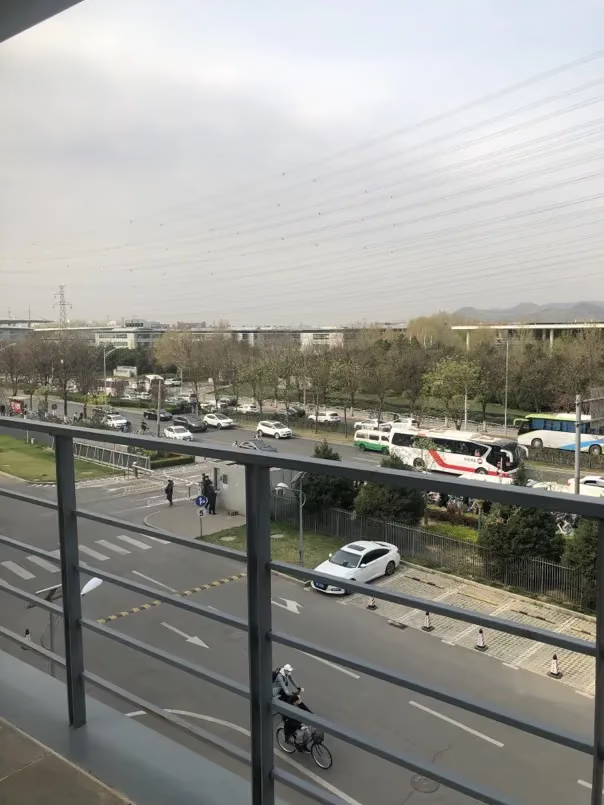
The photo below was taken on my first day back at work after the long quarantine:
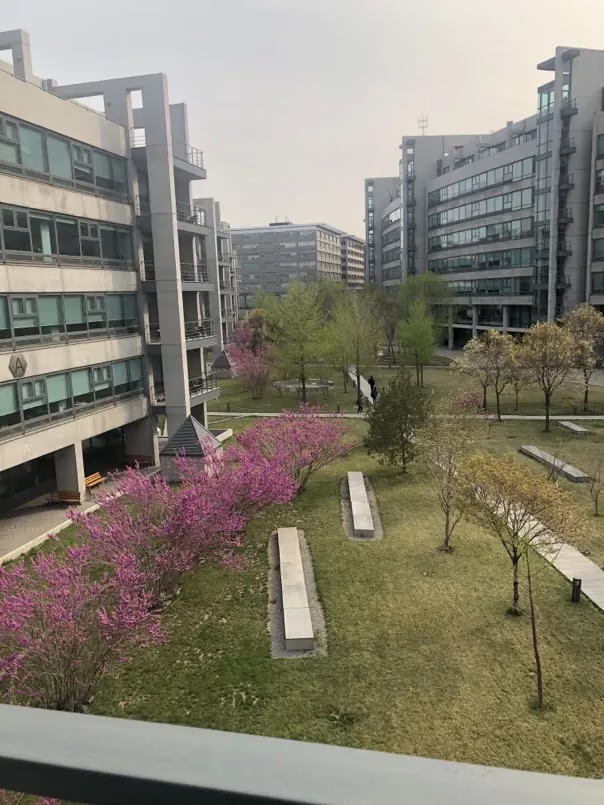
Very few people at the office:
I used to always eat breakfast at the company. During the pandemic, the company distributed isolation shields to everyone, and we had to bring our work meals back to our desks to eat.
The rest was that everyone could collect a week’s worth of masks every week. This continued until I left the company. This is indeed the humanistic spirit of a tech company.
Kuaishou Speed Edition
This is the only app I’ve witnessed going from 0 to 50 million DAU. From starting Speed Edition in 2019, to the team being assigned to X6, to being split into a single-column swipe team. I personally experienced its growth. At the end of 2019, Kuaishou exclusively sponsored the Spring Festival Gala. We were told to sign a secret agreement — the gist being that the Spring Festival Gala project couldn’t be leaked. It was a company secret. Signatories had to keep it confidential from everyone, even family members and spouses. Violating the agreement would result in a 3 million yuan fine. The live streaming business I was responsible for was quite important. On New Year’s Day, the first rehearsal for the New Year’s live stream went well.
At the mobilization meeting before taking on the Spring Festival Gala project, I looked like this:
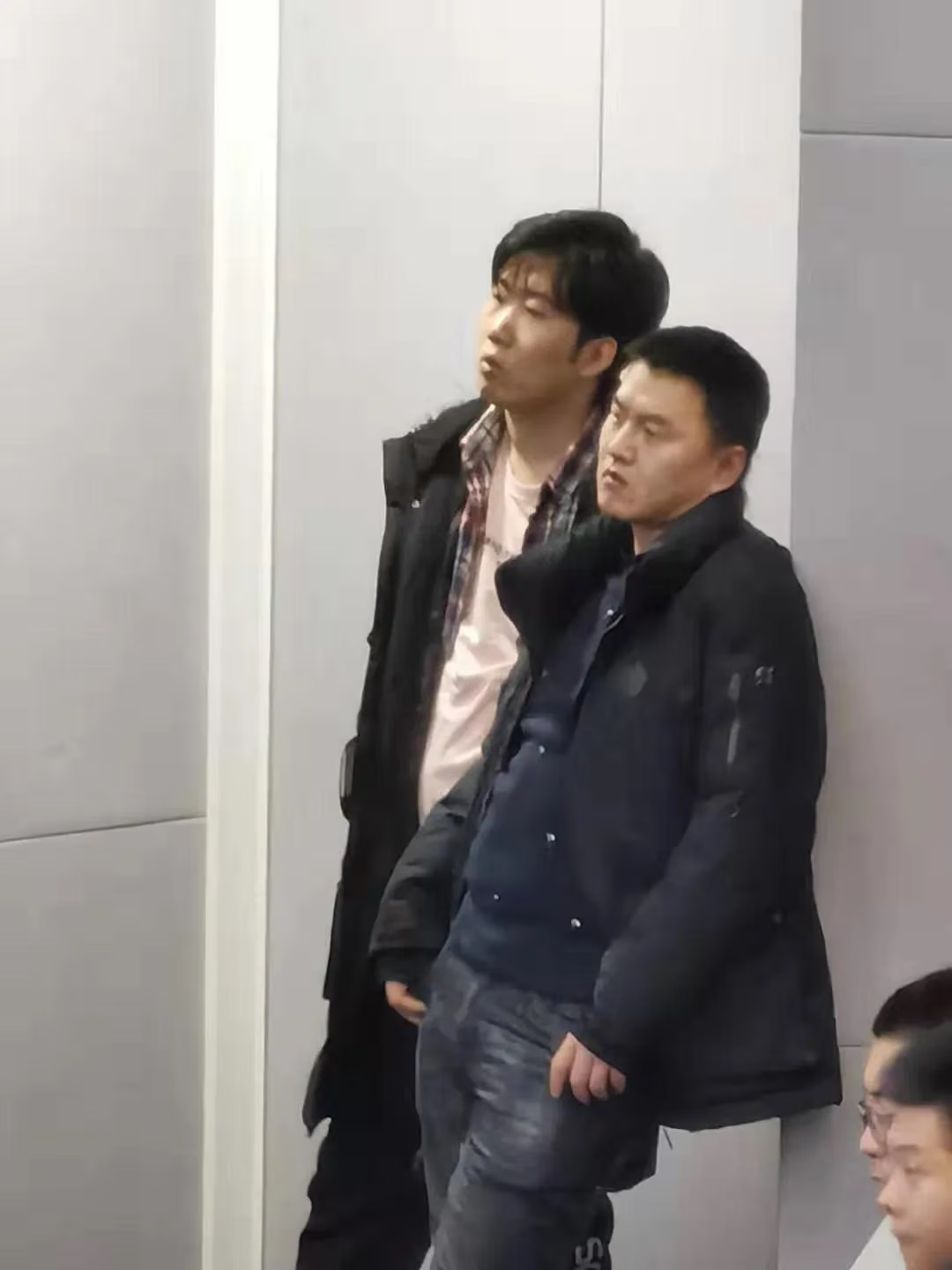
During the actual work:
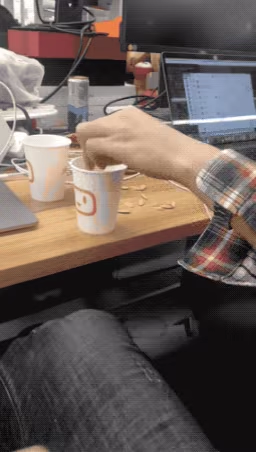
In the end, New Year’s Day was quite successful:
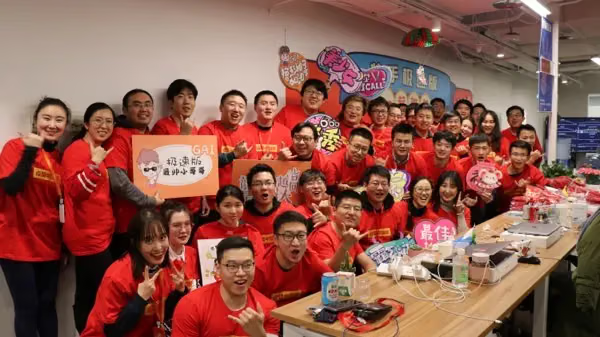
I hope these photos will withstand the test of time. Even if they’re of no use, they serve as indispensable material for the blog.
Selling My Motorcycle
After working in Beijing for so many years, I went through N electric bikes — either they kept breaking down or charging was too troublesome. That eventually led me to decide to buy a good motorcycle for commuting, to ease the feeling of repression from Beijing life.
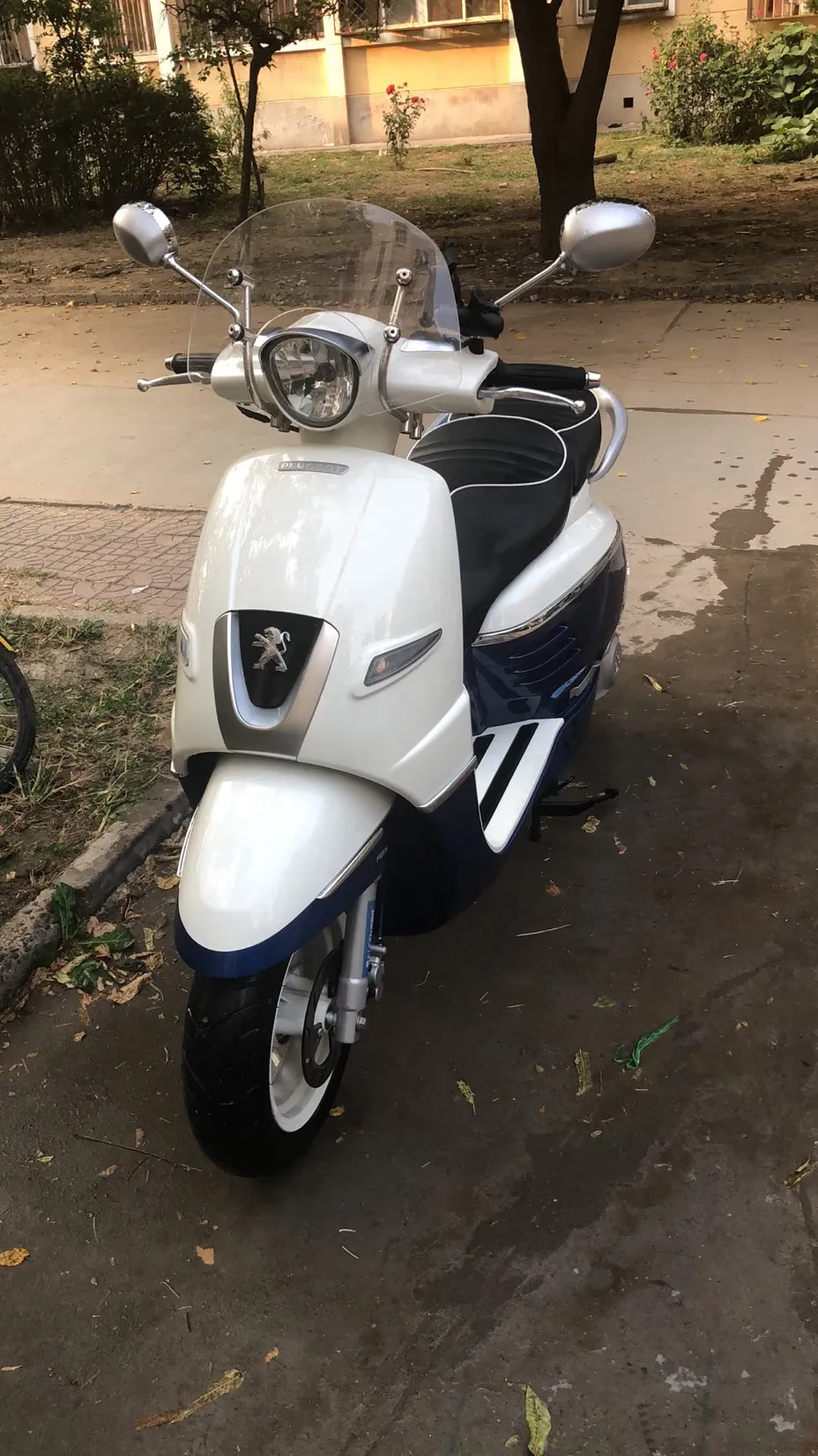
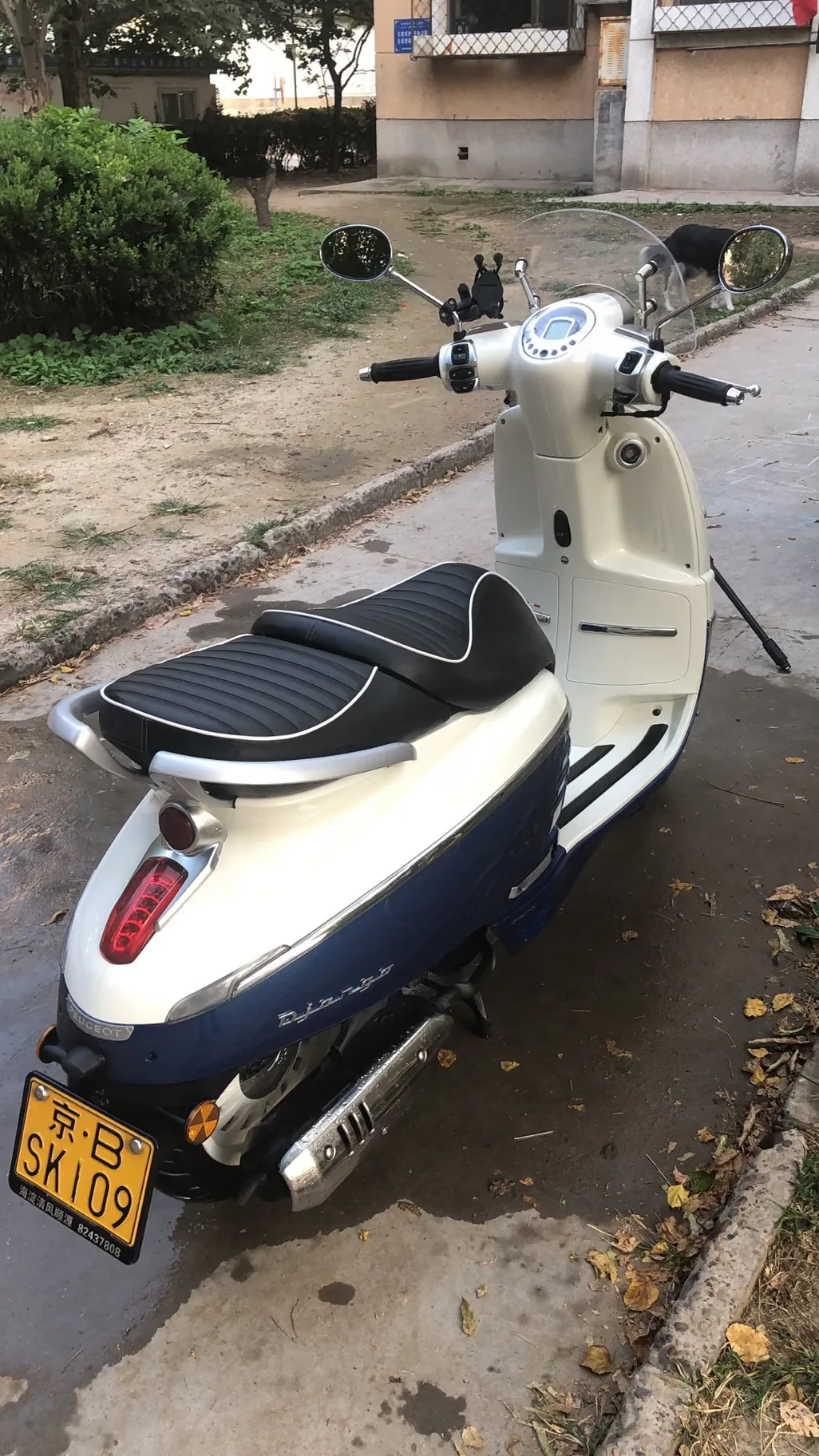
This motorcycle was the best one I ever bought, bar none. Unfortunately, I only rode it for a bit over 3000 km before selling it, because my hometown doesn’t allow motorcycles on the road. I had no way to bring it back. But at least the final selling price didn’t lose much money. I can consider it properly taken care of.
Leaving My Job and Ending My Beijing Years
Ever since I started working, I’ve always had a wish — when could I stop drifting like this, return to my hometown, find a job, and live quietly. At least not suffering as much as being a Beijing drifter. But for a fresh graduate, the first priority is to gain knowledge, skills, and self-sufficiency. Gradually, this wish became a dream that accompanied every Beijing drifter like a shadow.
In 2018, I joined Kuaishou, responsible for live streaming iOS development. During my tenure, I met many different colleagues, each technically outstanding. I attended Kuaishou’s 13th onboarding training (Kuaishou Middle School), where CEO Su Hua told us about the hardships of starting the business and the unsung investors who silently supported Kuaishou. I clearly remember Hua-ge saying: “Kuaishou wants to be a company with warmth, to let everyone receive universal benefit like sunshine.” Hua-ge’s simplicity had a personal charm. I hoped to inherit this simplicity from Hua-ge. Even though he was ranked 84th on the 2018 Hurun Rich List, I would sometimes see this CEO in the elevator. No matter how wealthy, he still drove a Buick GL6, a practical business car. Sometimes after work, I’d often see him riding a Mobike bike home on Houchangcun Road. This is also the main reason I often wore Huarui cotton-padded shoes — not to imitate this CEO’s low profile, but because I was poor.
Now, restless as I am, I only have one 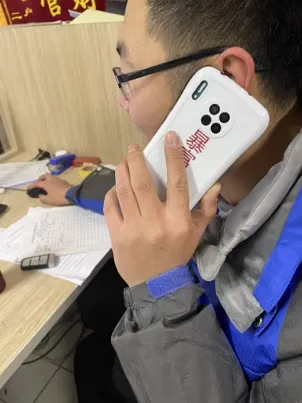 thought.
What impressed me most was when server-side leader Li Weibo gave everyone a sharing session on the process a video goes through from a user’s phone to what the viewer sees. This is something every Kuaishou employee should understand — from video production to backend processing, to video consumption. It equipped everyone with the foundational knowledge for working at Kuaishou. I benefited greatly. In my 3 years at Baidu, besides Zhibo briefly explaining the Baidu Netdisk app design to newcomers, no one was willing to explain how a keyword search goes from natural language analysis to the backend search engine processing and then returning the information content the user sees. From this perspective, Baidu should learn from latercomers’ experiences.
With the team constantly changing and always being assigned (my skills weren’t outstanding enough), thinking about my 7 years of drifting in Beijing, I often couldn’t sleep at night. With overtime leaving insufficient time for sleep, my hair started turning gray. Plus, the Beijing government maintained a high-pressure stance against non-locals coming to Beijing for employment — unequal rights, unequal road rights, but equal taxes. Anyway, non-locals had almost none of the equal rights that Beijing locals enjoyed — differential treatment. With all this, housing prices remained stubbornly high, the household registration issue was always hard to resolve, and in Beijing, aside from the dull 996 work, any road trip was a luxury for us. After all, there’s no equivalent exchange — I acknowledge that, but not even letting us have a car is a bit much. We rent for work, can’t enjoy ourselves on holidays, and Beijing drifters are treated as human batteries. My biggest worry was having to move and find a new rental every year, and not having a car was genuinely inconvenient. This oppressive life state lasted for years. Finally this year, I could no longer bear Beijing’s policy of not allowing non-local vehicles to enter, with only 12 entry permits per year. This tormented me. I still clearly remember playing badminton late after work and not being able to get a ride home. Gradually, various things triggered my reflections on working in Beijing — what did I really want? Isn’t it just to get the life I want? If this situation continued, the money might be a lot, but it would all be harvested by high housing prices, setting me back to square one. Although everyone in Beijing lives this way, it wasn’t the life I wanted. After weighing things for a long time, plus the work changes that disappointed me, I submitted my resignation and started my leave to return home.
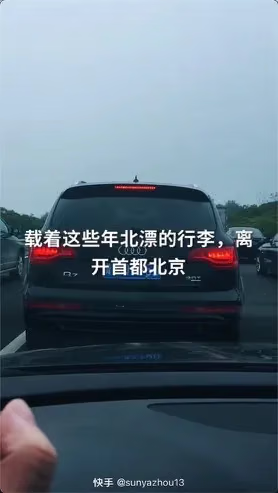
I had never been as happy as when I left Beijing. That joy was unprecedented.
Looking back at every step of my Beijing years, I walked each one so alone.
Along the Beijing-Harbin Expressway, driving my war chariot, heading northeast.
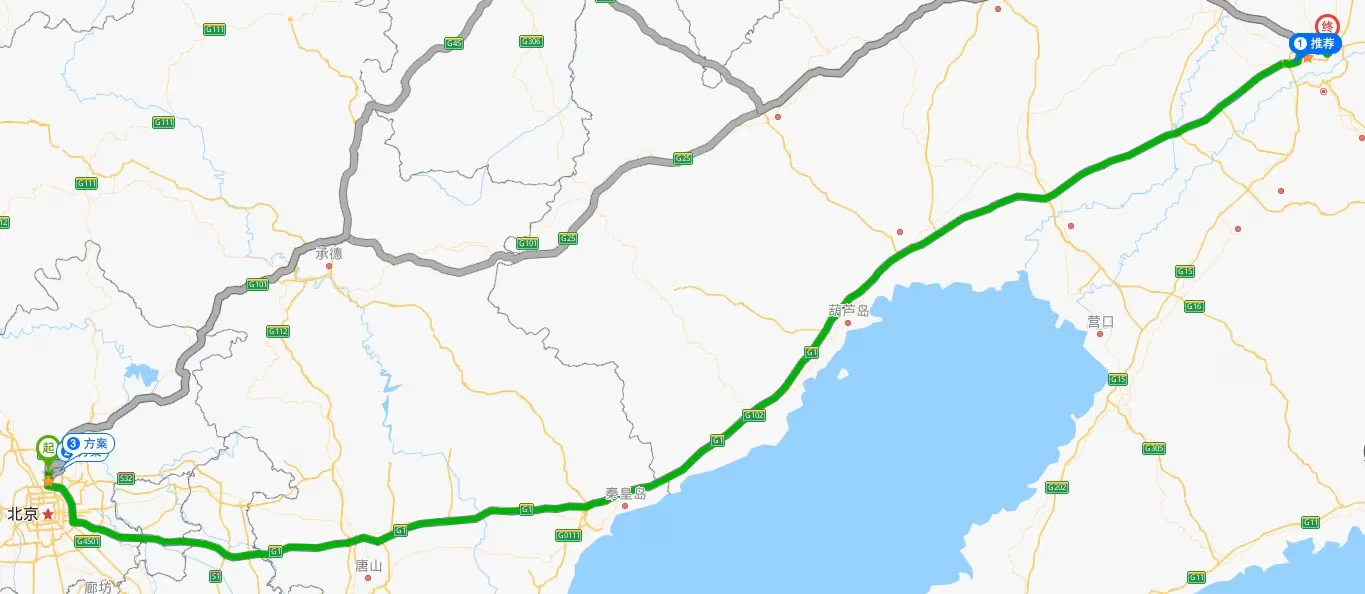
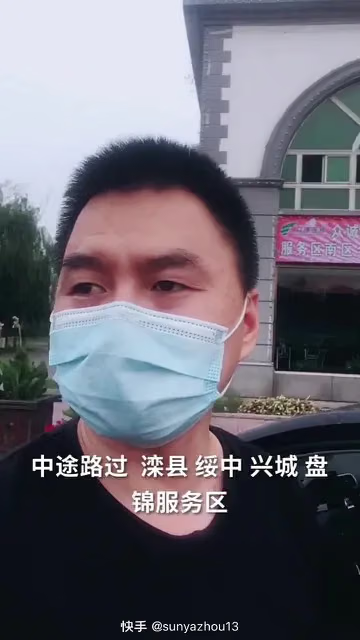
The first leg of the journey home was to a classmate’s home near Beidayaying in Tiexi District, Shenyang, Liaoning Province. After a year of pandemic prevention, residential compounds across the country were strictly controlled, prohibiting outsiders from entering. Before setting off, I confirmed that the compound allowed entry and exit, then started my journey. Liaoning Province truly has beautiful scenery. Passing through service areas like Suizhong, Xingcheng, and Tashan, I recorded the beautiful memories of this journey. Finally, at the Panjin Service Area, I took the photo below. Passing the Tashan Service Area, that twin-tower building spanning the Beijing-Harbin Expressway is perhaps the only landmark on this route!
The second leg of the journey home required a detour from the Jilin direction, taking the Jilin-Heilongjiang Expressway, through Shulan and Wuchang, then back to the Ice City of Harbin. Along the way, I passed through Kaiyuan and Tieling service areas — both very nice and modern. If anyone drives through, definitely check out these two service areas.
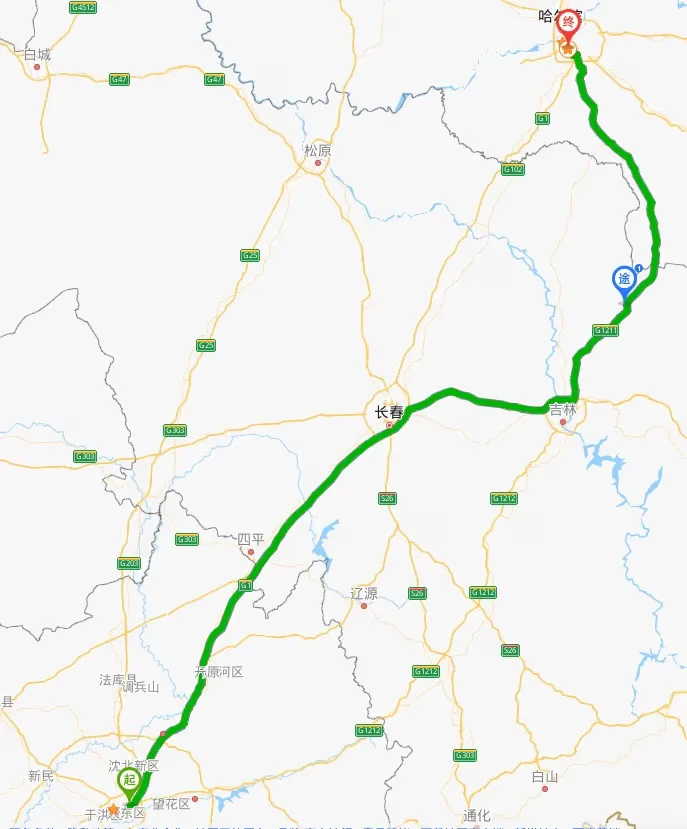
Along the way, you’ll pass by the beautiful Rime Island at the foot of Changbai Mountain. The scenery is great. If I get the chance, I’ll definitely drive there for a closer look.
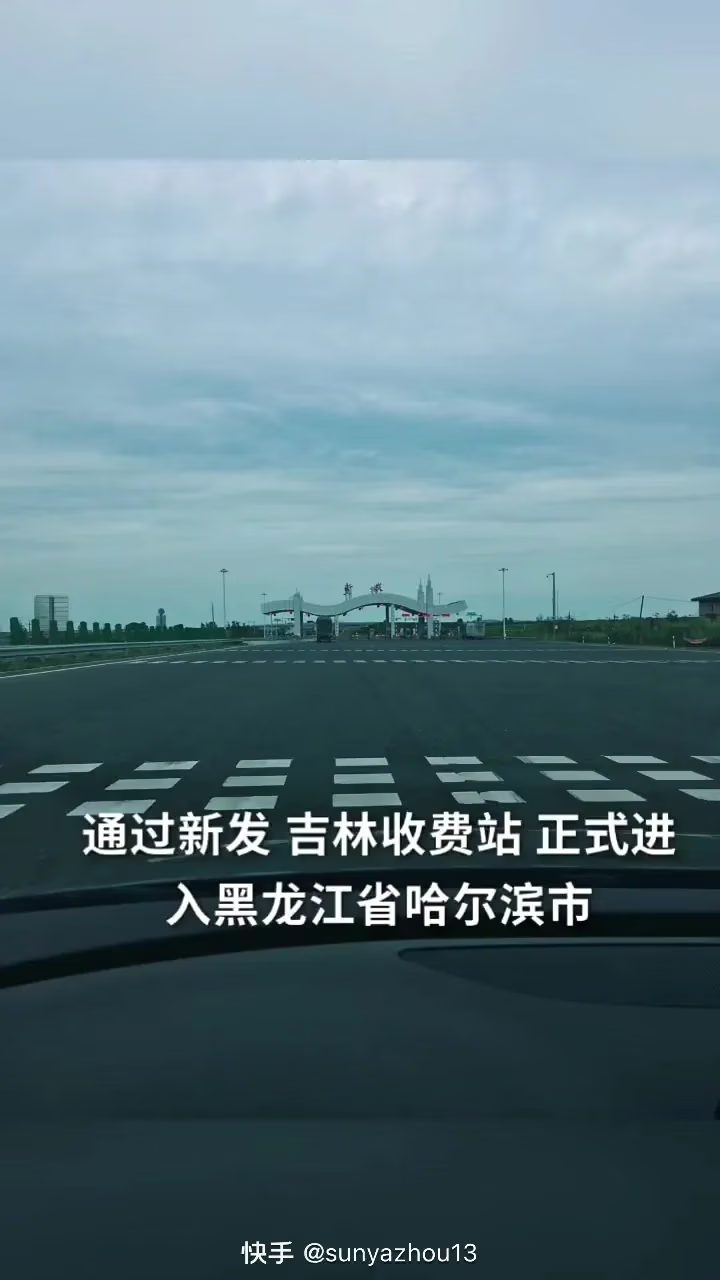
Finally, passing through the Xinfa provincial toll station, I entered Harbin. The entire trip took 2 days, covering about 1500 km.
Going Home
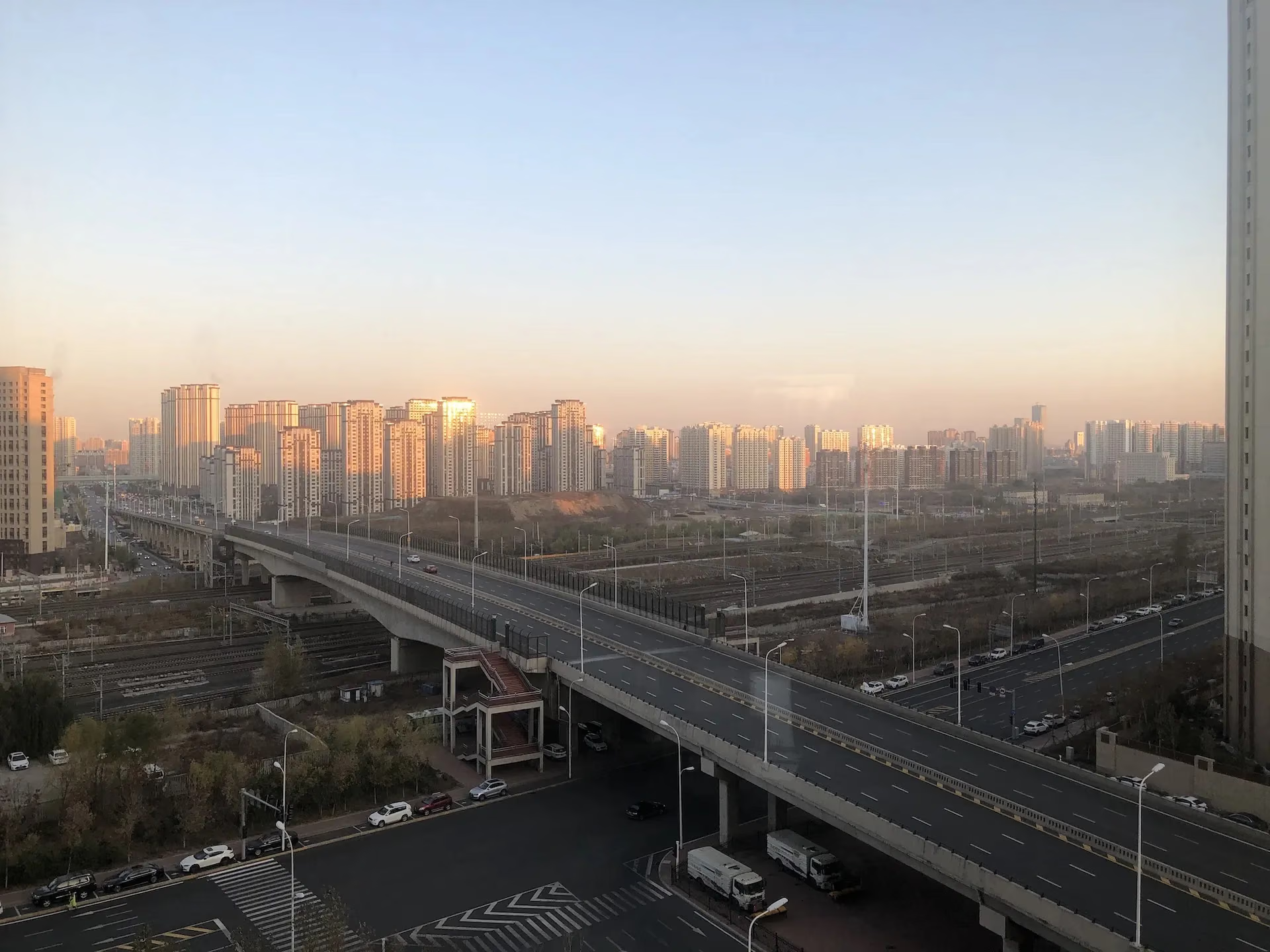
The first thing after getting home was organizing household items. The house had been unoccupied for a long time with no one to maintain it. The next step was to review the basics and prepare for interviews and job hunting. After I left my job, I frequently received WeChat messages from former colleagues and peers, all asking the same question: why did I give up such a good job and benefits in Beijing to return home? I actually want to give a direct answer here. Everyone goes through more or less job changes. The IT industry has always been a high-risk, high-reward, high-unemployment industry. I sacrificed a high salary and good benefits in exchange for the life I wanted, so these sacrifices were worth it. Even if the companies back home are all mediocre, the benefits are poor, and problems I never had to consider in Beijing become difficult here, that’s just how third-tier cities are. Even though this decision wasn’t the wisest, compared to Beijing, it’s much better. No more renting — the happiness index is higher. I can get off work around 5 PM. I earn maybe less than 1/3 or 1/4 of what I made in Beijing, but I have more time for my hobbies. Of course, I also lost the opportunity to work with many outstanding colleagues. Everyone has their own way of choosing their life — maybe this is my foolish way! I hope to devote my spare time to learning and hobbies, maintain my enthusiasm for continuous learning, and keep updating my blog with more excellent articles.
Only by accepting the various shortcomings of a third-tier city can we eventually receive the good it brings! I think this is my attitude toward life and my approach to facing those difficult challenges — challenges like an unfavorable work environment, ungenerous benefits, modest salary, and less-than-ideal career development. Friends reading this might even mock my lack of ambition. Yes, I’d rather be someone who faces a bleak life head-on. After all these years of working, I’ve grown from an ignorant novice to an ignorant expert. My learning journey and work experience have shaped me into someone willing to accept challenges.
The days of making quick money in Beijing are over. Returning to a second or third-tier city means adapting to the rhythm of earning slower money in order to go further. Before finding a career with better development prospects, this is my current understanding and thinking. In short, I’m not the kind of person who achieves nothing yet considers mediocrity precious. I would feel ashamed of having no accomplishments.
While working at Kuaishou, I met a badminton friend and colleague named Cheng Bobo. This older guy from Jingdezhen, Jiangxi, who graduated from Tsinghua University, showed me an unusual side. Every time I saw his social media posts, I’d comment “the scenery is great,” because he always used weekends to travel. What struck me most was his reply: “As a worker, you need to learn to entertain yourself.” Workers can have some fun too. The phrase “worker” encouraged my soul.
Perhaps my departure revealed the deepest pain in every Beijing drifter’s heart. Here, I want to encourage all Beijing drifters — the industry we work in is a great one. Only outstanding, exceptional, and hard-working people can rise. Let’s encourage each other to make the field of computer science and technology better.
Jonathan Lee
When you’re young, you don’t appreciate Jonathan Lee; when you finally understand, you’re already past forty. His songs withstand the test of time and sing the pain in my heart.

Actually, some of his lyrics are so real and poetic that they touch me deeply as a casual fan.
- Lonely Lovers
- You All
- Sad Metro
- I Really Love You
- Question
- Going Away
- Don’t Care Who I Am
Jonathan Lee’s voice is deep and powerful, clean and crisp. In the last month before leaving Beijing, his music encouraged my soul almost every day on my commute.
What I Consider Great
Once upon a time, “seeking truth and being pragmatic, seeking truth from facts” became my personal motto. Yet I’ve never done anything great or accomplished. When I can’t sleep, I often think about what I’d do if I suddenly became rich. Would I recklessly squander wealth or choose to steadily continue working? I found that I’d still choose to work steadily — otherwise, life would lose its meaning. Even if I got lucky and became a millionaire, I should help those relatives, friends, and siblings around me. Because in some sense, becoming wealthy means you should have the ability to manage that wealth; otherwise, you’d become inflated and lose everything. If it were me, I could choose to buy a few properties as investments, but if my siblings don’t even have basic living facilities like a house, and as a wealthy person you stand by idly — I think that’s a failed way of living. This kind of wealth that contributes nothing to society is too narrow. Li Ka-shing is one such example. This understanding of greatness — different people see different things.
Why Talk About Greatness Here?
Because too many real stories around me have stimulated my nerves. Many people indeed can’t manage the wealth given to them by others, becoming tragedies. This reminds me to always be vigilant. The greatest tragedy in life is when your abilities don’t match your dreams, yet you still compare yourself to others. I hope to live authentically.
“Sun Yazhou’s Second Theory”
When I graduated from university, I set three goals for myself:
- Don’t rely on parents
- First achieve self-sufficiency and meet basic needs
- If the first two are achieved, then work on getting rich
After more than 7 years of work practice, I hereby formally declare that these three goals will serve as the standard for measuring an outstanding university graduate’s path from poverty to wealth. I call this methodology “Sun Yazhou’s Second Theory”, “The 2nd Theory Of SunYazhou”.
After reading my rambling theory, did you “learn” anything?
Good Things
Calligraphy Desk
During the pandemic, I bought a North American black walnut calligraphy desk for studying. I quite like that Taishi chair. It’s not comfortable to sit in — a reminder that life is always uncomfortable like this.

Solid wood furniture can be a bit pricey. The Taishi chair + calligraphy desk cost roughly ¥5000+ RMB.
Volkswagen Headlight Upgrade
Since I bought a cheap car last year, the headlights were terrible at night on the highway — I almost ran over a tire, which was quite dangerous. So I recommend VW owners consider upgrading their headlights. This upgrade is fully compliant with vehicle inspection regulations. Volkswagen HID headlight upgrade. I upgraded with imported Hella 5 lenses, which are very expensive. Plus Osram top-tier D1s 6000K color temperature HID bulbs and a Hella 4 ballast.
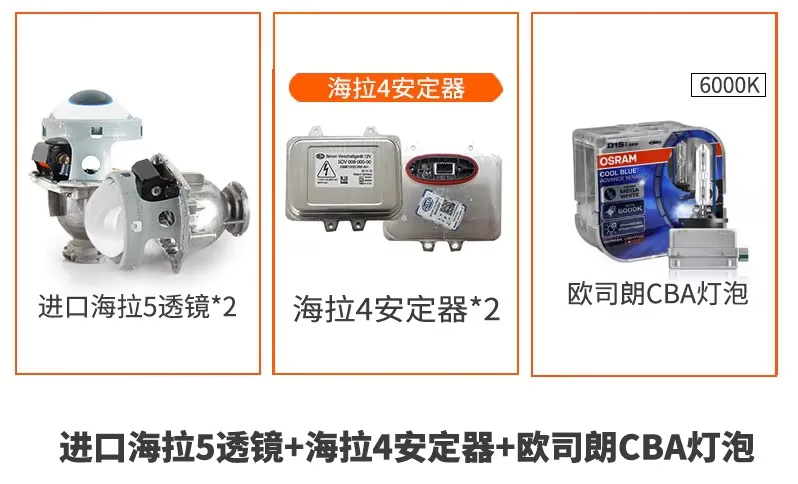

Upgrading the headlights was absolutely a necessary operation. Although this war chariot is a bit old, it accompanied me on two round trips between home and Beijing. Over 6000+ km of zero-accident safe driving — it never left me stranded on the road, which I’m quite gratified by. This May Day, I replaced all 4 Continental tires and got an MIB 682E head unit. I hope it will take good care of this war chariot’s owner in the future.
Robot Vacuum
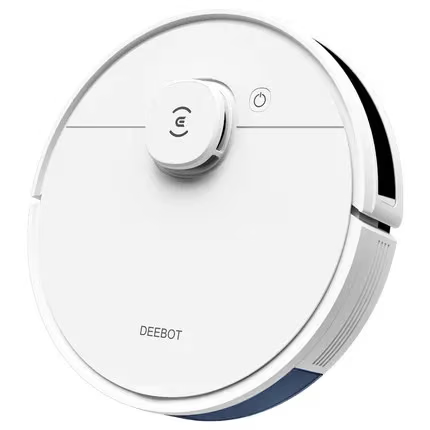
A floor-cleaning godsend that frees your hands. I’m quite lazy and don’t like cleaning. As a 3C-loving programmer, an electric robot vacuum is indispensable for home use. Makes it convenient to clean the room.
Summary
This year’s year-end summary didn’t record a day-by-day log like last year’s, nor did it mention life and study specifically. Mainly I wanted to think differently and reflect on the narrative of this article. I also didn’t mention the progress of my second five-year plan — I want to see the results of the second five-year plan.
My biggest gain in 2020 was ending my Beijing years and choosing the life I wanted. In 2021, I’ll strive forward — happiness is achieved through struggle — and work toward realizing my second five-year plan as soon as possible.