
Preface
This article is strongly personal in tone. If it makes you uncomfortable, please close it immediately. This article is for personal learning records only. You are welcome to repost or share it within the scope of the license agreement. Please respect the copyright and keep the original link. Thank you for your understanding and cooperation. If you find this site helpful, you can subscribe via RSS. Thanks for your support!
年终将至,作业催交.
州司临门,病毒被秒.
诸事皆顺,时光渐少.
励精图治,地上逍遥.
This is the 5th year I’ve kept writing year-end summaries. If I had to give this year’s summary a theme, my shallow take would be that “a year of constantly compromising after daily self-denial” fits best.
- 2021 Year-End Summary
- 2020 Year-End Summary
- 2019 Year-End Summary
- 2018 Year-End Summary
- 2017 Year-End Summary
Truly, it is only with the accumulation of quantity that a qualitative leap comes about.
2022 Review
- About Life
- About Work
- About Learning
- About Ideals
- About Great Finds
About Life
It’s been more than three years of the pandemic, and it was only until the beginning of this month that things truly opened up. After three vaccine doses, I unfortunately got infected in the first week of the reopening. Fortunately, I recovered quickly.
The 2022 Spring Festival was spent in Beijing — the only time since I started working that the pandemic forced me to spend Chinese New Year in Beijing. In the end, it’s because the world of the poor is full of difficulties. At around the same time, Russia and Ukraine embarked on a protracted war. At this very moment, on the evening of December 24, 2022, the war is still ongoing. With the gradual relaxation of pandemic controls, the pandemic will eventually be eradicated. But when this war will end remains unclear. In the US, Trump is gone and Biden has taken over as president. This old man isn’t nearly as capable as Trump, but one of his brushes paints toward China and the other toward NATO and Russia.
Under such operations, our gas prices rose from the usual 6.x yuan to the current 8.x yuan (92-octane gasoline), and since the Russia-Ukraine war started in February there’s still no sign of them dropping.
My life has been affected to varying degrees. The collective slogan of tech companies is always the same — 降本增效 (cut costs, boost efficiency) — and the wave of layoffs is met with wailing everywhere; the IT industry I’m in is the hardest hit. Not long after I returned to Beijing, I’ve already changed employers three times.
What it felt like to me is that this is the tide of the times. The choices made earlier may only raise or lower the probability of disaster, but they don’t decide the final outcome. Under these circumstances, the real economy has taken an unprecedented hit; while the economy is sluggish, every industry is cutting operating costs, and whoever can survive against this backdrop is the king. This led me to reflect on the pandemic model and my situation over these past three-plus years, and I reached a conclusion — these years, just live with dignity; the size of your salary doesn't matter, what matters is surviving. Life is always half joy and half sorrow — you have to pace yourself and take it easy.
This is truly the feeling that comes after all kinds of self-denial. It’s not a question of whether life is good or bad; it’s a question of whether life can go on at all.
In Memory of Turing
Earlier, I promised that once the new pound notes were issued, I’d buy a few to keep as collectibles, in memory of the pioneer who drove the computer industry forward — Alan Turing.

It was he who inspired my soul, driving me to keep forging ahead and innovating in the development of computer science.
This summer I went to China Merchants Bank and, by appointment, got two brand-new 50-pound notes. The front features the Queen of England and the back features Turing, the soul figure of this computer pioneer. The pound note is indeed better quality than the RMB — it even has chip circuits printed on it. No idea what they’re for, but anyway it cost over 400 RMB to exchange for one 50-pound note.
If any of you reading this think my year-end summary has at least a little value, please help share it. I plan to give away the other 50-pound note to those who follow my blog, as an encouragement for everyone to help the computer industry develop even better. Of course, this depends on which of you has deep knowledge, outstanding technical skill, an excellent blog, and has made remarkable contributions to the development of technology.
Cooking
Somewhere along the way I picked up a habit: when I’m idle and bored, I like to reflect on my various flaws, then keep summing up my mistakes and shortcomings. To test whether I truly uphold the principle of 行胜于言 (actions speak louder than words), I started practicing with one of the most technique-demanding Northeastern dishes — guobaorou (double-cooked pork slices).
What counts as making it properly?
I repeatedly watched several food bloggers on a video app. After about 10 rounds of watching and summarizing, I found that Northeastern dishes really need Northeastern chefs to make them.
So what’s the standard for a good dish?
Deliciousness is the standard. Now it’s trendy to reinvent old dishes. Some say guobaorou tastes best with orange juice sauce, others say with tomato sauce. The most original guobaorou recipe is savory, not sweet-and-sour. Whatever the sauce or flavor, as long as you think it tastes good, that’s what matters.
This is what the first attempt looked like.
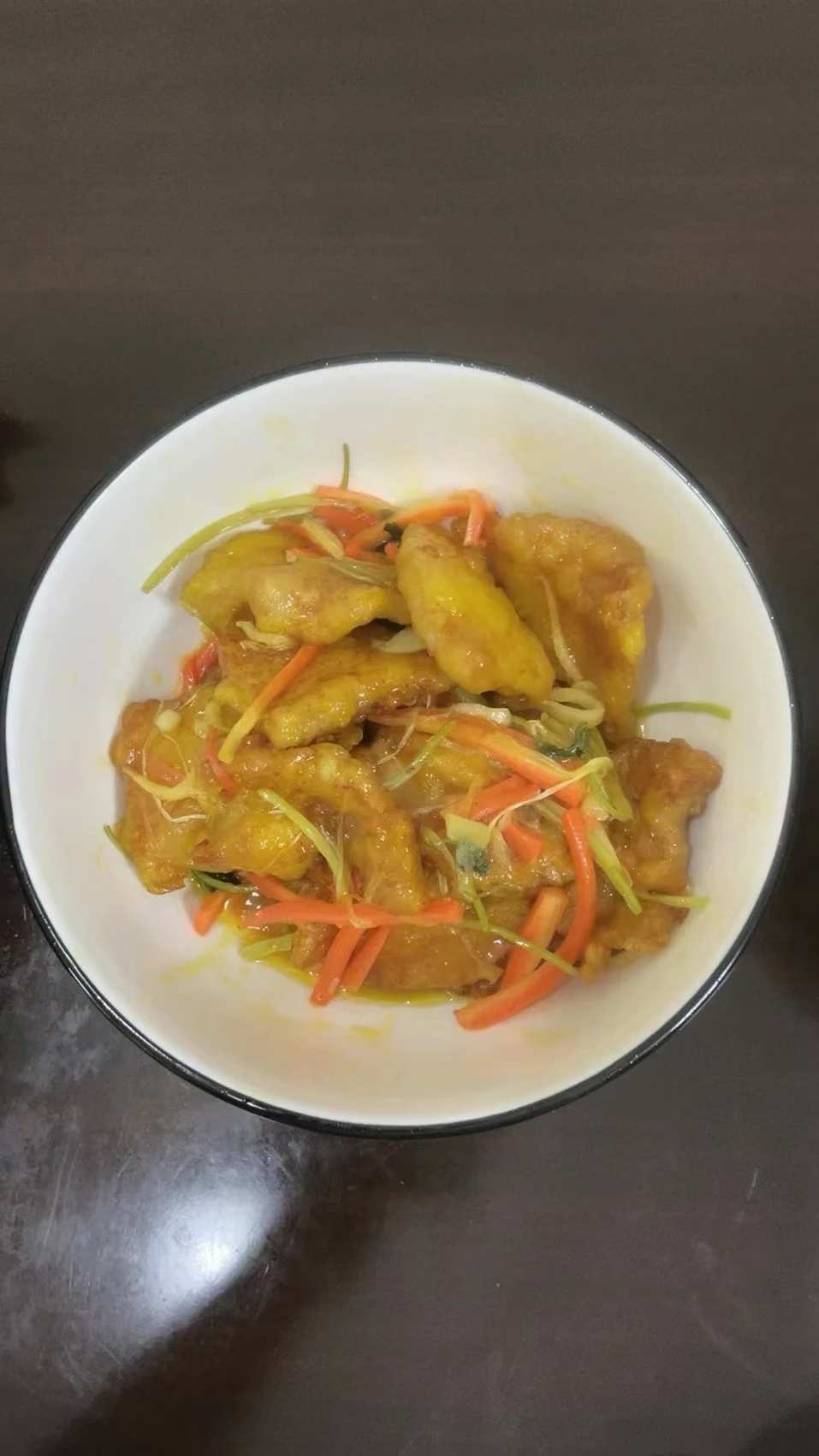
This is what the second attempt looked like.

…
I can’t show anything beyond that. But through the constant practice that comes with practice-makes-perfect, I found that I’m confident I can make this dish perfectly. The only problem is it devours ingredients — the ingredients really aren’t cheap. With enough ingredients to practice on, making it perfectly is just a matter of time.
Through hands-on practice, here’s my technical summary:
- The batter (hú, fourth tone) — it’s best to soak water starch (potato starch) ahead of time, and it must be adjusted to a non-Newtonian fluid state.
- The tenderloin must be squeezed dry of water; there must be no bloody liquid, otherwise it turns black after frying. The slices should be squeezed until they turn white — that’s optimal.
- Fry at high oil temperature. On a home gas stove, the oil temperature should reach above 180° (i.e., the state where the oil is smoking). The first pass fries the meat to a golden state. For the second and third passes, wait until the oil heats up again (to a smoking state) and re-fry — this step is called
闯油, meaning you put the meat back in while the oil temperature rises. After a few rounds of this re-frying, the guobaorou turns a date-red color and is basically done. - The rest is the sauce technique. This also comes in two kinds: cooking the sauce into the dish (烹汁) and glazing the sauce over the meat (握汁). As for the specifics, you’ll understand once you watch the video tutorials online, so I won’t go into more detail.
Through the above process, I think the most important things are technique and seriousness — practice diligently.
Here I recommend everyone buy a starch called Windmill brand

If you make it often, I suggest buying 2.5KG or more — this dish is extremely starch-hungry. Don’t ask why; it’s all tuition fees I’ve paid. Almost no other starch is as pure as this one.
Thanks to my diligent practice, after a fishing activity with colleagues we went out to eat, and among the dishes there was one called 那年秋天的茄子 (The Eggplant of That Autumn)
After eating it I thought it was great, so I decided to go back and replicate it. Here’s the restaurant’s version.

Here’s what mine looked like after replicating it.
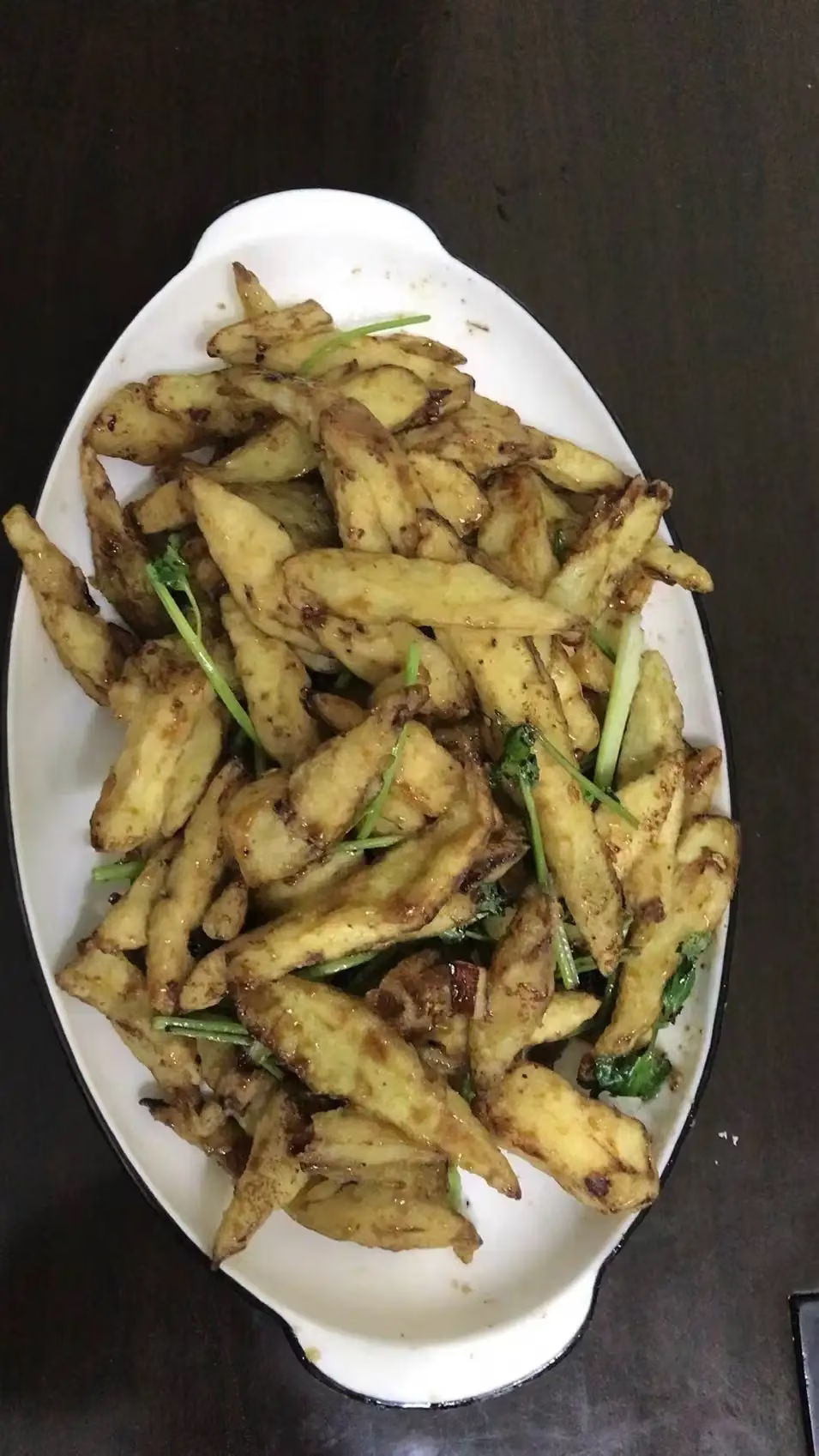
This dish is delicious and the cost is dirt cheap. I can tell you very responsibly that the ingredients plus seasonings for this plate cost no more than 10 yuan. The tricky part is how to get the batter into that pullable, thread-drawing state. You’ll know once you’ve eaten it — it’s not oily at all. Mine came out greasy, not quite successful, so I still need more practice.
That’s all for my life in 2022. Just a bunch of trivial memories, some bullshit experience, and immature political views — excuse me for that.
About Work
At the beginning of the year, I was responsible for the development of a beauty-filter SDK for face recognition at Megvii. This company absolutely lacks humanistic spirit and artistic temperament. The colleagues in the team have a rather strong sense of superiority and always think they’re all that — I don’t know where that pride comes from. If any of my peers are job hunting, I’d suggest not going to this company. The founder claims to have graduated from Tsinghua’s Yao Class and seems to think highly of his own noble origins, carrying a lot of arrogance. My honest impression is that Tsinghua is a great school, but judging by how the people leading this company run things, I wonder how they managed to make the company so murky and chaotic. Look at the people this company hires — some are decent, some are mediocre, and some are garbage who don’t even realize they’re garbage, always trying to push others out instead of thinking about how to develop their teammates and lead the team well. My final verdict on this company is: “Stay grounded. Stop bragging about your so-called AI — it’s a technology any company has. Survive and keep innovating; otherwise there’s a reason you can’t beat SenseTime.” Maybe this is the legendary 卷 (involution)! Those who can handle the rat race stay, those who can’t, leave. If a company reaches this state, leave if you can! It’s not worth putting in too much effort, because its condition guarantees low output, low efficiency, no revenue, only investment. The funny thing is, from the technical interview to onboarding there were 5 rounds in total, 4 of them technical; of those 4, 3 were algorithms; and of those 3 algorithm rounds, 2 were binary search. I’m not bragging — I can honestly say the interviewers here only know binary search in terms of algorithms. If I asked them to write a binary tree level-order traversal, zigzag traversal, or an LRU cache, they probably couldn’t. Anyway, I still put a lot of work into algorithms.
I once divided the Tsinghua brothers into two camps.
- The pragmatic, truth-seeking camp
- The vainly famous camp
Having personally verified it, this one belongs to the vainly famous camp. Case closed!
Current Status
I currently work on the Kuwo Music team under TME (Tencent Music Entertainment Group). This is one of the few companies I could find amid the layoff wave of the past two-plus years of the pandemic.
Products under TME
- QQ Music
- Kugou Music
- Kuwo Music
- Lazy Audio Books
- Kuwo Changting
- Bodian Music
…
Since music is protected by copyright, most products under TME are paid services. The company is currently developing along the path of cutting costs and boosting efficiency.
My Thoughts on It
When I worked at Baidu in earlier years, teams were closed off from each other — there was almost no opportunity for technical exchange. Even if a team built something really cool, or a highly sophisticated technical architecture and tools, it was hard to share the results with sibling teams or even other teams within Baidu. I really resent this. A company split internally like N small companies, not communicating with each other, building things in silos behind closed doors, not open-sourcing at all — not even sharing technical achievements among sibling teams is a terrible thing. This is also why Baidu is still like this even today: everyone is only thinking about their own team’s ORI. This is a typical sign of a company on the decline. If Robin reads this year-end summary of mine, please remember to fix this bad habit of the company. At the very least, getting Baidu’s stock up by one percentage point wouldn’t be a problem.
At TME, the situation is similar, but with quite a few improvements. We can use QQ Music’s features whenever we want; QQ Music provides internal technical support, ensuring technology sharing. I think maybe this is why Tencent is stronger than Baidu!
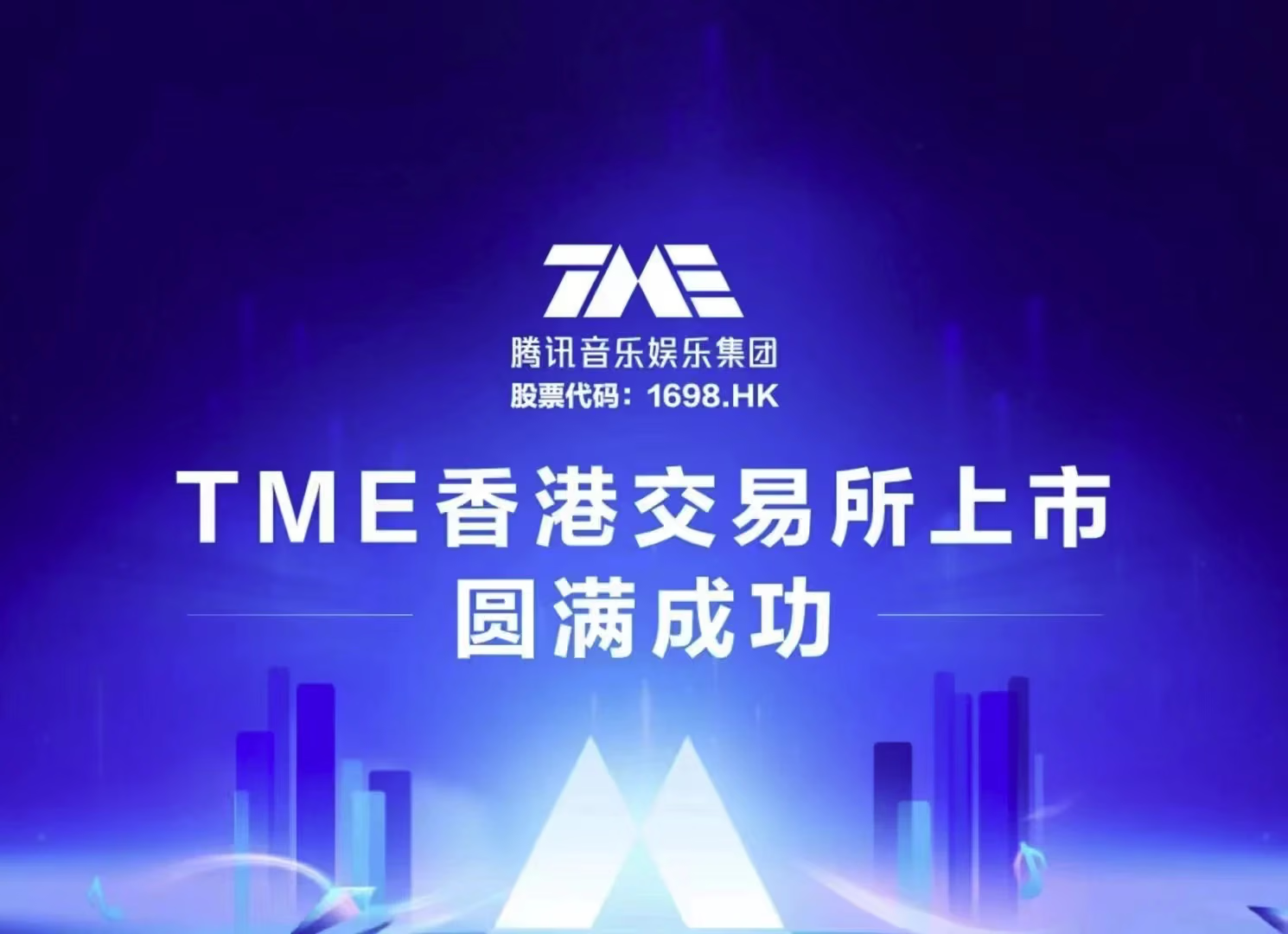
This is already the second listed company I’ve happened to join in my career. I don’t hold any stock though. :)
About the Team
Overall, the people on this team are pretty great.
- No cold-shouldering of newcomers
- Though the pay isn’t high, the team atmosphere is great
- The boss doesn’t have a bad air of superiority and is still a qualified leader
In the current environment, being able to meet a team like this is already very nice.
About Technology
Our team’s pursuit of technology is quite good.
Since joining this team, I’ve basically brought over all the good practices from my Kuaishou team.
- Implemented sensible branch management
- Code review tailored to the situation
- Technical discussions
- Discussing popular technical solutions and design techniques
- A love of programming while tackling the usual difficulties together.
- Technical sharing on some valuable and highly sophisticated development work.
Let me tell you something funny. About two months after joining the team’s development, I ran into a truly bizarre problem. A guy on the team, while writing an animation, incorrectly set instanceCount in CAReplicatorLayer to MAXFLOAT.
This caused the phone to freeze and reboot directly while playing a song. To solve this problem, I spent a whole day using binary search to keep narrowing down the code, because each debug cycle took about 3 minutes including the phone reboot. I finally pinpointed the bug. This is the most bizarre bug I’ve encountered in my career so far — I have to mark it.
About Learning
In the first half of the year, I got into face recognition and AI, learning some machine learning-related technologies. In the second half, I was working on a music app. Of course, music isn’t easy to make — first you need digital signal processing. And when it comes to signal processing, you can’t avoid the Fourier transform. Only by understanding these can you build better features: for example, when every song being played is converted to various formats, the format needs to be converted back to raw data samples — say I want to convert AAC or MP3 to lossless quality, which requires converting the containerized format back to PCM (pulse-code modulation), and then wrapping it into other formats through an encoder. In the middle of all this, it’s certainly not enough to just know some audio/video technology; you also need to convert data from the frequency domain to the time domain, run an FFT (Fast Fourier Transform), and generate multi-channel signal samples to facilitate audio band animations. There’s also the weighted average algorithm, A-weighting algorithm, window-function fitting, filtering, and more. Most people who aren’t in this field would find it rather obscure, and so do I.
Digital Signal Processing
So I spent some time on Bilibili and finished a course on digital signal processing.
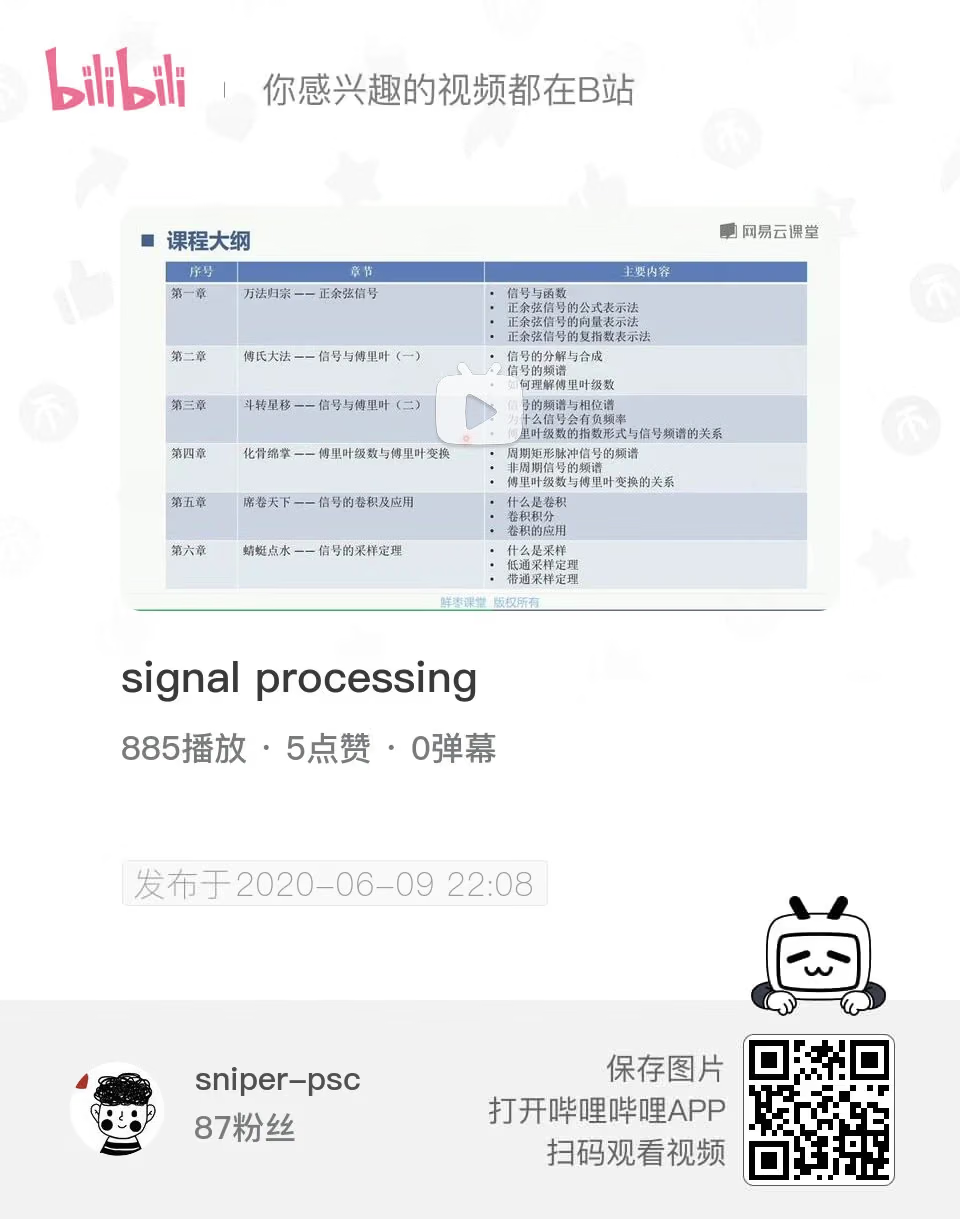
After finishing this course, it felt like I hadn’t learned anything, because it was all formula derivations — no code, no tutorials on using tools. It can only serve as a basic reference for getting started: things like low-pass filters, high-pass filters, band-pass filters, band-stop filters, FIR filters, BF half-band filters and various other filtering algorithms; or some Laplace theorems, Hilbert theorems, and the like — all rather academic and fundamental, not at all suitable for a hands-on programmer.
Audio & Video Courses
- Kuaishou · Introduction to Audio & Video Technology
- Kuaishou · Hands-on Mobile Audio & Video Development
I promise I completed both of these courses 100%. But completing them doesn’t mean I’ve mastered them — I still have to learn while fighting.
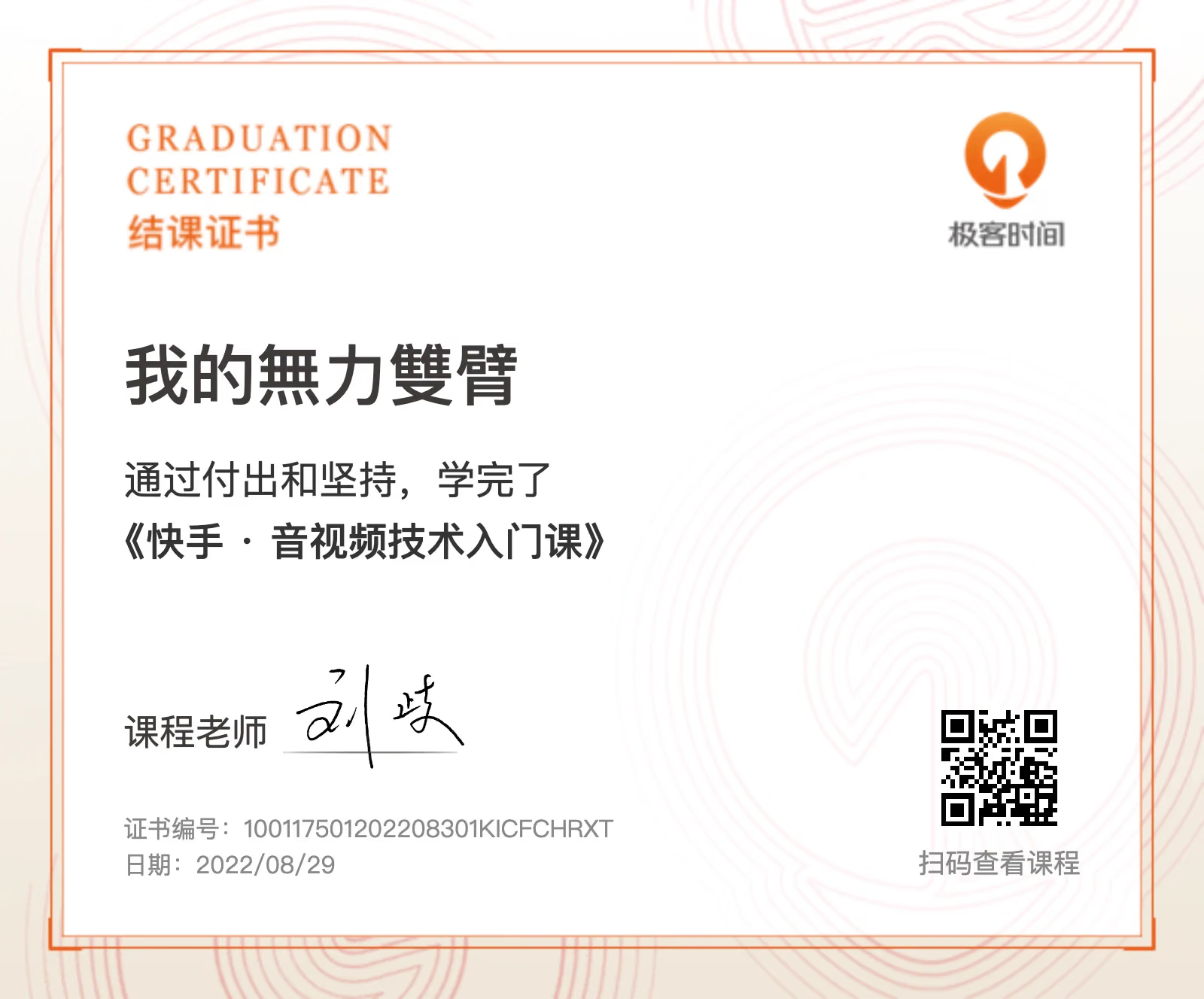
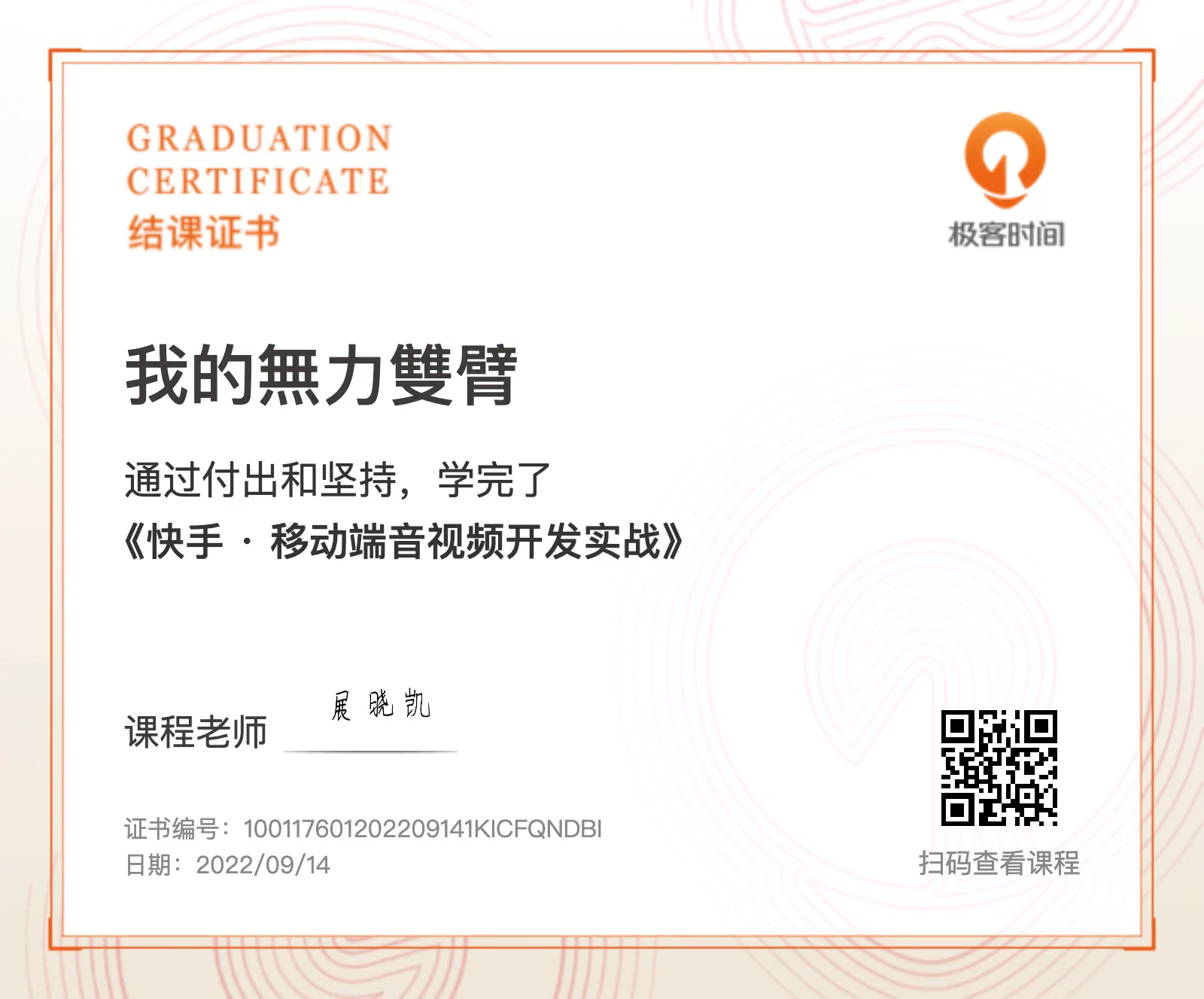
Keeping the certificates after completing them as a memento, though this doesn’t really prove anything.
These two courses are very suitable for iOS developers switching to C/C++ to learn audio/video. If I were to recommend them, it would definitely be 10 stars.
Currently Learning
Hou Jie C++
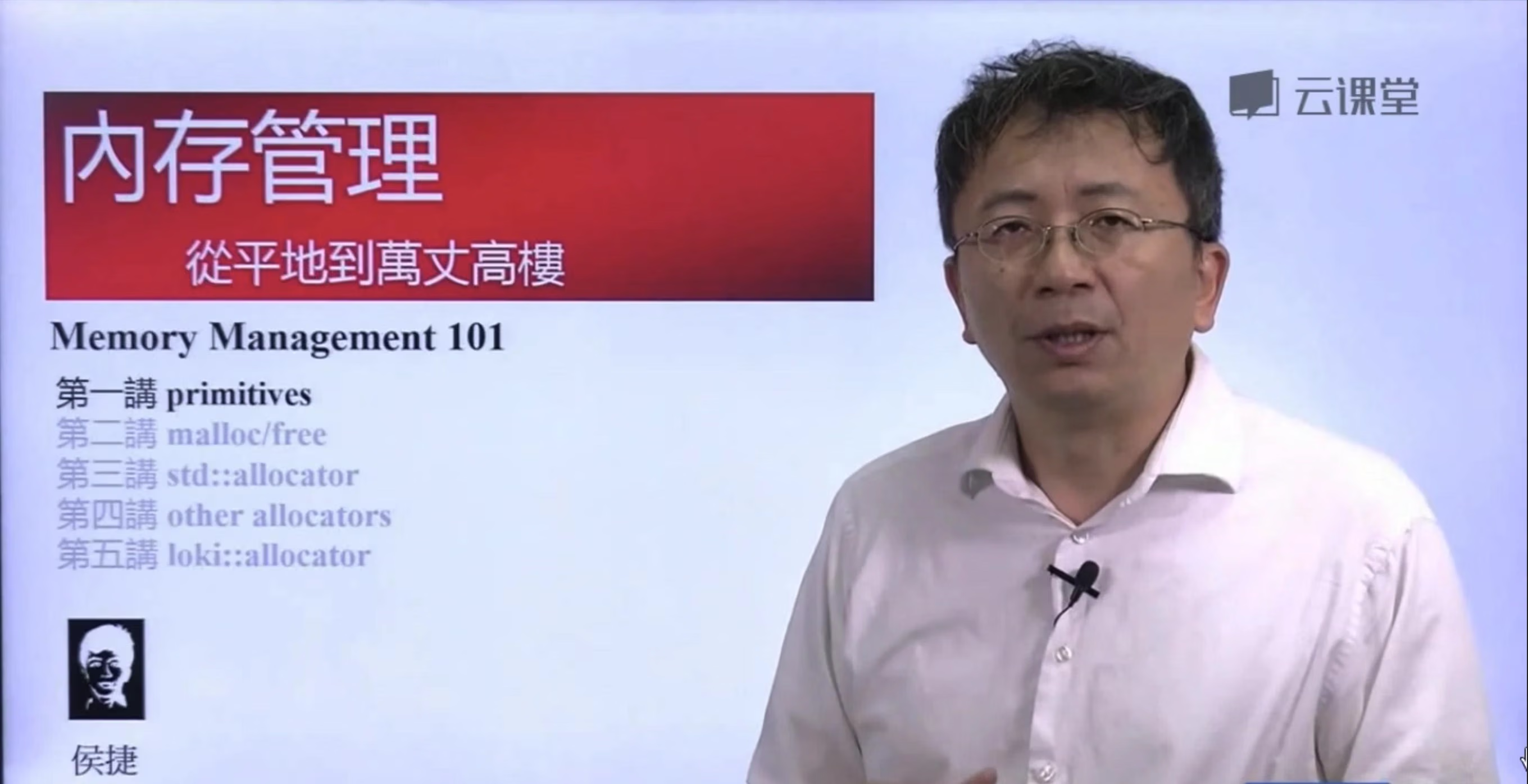
Because the entry threshold for audio/video is C/C++, I’m working hard to keep up with the learning in order to align with the technology.
Reading

I spent the whole year studying these two books. Grandpa Mao’s writing is quite good — when I was job hunting I often flipped through it, and it boosted my confidence. The other one is a reference book that I consult for details regularly. Nothing much to say — when it comes to a technology, if you haven’t mastered it flexibly, never say you know it. Admit it: you don’t.
Summary
Working in technology really requires continuous learning, and I also think the best way to learn technology is to learn while fighting. You need it here, you learn it there; only by combining the two can you practice diligently, and only then can your skills improve.
Put it bluntly: even if you learned C++ once in college, if you haven’t used it for years, it equals 0.
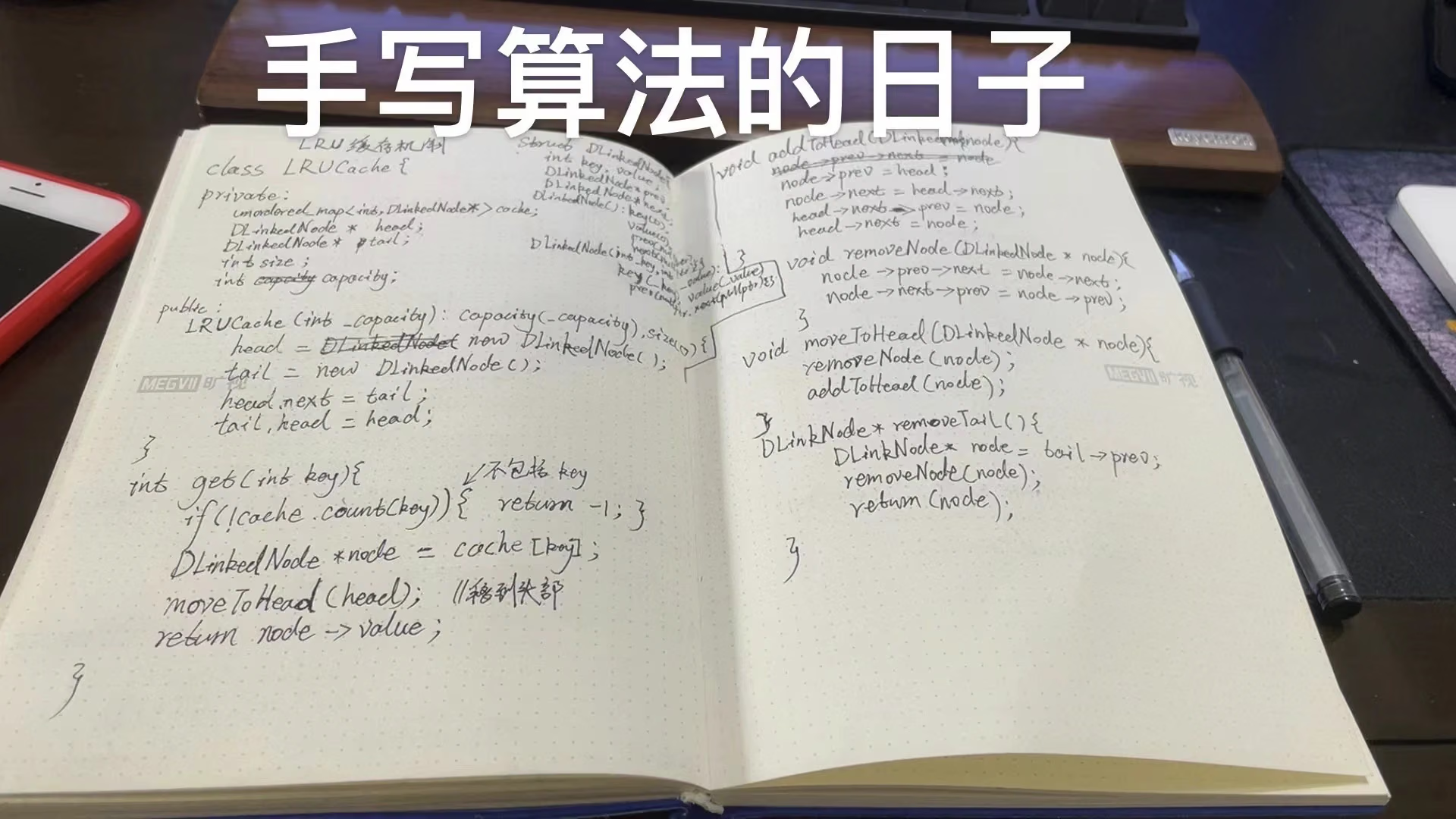
Looking back at my interview preparation, I reviewed algorithms N times. Here’s a picture as a memento.
About Ideals
My ideal is to build a university that solves the chokepoint technologies constraining China. But in reality, this ideal of mine is too absurd. However, there’s one person who can always realize my ideal — Cao Dewang
The Fuyao University of Science and Technology he founded has almost turned my dream into his reality. I admit that it’s laughable for a person who can barely make ends meet to think about building a university that solves China’s chokepoint technologies. He invested 10 billion yuan. This is exactly a university designed to my standards. Sigh, I admit I’m too useless.
I remember last year I said Xu Jiayin spent a fortune building cars, and I said these rich people may have money but they don’t know how to spend it. Wang Sicong has money and doesn’t know how to spend it either. When it comes to solving the chokepoint problems constraining China, spending even 1 million yuan on it beats Wang Jianlin’s “small goal” by a mile. I have no idea what the rich think or what their world is like.
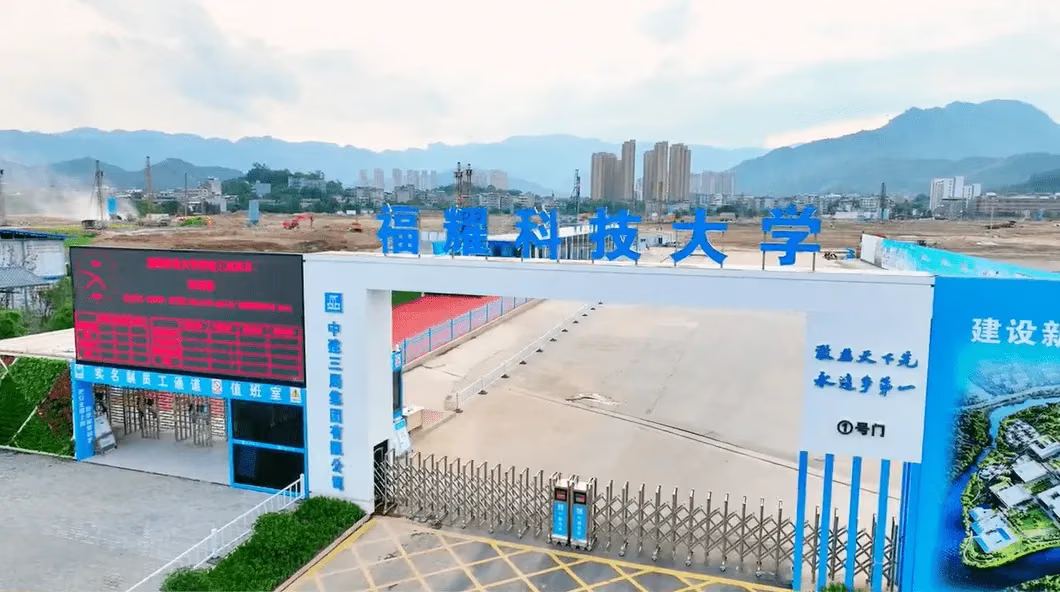
Anyway, I hope Cao Dewang’s public image won’t collapse, and I hope he runs the university well. If he doesn’t, I’ll do it myself — within my lifetime I will solve the 34 chokepoint technologies constraining China. Click here to view the 34 technologies
With Grandpa Cao’s current operations, that day is within reach.
Here I have to bring out what Grandpa Cao said
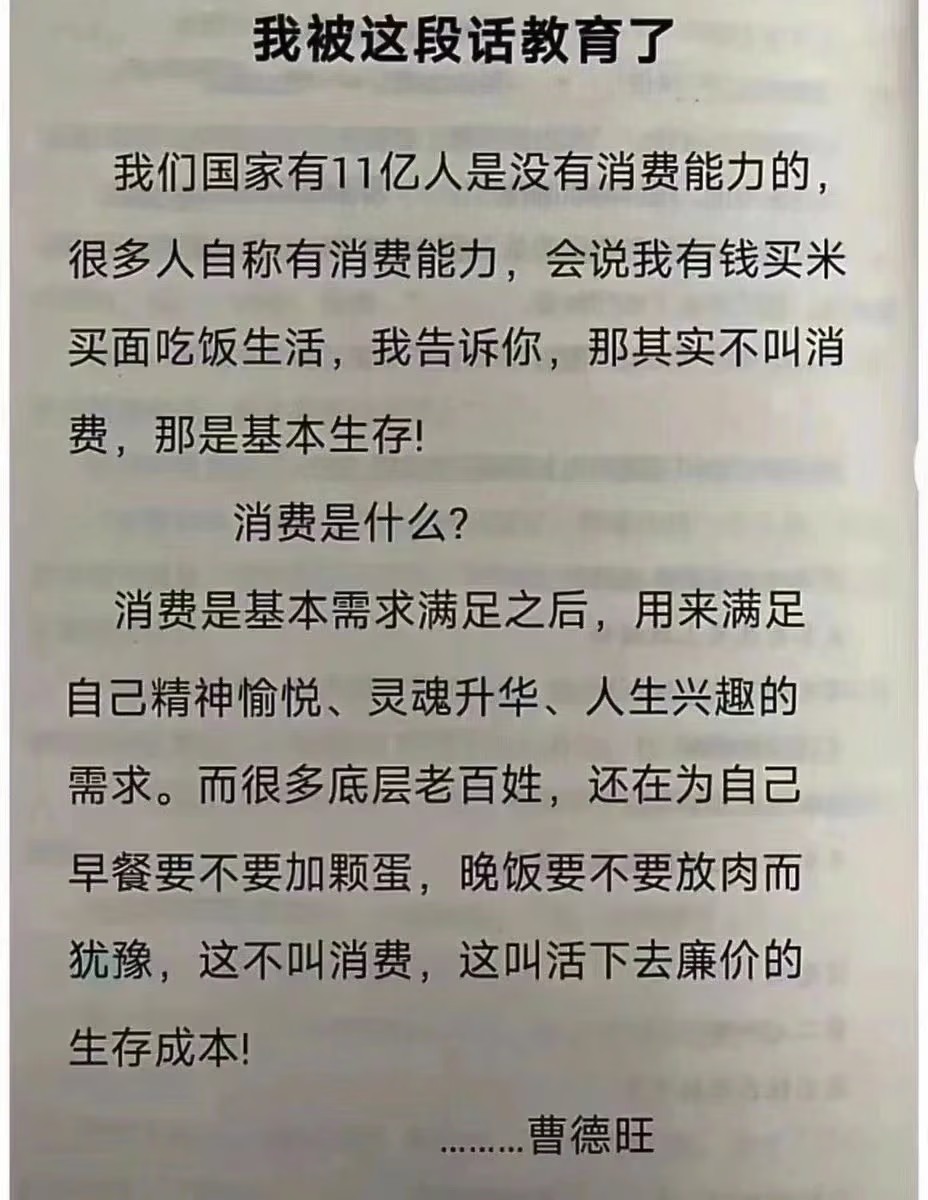
No spending power +1
About Great Finds
MagSafe Magnetic Power Bank

If you often go out and own an iPhone 12 or later, I suggest buying one of these. No cumbersome charging cables — it just snaps onto the back of the phone and charges wirelessly. This thing is absolutely useful when you’re out.
8BitDo Game Controller
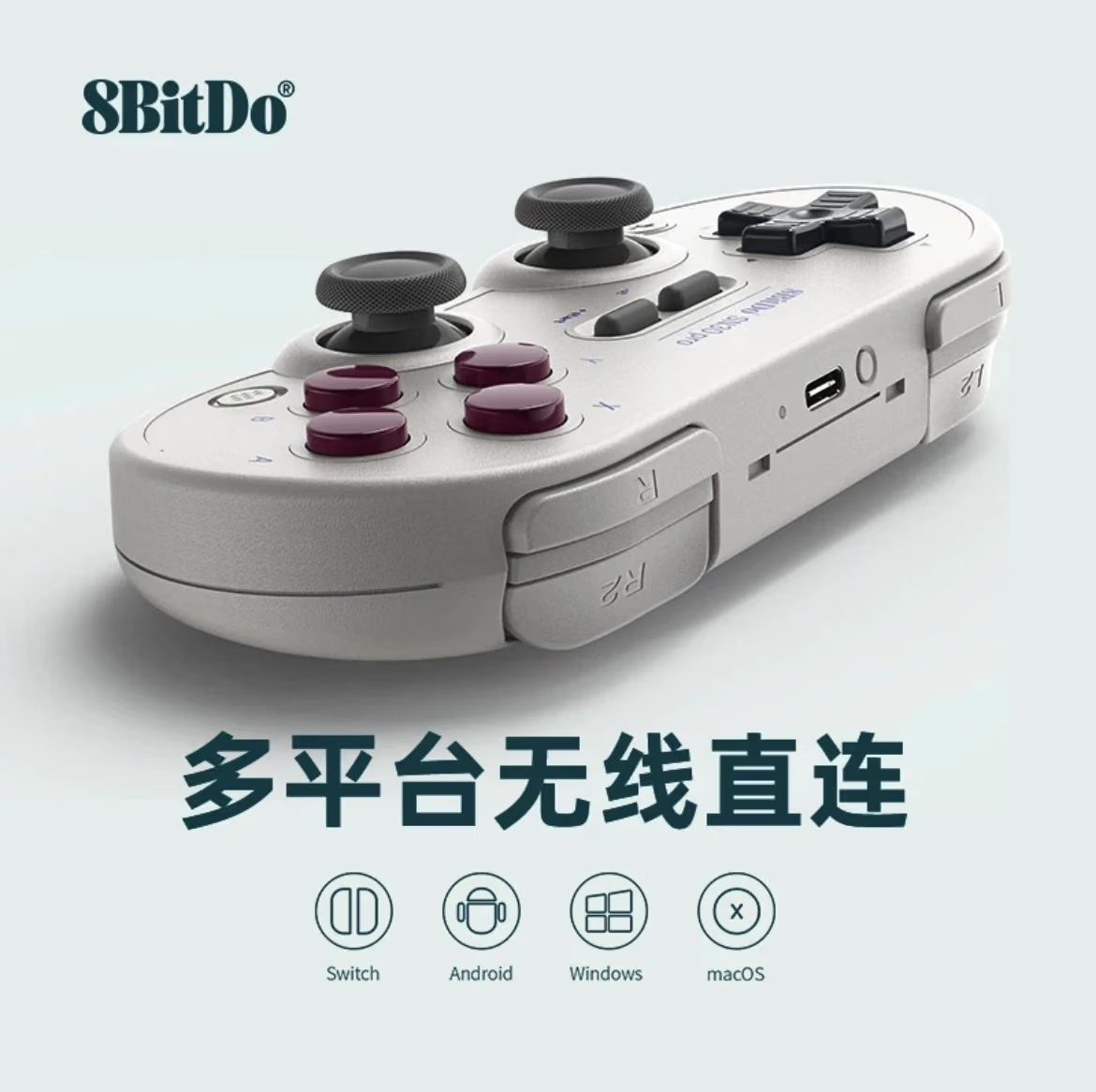
In my spare time I often enjoy playing puzzle games and classic arcade games. There’s an emulator called RetroArch

This emulator can play games on all kinds of platforms, but it’s a hassle to configure — you need to first look up setup tutorials on Xigua Video or Bilibili. Playing games in your spare time is a pretty good thing that’s good for your physical and mental health. Of course, work and family matter more; just keep your priorities straight. Manage your time reasonably.
The Quark-N Invented by Zhihui Jun
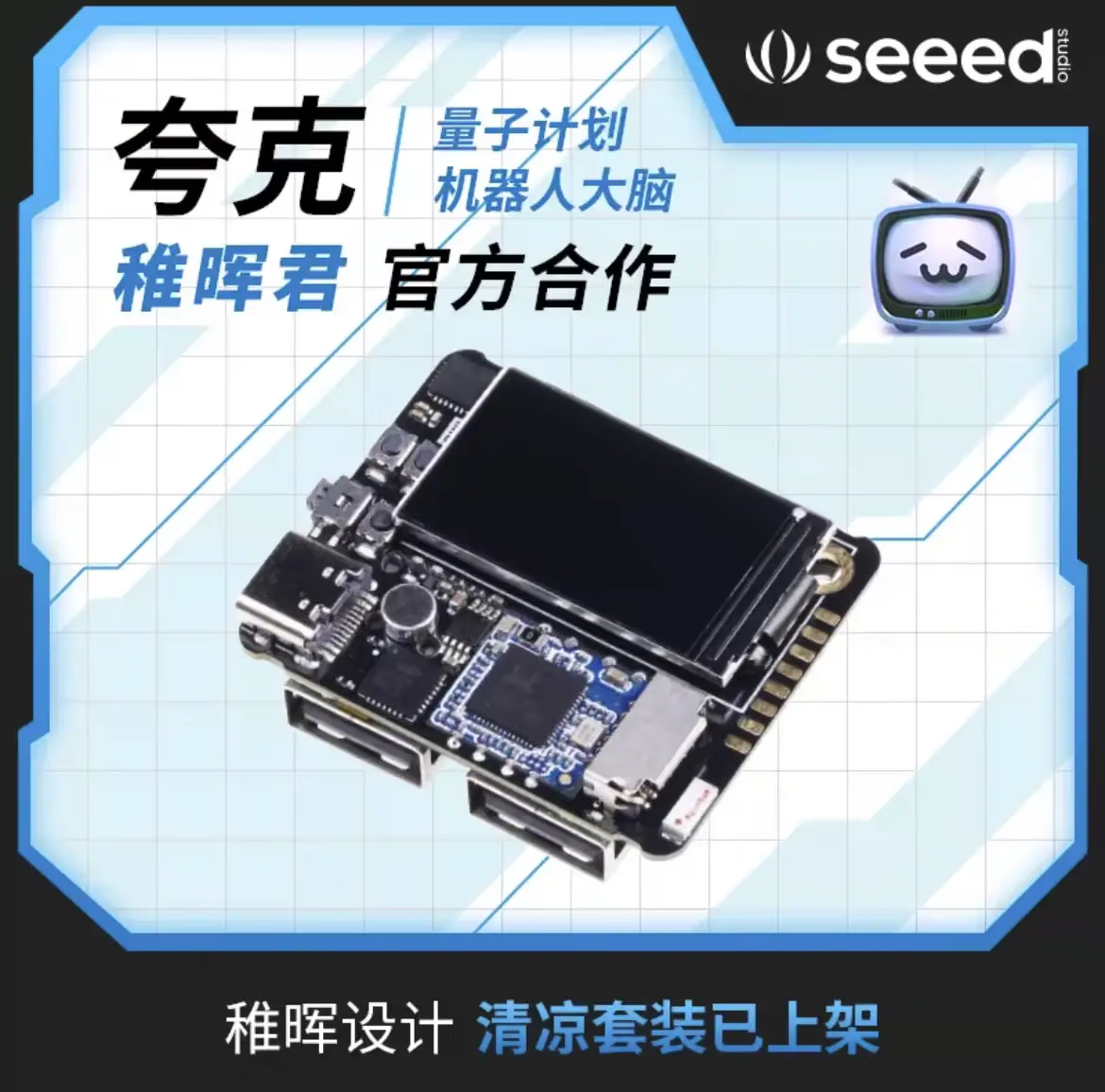
Would you believe this is the smallest card computer? It comes from the genius teenager of Huawei. Zhihui Jun’s Bilibili homepage — if you like it, click to check it out. It’s all Zhihui Jun’s work. If I told you he open-sourced all the hardware and original software, including the hardware design drawings and circuits, would you believe it’s still hard for you to build one?
This card computer can run Ubuntu Linux, and it’s very suitable for learning.
Summary
This year went by — the first half was dull, the second half was better. I just wonder how long the current company, amid the layoffs, wants to keep laying people off. I hope everyone, like me, works hard at learning your own technology, plays it to a state of perfection, breaks the scythe of capital-driven layoffs, builds your own air-defense system, stays fearless before danger arrives, and achieves financial freedom as soon as possible.
Live with dignity, don’t fizzle out — the road ahead is still long.