

In 2019, Alan Turing (the pioneer creator of the computer) will appear on the cover of the future 50-pound banknote. This will be a milestone in the history of computer development. It was he who cracked Germany’s famous Enigma cipher system and helped the Allies win World War II. Without him, there would be no computers today.
Preface
This article carries strong personal sentiment. If it makes you uncomfortable, please close it as soon as possible. This article is only for personal study records. Reprinting or sharing within the scope of the license is also welcome. Please respect the copyright and keep the original link. Thank you for your understanding and cooperation. If you find this site helpful, you can subscribe via RSS. Thanks for your support!
Looking far to the edge of the world, my learning grows humbler by the day; at thirty, who am I?
Years press on and slip away in haste; look back, and all the bustle turned to nothing.
People say drifting in Beijing pays well, but every push forward is nothing but torment.
Stars and seas all lie right here; the road to poetry and distant lands stretches far.
The year is over; as usual, I hand in my 2019 year-end summary.
2019 Review
Here are this year’s events:
- Work
- Home renovation
- Japan trip
- Life
- Reading
- Buying a motorcycle
- Buying a car
- Health
- Five-year plan
- Summary
Work
My work was very stable this year; I’ve been working at Kuaishou all along. Starting in June, I was reassigned to work on a new app, 快手极速版 (Kuaishou Lite). So far it’s going well. Last year, my live-streaming team won the Business Breakthrough Award. The company gave out a 5 million RMB bonus, but obviously that had nothing to do with us; it just means the standard of the team-building trips might improve a bit.
One pleasant thing this year was that an article I shared about AVAudioSession earned me a reward, encouraging me to keep learning and studying technology.
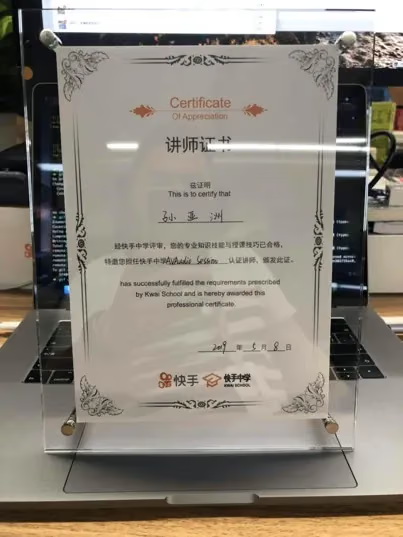
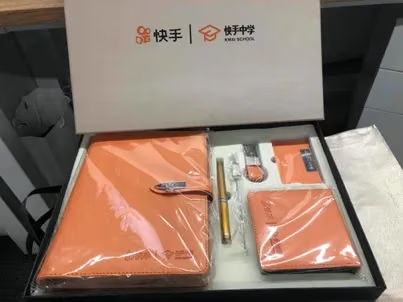
Thanks to the Kuaishou official team for such thoughtful care.
The company is growing bigger. Before I knew it, I seemed to have become a veteran employee. When I joined, my employee number was 1807; now I estimate it’s over 10,000. To support the company’s business, I had to follow the company’s arrangement and work on a different business line. There was a sense of letdown — going from a team that got a 5-million bonus to a team that wasn’t that great, and at the time it was full of all sorts of X factors. Even with all the grievances, you just have to be a brick, moved wherever you’re needed. At the time I felt I might be done in two months, but not only did I survive, things went pretty well. When I first started, the pain of days of build failures still lingers in my mind — the kind of pain where if you couldn’t get it working, you’d be out of a job tomorrow.
In this industry of high risk, high rewards, and high unemployment, it’s already very hard to stay at a job for more than 2 consecutive years. In this industry, you go to bed at midnight almost every day and arrive at the office at 9 a.m. This really is trading life for money. Every time I go to the barbershop, I ask the barber to trim my white hairs first. If you haven’t mentally prepared yourself, I don’t recommend choosing the IT industry. Development is not a small matter; when you reach middle age, you’ll know what unemployment really means.
From Baidu to Kingsoft to Kuaishou, the changes over these years keep giving me new thoughts. Kuaishou is my last company in Beijing; no other company is as down-to-earth as it is.
Just as I’m writing this article, the 快手极速版 (Kuaishou Lite) that I helped develop has reached the top of the App Store.
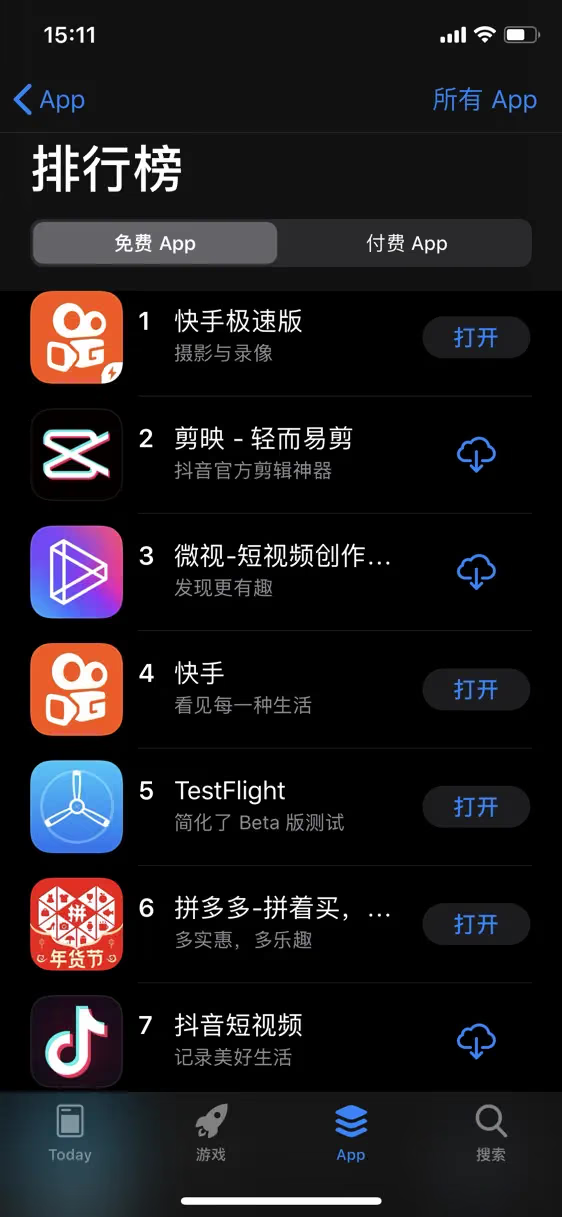
My 2019 year-end OKR was to get Kuaishou Lite to the top spot on the App Store. Today, it’s done.
Home Renovation
At the beginning of 2019, after the developer handed over the apartment, I went through the move-in procedures and then started preparing for the renovation. I was very excited at move-in — after all, I’d spent over 1 million RMB on this apartment, and the developer neither ran away nor left it unfinished. At move-in, you have to pay all sorts of fees, a bit over 20k RMB. The developer was fairly decent thanks to the owners’ rights-defense efforts, and waived the heating fee and a few thousand RMB of other miscellaneous charges. But there are all sorts of problems after moving in; I won’t go into them. If you have money to buy a house, buy a villa; if you don’t, buy a second-hand one. For a new house, unless you’re financially free and have plenty of time and energy, you’ll slowly come to understand what tempering your soul really means.
The renovation was handled entirely by my girlfriend’s parents. All the work was done by family members. It can’t be called great, since they’re not professionals, but as long as it’s usable, that’s my standard. All in all, it came to about 170k RMB.
The image below shows the scene after the renovation, when the marble casing was finally installed.
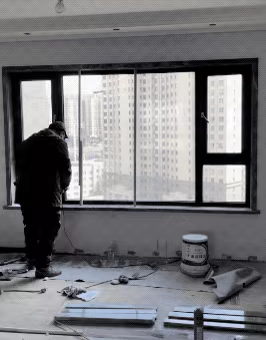
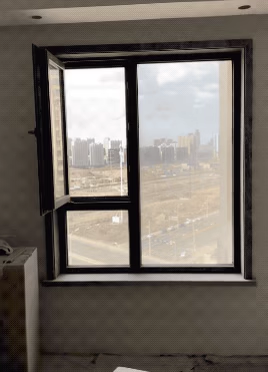
Below is the final photo after the renovation was completed.

I have a rough idea of the renovation process; here it is in case you renovate later:
- Planning and design
- Re-plumbing and re-wiring
- Apply wall primer and floor primer (a kind of adhesive that protects walls from corrosion, moisture, and alkali)
- Wrap the drain pipes with soundproofing cotton
- Lay floor tiles, wrap the openings, and tile the walls in the kitchen and bathroom
- Integrated ceiling
- Paint the walls white
- Buy appliances: for the kitchen, an integrated stove or a range hood and stove
- Kitchen cabinets, bedroom wooden wardrobes, and the like — the carpentry work
- Custom wooden doors
- Marble casing, including the kitchen countertop, threshold stones, baseboards, etc.
- Wrap up and start buying appliances, sofa, washing machine, refrigerator, TV, etc.
That’s basically the process, though not exhaustive.
Things to Note During Renovation
The most important thing is the marble casing. Mine was on the expensive side, done by a relative, totaling around 10,000+ RMB, because I used natural stone for the baseboards too. This stuff is really expensive, 260+/m, but it does look good. I suggest wrapping the window frames in this high-end marble, and using cheaper stone costing a few dozen RMB per meter for the baseboards. That way it looks classy without breaking the bank.
One Thing That Moved Me
I follow a guy on Kuaishou called 华图聊装修 (Huatu Talks Renovation), Brother Dalong. We chat often, mostly about Kuaishou. As an iOS developer, all I can do is make the app well, ensuring streamers and viewers can smoothly use Kuaishou to start streaming or watch live streams — that’s my job. This streamer told me that without Kuaishou, his renovation company might have gone under this year, and he thanks the Kuaishou official team because every month he gets to meet a few 老铁 (friends) who come to him for renovations. I suddenly felt that the company I work for has warmth — it saved at least one small business like the one I saw.
This isn’t an advertisement. I just think his renovation work is more professional than what I described above. It doesn’t matter whether you look for him or not. I think it’s important to learn more about this kind of knowledge so you don’t get ripped off when renovating. You can find his Kuaishou account by searching in the app.
The Japan Trip
After the May Day holiday this year, the live-streaming team had its first team-building trip. After a vote, we decided to go to Japan, but everyone had to cover at least 5000+ RMB of the cost themselves. Since I’d experienced similar things before and hadn’t bought a house, I didn’t dare sign up back then. This time I planned to go out and see the world, broaden my horizons, and take a look at capitalism.
Nonstop from Beijing Capital International Airport to Tokyo Haneda Airport in Japan.
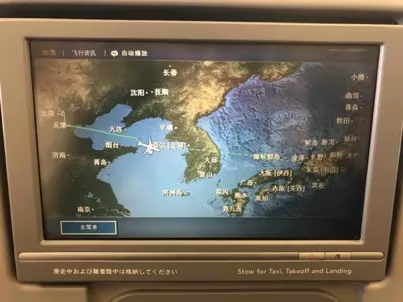
Unexpectedly, the plane flew along the 38th parallel between North and South Korea.
After arriving in Tokyo, we took a bus, and the Japanese license plates shocked me.
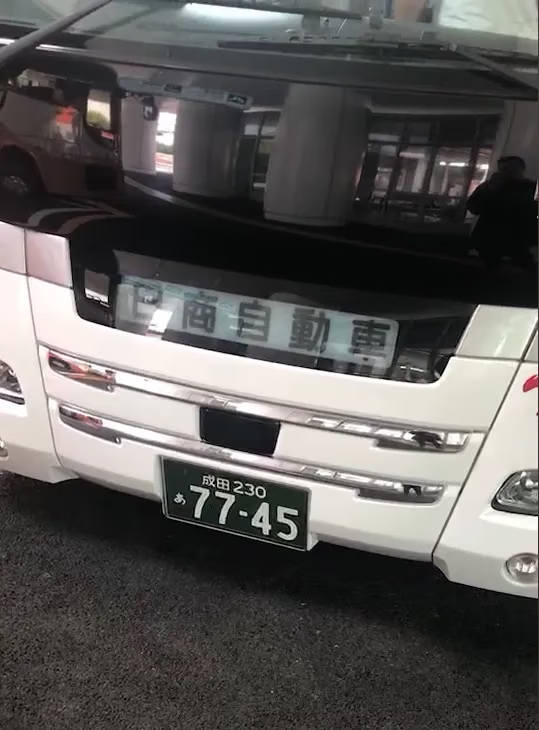
A few simple numbers can represent a license plate.
After getting on the bus, I noticed a very practical design: the bus’s cup holder.

I’m not saying I’m a foreign-worshipper, but why don’t domestic buses have this thing! It has no technical content at all. Such a humanized design is really rare.
The port and factories of Tokyo Bay basically explain why Japan is so developed.

Japan is a Commonwealth country; traffic drives on the left, and every truck is polished to a shine.
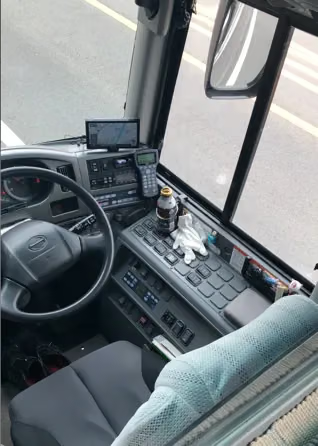
The driver’s seat is on the right. I’d only heard that Japanese drivers wear white gloves; this time I actually saw it. I also saw the driver group suitcases by color — that’s really something different, making it easy for colorblind tourists to quickly find their own luggage.
The first scenic spot we visited was 平和公园 (Heiwa Peace Park). It’s a pity I didn’t take photos. The air humidity was great. You could tell the environment was nice from the butterflies everywhere.

Arrived at the hot spring hotel in Yamanashi Prefecture.
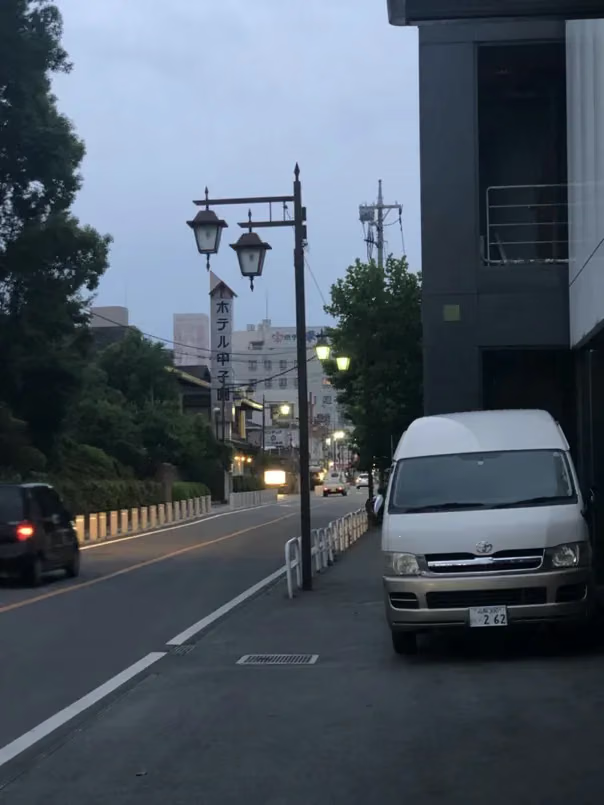
A drugstore in this small prefecture.
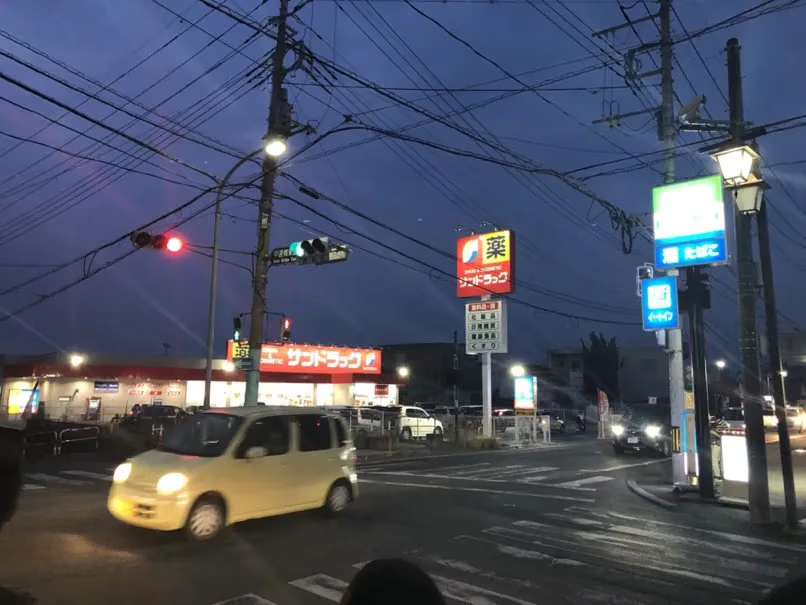
The only objective feature that makes me feel capitalism lags behind while socialism thrives is that utility poles are everywhere in Japan.
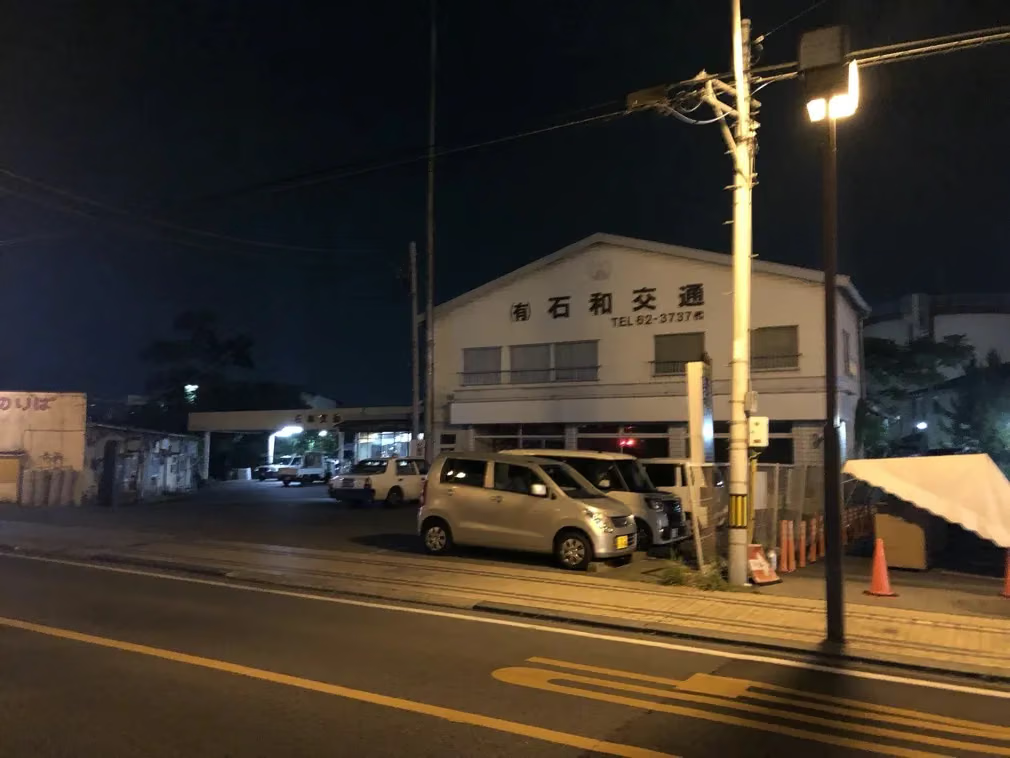
The traffic police station in Yamanashi Prefecture, Japan.
Japan’s food delivery motorcycles.
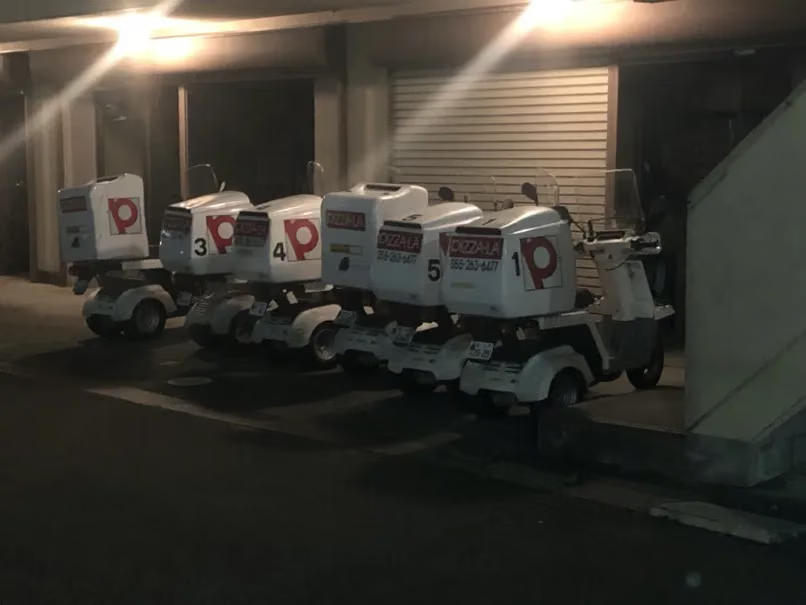
Look at this neat fleet. Compared to domestic delivery vehicles, apart from being less environmentally friendly, they’re really quite tidy. When our country can equip delivery vehicles this neatly, my motherland will basically have entered the ranks of developed countries. This kind of vehicle is called a 大脚摩托 (big-foot motorcycle) in Japan. It even has split independent suspension in the front. The cargo box can carry meals for at least 20 people, and one tank of gas covers 200 kilometers. It’s practically standard equipment for a developed country.
Japanese-style hot spring hotel.
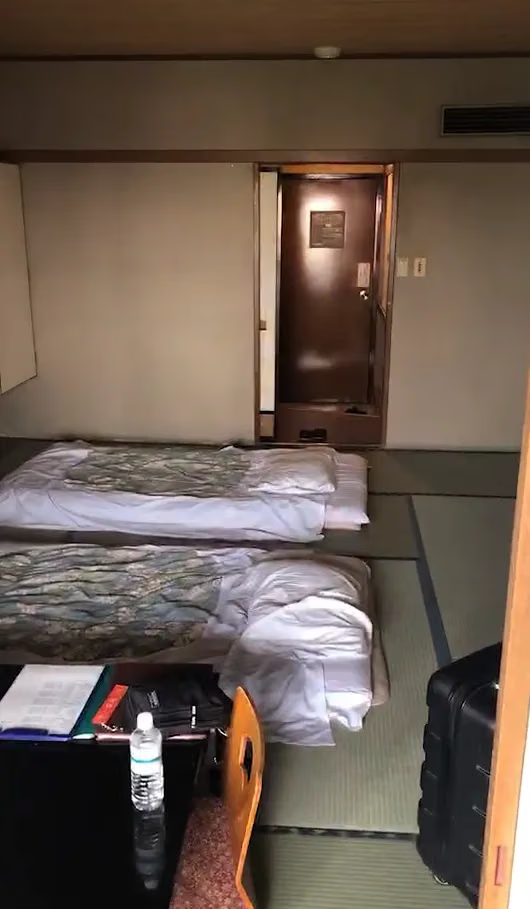
Folding up the bedding and setting down a table lets you eat right there — it saves space and is quite convenient.
The next day we went to Mount Fuji. A glimpse of Mount Fuji.

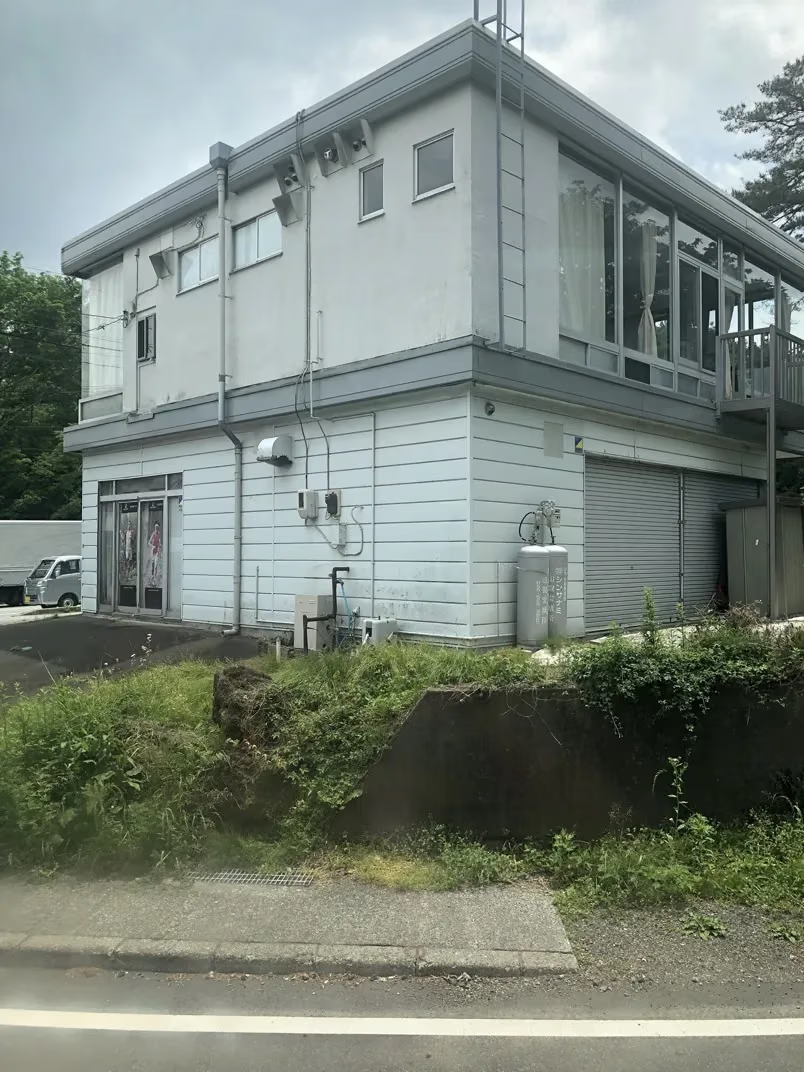
On the way back, I saw that every house had a few gas canisters in front and behind it.
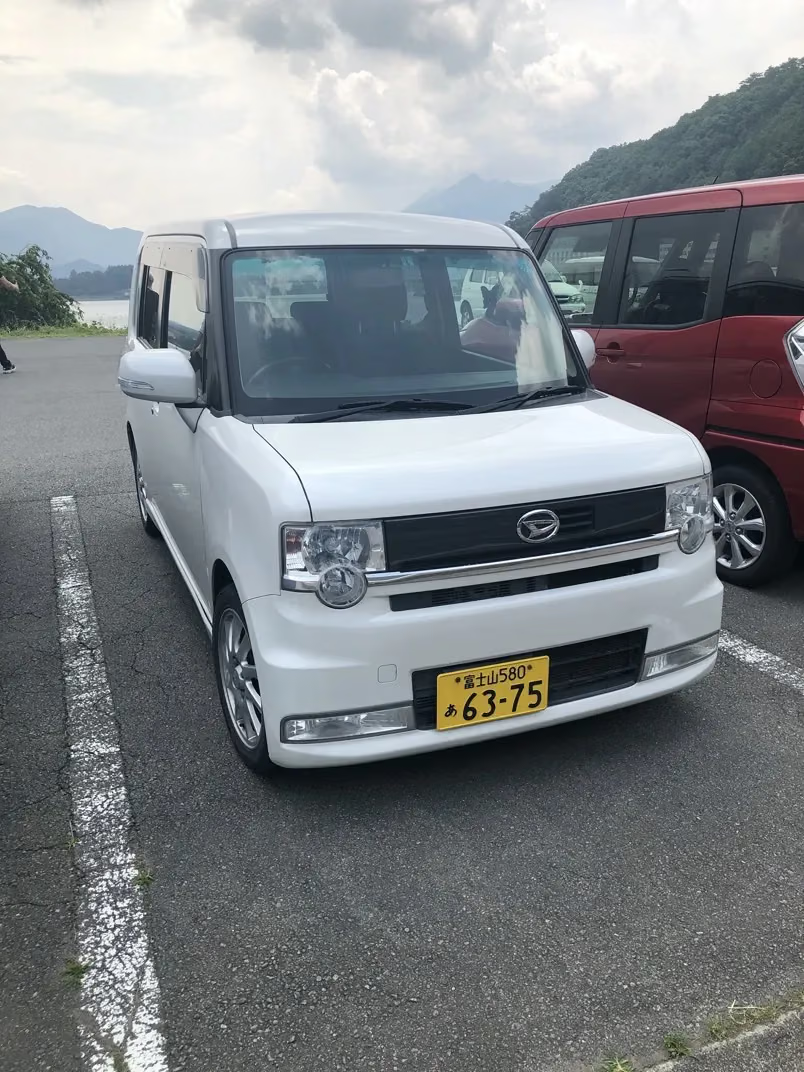
Japan’s residential vehicle, the K-CAR, can’t exceed 660cc in displacement. It’s so small it’s very practical.
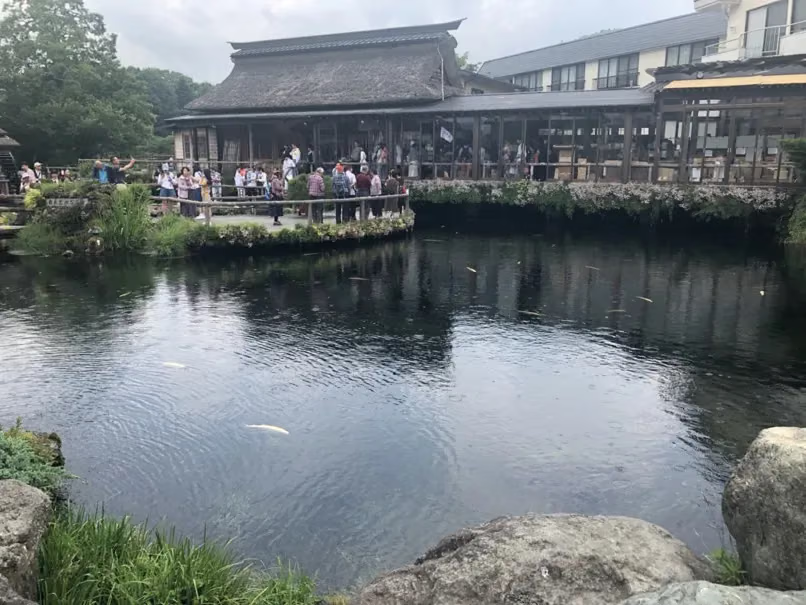
At Oshino Hakkai, the clear ponds made me think of Chairman Mao’s line, 鹰击长空鱼翔浅底 (eagles strike the vast sky, fish glide in the shallow depths).
In the afternoon we arrived in Tokyo and visited the outside of the Imperial Palace.
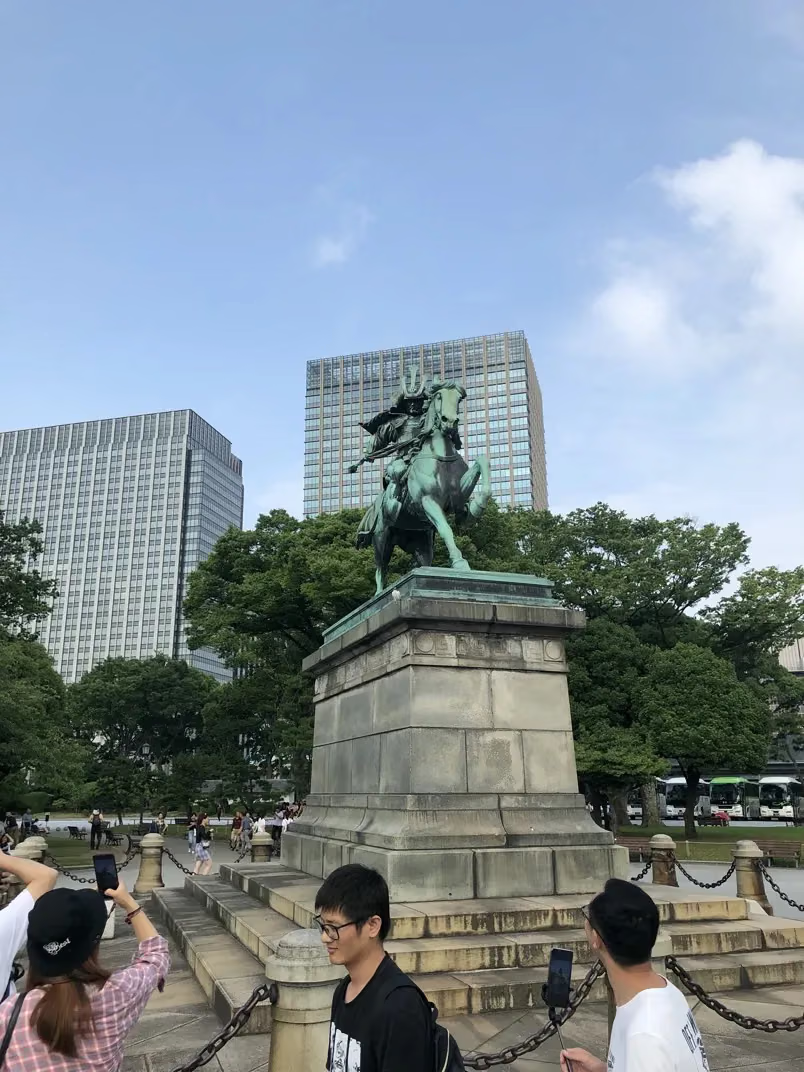
His name is Kusunoki Masashige, the Zhuge Liang of Japan, so to speak. Japan also has a period similar to our Three Kingdoms, called the Sengoku period, from 1467 to 1585 or 1615. That was the era of Toyotomi Hideyoshi, Oda Nobunaga, and Tokugawa Ieyasu, which ended with the Tokugawa shogunate’s final victory and the establishment of the imperial era of today’s Japan.
On the third day of the trip, we had free time and went to the bustling Shinjuku district of Tokyo.
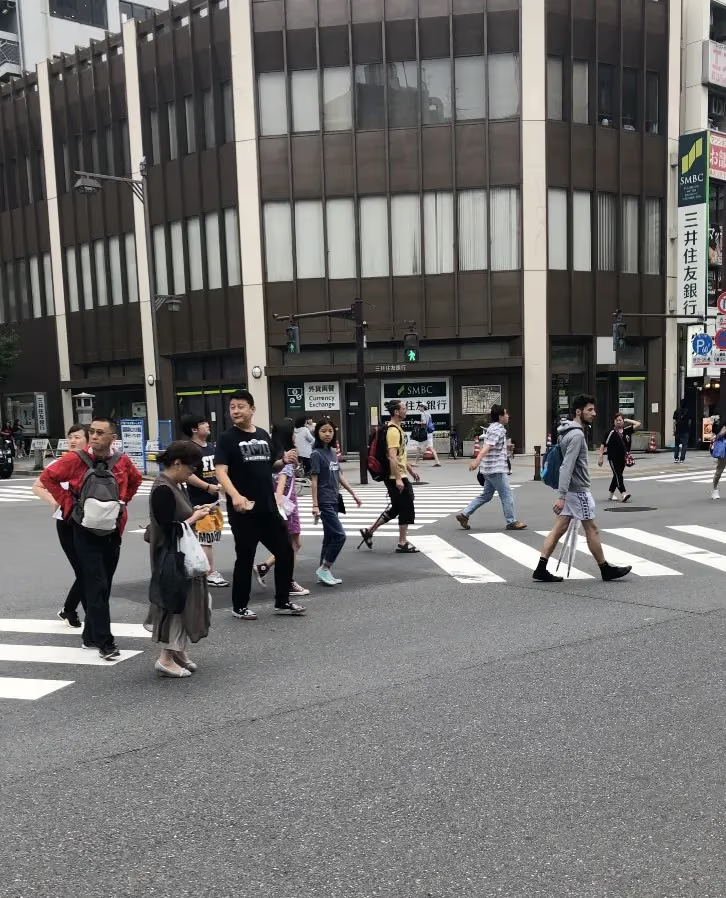
On Japanese streets, crosswalks can go horizontally, vertically, or diagonally.
On the third day of free time, we went to Roppongi Hills in the evening to overlook Tokyo Tower and the bustling Tokyo night view.

On the last day, we went to Tokyo Port to see Tokyo Bay, where Japan once signed the instrument of unconditional surrender aboard the American battleship USS Missouri.
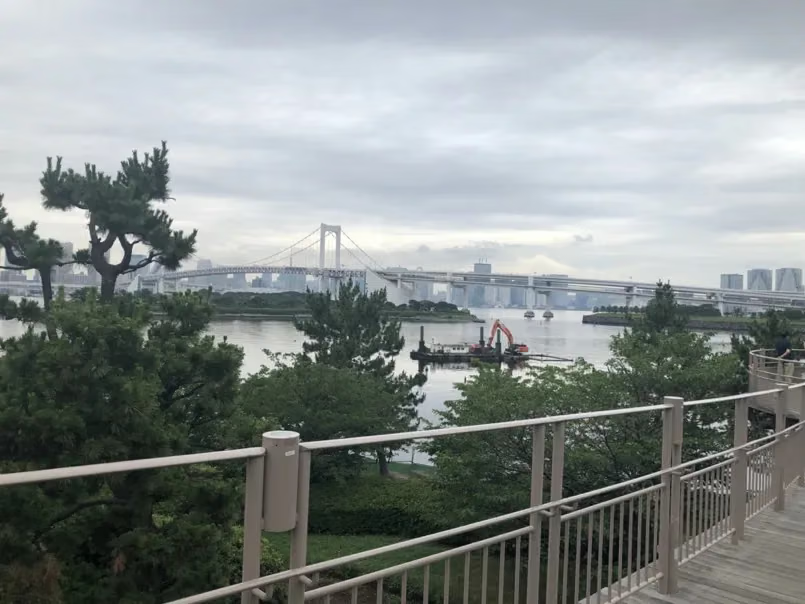
Since this is already quite long, I’ll keep the introduction brief and end here.
Summary of the Japan Trip - Building a Better Motherland
After this trip, I suddenly felt deeply educated by capitalism. Japan’s streets are lined with rows of houses, neat delivery motorcycles, clean drinkable water from street taps, clear-as-glass water in the drainage ditches, clean gas canisters in front and behind houses, family cars with displacement under 660cc, garbage sorting bins, amphibious buses on Tokyo Bay, and diagonal crosswalks in Shinjuku. Everywhere reflects the Japanese life principles of environmental protection and practicality. It’s not that I’m a foreign-worshipper; we really should learn the superior skills of others. I feel my soul has been tested here. Our country is still in the primary stage of socialism. Japan’s mobile network infrastructure isn’t great; its internet development, mobile payments, and electric vehicles all lag behind ours. These are things today’s Japan needs to learn from us. Most Japanese people believe China’s reform and opening up under Deng Xiaoping was right. This is a society where ‘money rules’, and Japan is the same. I believe that in the next 10-20 years, China will definitely surpass Japan.
This Japan trip deeply educated me. I must build a better motherland, starting from the professional skills I excel at and pushing them to the extreme — that’s my contribution to the country and the people. My travel is not just a quick glance; my photos are a record of history.
Life
This year marks the 6th year of my life as a Beijing drifter. Although the salary is much higher in Beijing, I live very oppressively — an unprecedented sense of oppression. I can say that every day, besides work, I don’t even know where to go on my days off. There’s no joy at all, and this state continues every day. Forget about hobbies. At year-end, work was so busy that I could fall asleep walking home. When I couldn’t sleep, I’d wonder whether this was my last week in Beijing. Being a Beijing drifter isn’t worth it. Don’t come unless you’re fully prepared, unless life has left you with no other choice.
Looking back at the me of 6 years ago from today’s age of 30, I’m definitely much better off. But comparing to 5 years ago, 4 years ago, 3 years ago — it’s not that there’s a worst, only a worse. I don’t want to become a mortgage slave; I hope to completely shed my mortgage-slave status in 2020. I currently have 100k left on the loan, and then it’ll all be paid off. I still need to roll up my sleeves and keep working hard.
This year I moved my household registration (hukou) to Harbin, finally leaving the rural hukou behind. As I said in my year-end summary a few years ago, the hukou is extremely important for young people like us. Unless you’ve had a rural hukou, you’ll never understand how deeply rooted smallholder-economy thinking is, and once it forms a certain mindset, you won’t want to move your hukou to the city. Urban hukou is crucial for young people buying houses and getting loans, children’s schooling, and access to the social service system.When I was a child living in the countryside, I always heard things like “the working people are glorious” and “farmers are glorious”, but I never saw any city person come back to be a farmer. Isn’t farming glorious? Why don’t they come back and do something glorious? When I grew up, I understood that it’s not that they can’t be glorious; it’s that they live at the bottom of society. Saying they’re not glorious would be class discrimination. But everything people do is city people’s business — who wants to go back to farming?
The process of moving the hukou was roughly like this:
- Provide the original ID card + a photocopy
- Provide the household register: the head-of-household page and the personal page + copies of both
- Provide the diploma certificate (original + photocopy) and the education verification QR code, i.e., the confirmation slip from CHSI (学信网)
- Original house purchase contract + a photocopy
- Original purchase invoice
- My community is Aida 88, so I had to go to the Wanggang Police Station in Nangang District
- Find the household registration police officer to organize the materials and issue a migration opinion
- Get the police station chief’s signature
- Complete the procedures at the counter
- Along the way, I also changed the address on my ID card
If it’s within the same province, you basically don’t need a residence transfer permit; you can migrate directly without returning to your place of origin. If it’s from another province, you need to apply for the move-out procedures at the police station in your original place of residence, then go to the police station in the destination to complete the acceptance procedures. It’s quite troublesome and you have to travel between the two places.
The whole hukou process takes about 2 hours; the ID card takes about half a month or more.
After getting the ID card done and returning to Beijing, I updated the identity information for all the documents and accounts I use: bank cards, Alipay, WeChat, work residence permit, residence permit — all of it.
Going through all of it, I found that changing your hukou and ID card is really troublesome.
Reading
This year I hardly had much time for reading. The thing I read most was the Magotan maintenance manual.
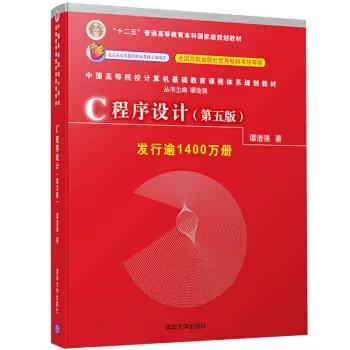
I bought the latest edition of Tan Haoqiang’s C Programming.
I bought Brother Bird’s (鸟哥) latest Linux book.
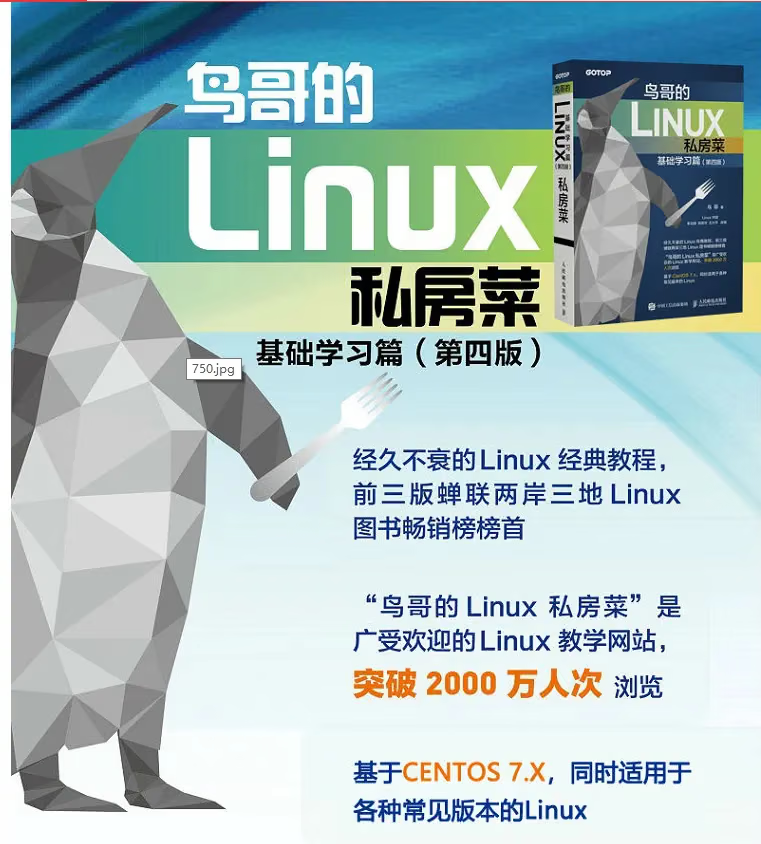
These two books have basically accompanied me through half my career. Now that the renovation is done, these books will be put on the shelf as treasures. It’s said that the latest version of the Linux book no longer uses CentOS 6, but the CentOS 7 operating system. When I have time, I’ll set up a Raspberry Pi; that would be great.
Buying a Motorcycle
In 2019, Beijing introduced a restrictive policy saying that electric bikes that don’t meet the standards would be banned from the road in 2 years. So I sold my NIU N1s and switched to a motorcycle for commuting. To ride the motorcycle, I also went to a driving school in Haidian to add the motorcycle license.
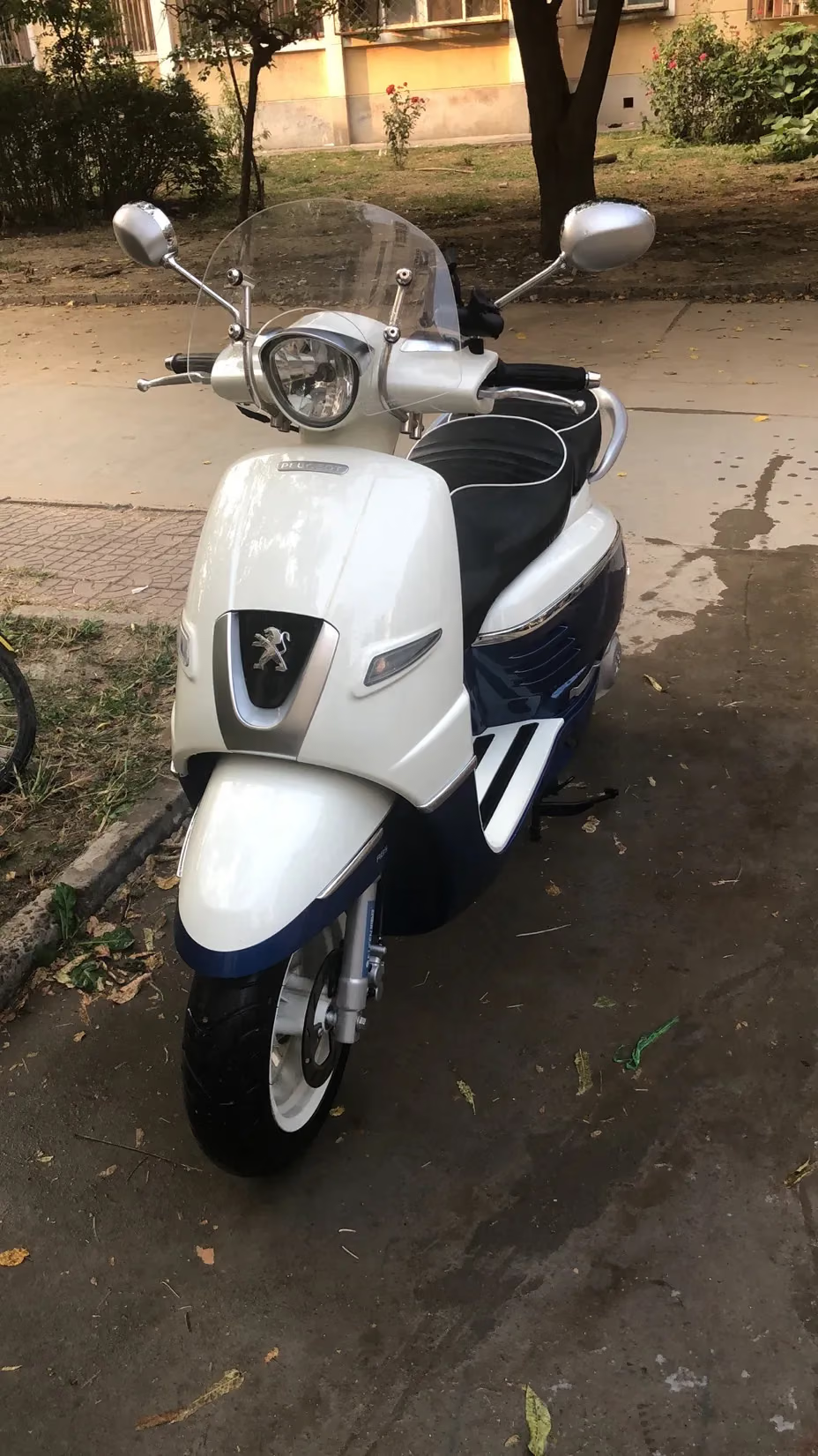
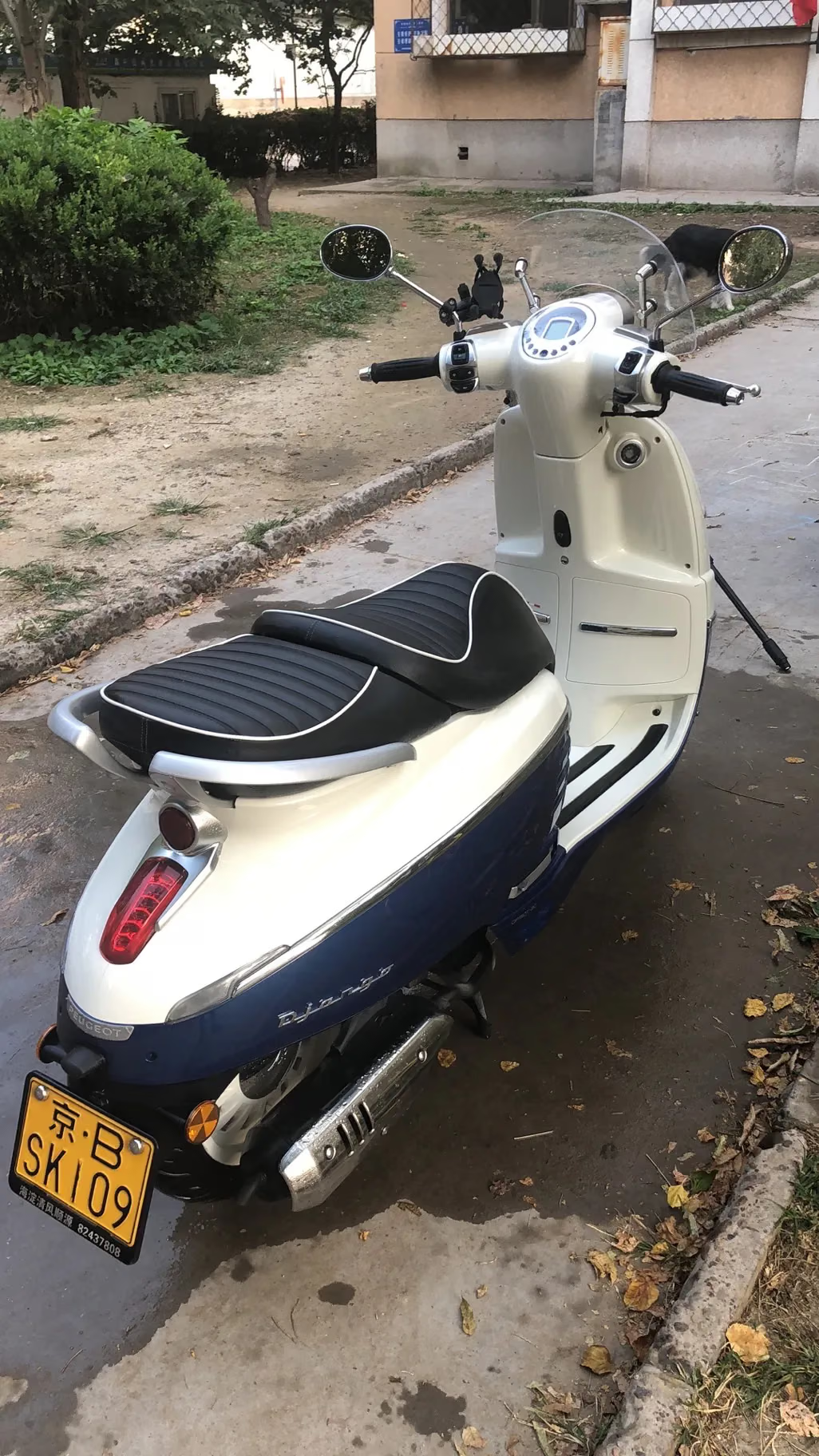
A scooter is enough for me. This motorcycle is called a django 150 (Jiangge), manufactured by Jinan Qingqi. So far I’ve ridden it safely for 3,000 kilometers without any problems. It cost 20,000+ RMB. When I bought it, it happened to coincide with the national tax exemption for motorcycles with displacements under 150cc. I hope to ride this bike back to Harbin, as a memento of these years working in Beijing.
If you don’t know much about motorcycles, you can download an app called 哈罗摩托 (Hello Motorcycle) and take a look.
To add the motorcycle license, I took everything from Subject 1 to Subject 4. From registration to practice to getting the license took 11 days. Very efficient, though practicing on a motorcycle in summer is really hot.
Motorcycle (2-wheel) Subject 2 practice

Motorcycle (3-wheel) Subject 2 practice
Motorcycle Exam Process
- Subject 1: Theory
- 100 questions
- Subject 2
- Starting off
- Fixed-point stop and hill start
- Single-side bridge
- Slalom around cones
- Subject 3: Road test
- Slow down at crosswalks
- U-turn
- Shift gears and accelerate
- Turn on the right turn signal, slow down, and stop
- Subject 4: Theory
- 100 questions
If you apply for a three-wheeled motorcycle license, it’s marked with D; a two-wheeled motorcycle is E. D is downward compatible, meaning once you pass for the D license, you can directly ride a 2-wheel motorcycle.
If you have a C license, e.g., C1, then after you pass the 2-wheel motorcycle exam, your license becomes C1E or C2E (C1 means manual transmission, C2 means automatic). The old license is collected and a new one is issued, with E or D distinguishing how long the probation period is. Basically no big problems; you just can’t drive on the highway during the probation period.
As for A or B licenses, I don’t know; I haven’t tested them. You can look them up online.
About point deductions: when you hold a C1E license, you need to be extra careful, because you have a total of 12 points, not distinguished between C, E, or D. Deductions work the same no matter what you drive. Having one car and one motorcycle is the same as having two cars — 12 points, not a single one more. If you lose 12 points riding the motorcycle, then forget about driving your car; hurry up and prepare for the Subject 1 and Subject 4 exams.
Motorcycle Subject 2 isn’t so easy to pass either. During the test, for example, in the slalom or single-side bridge, if your foot touches the ground even once, you fail. On the hill start, you can stay for at most 30 seconds and your foot may touch the ground only once.
Buying a Car
Even though I’d had my driver’s license for over 2 years, I’d never actually driven a car properly. Without a car to practice with, I worried I’d be at a loss when I needed to drive later. Unexpectedly this year, a classmate introduced me to a suitable used car in good condition. So I flew back and bought it.
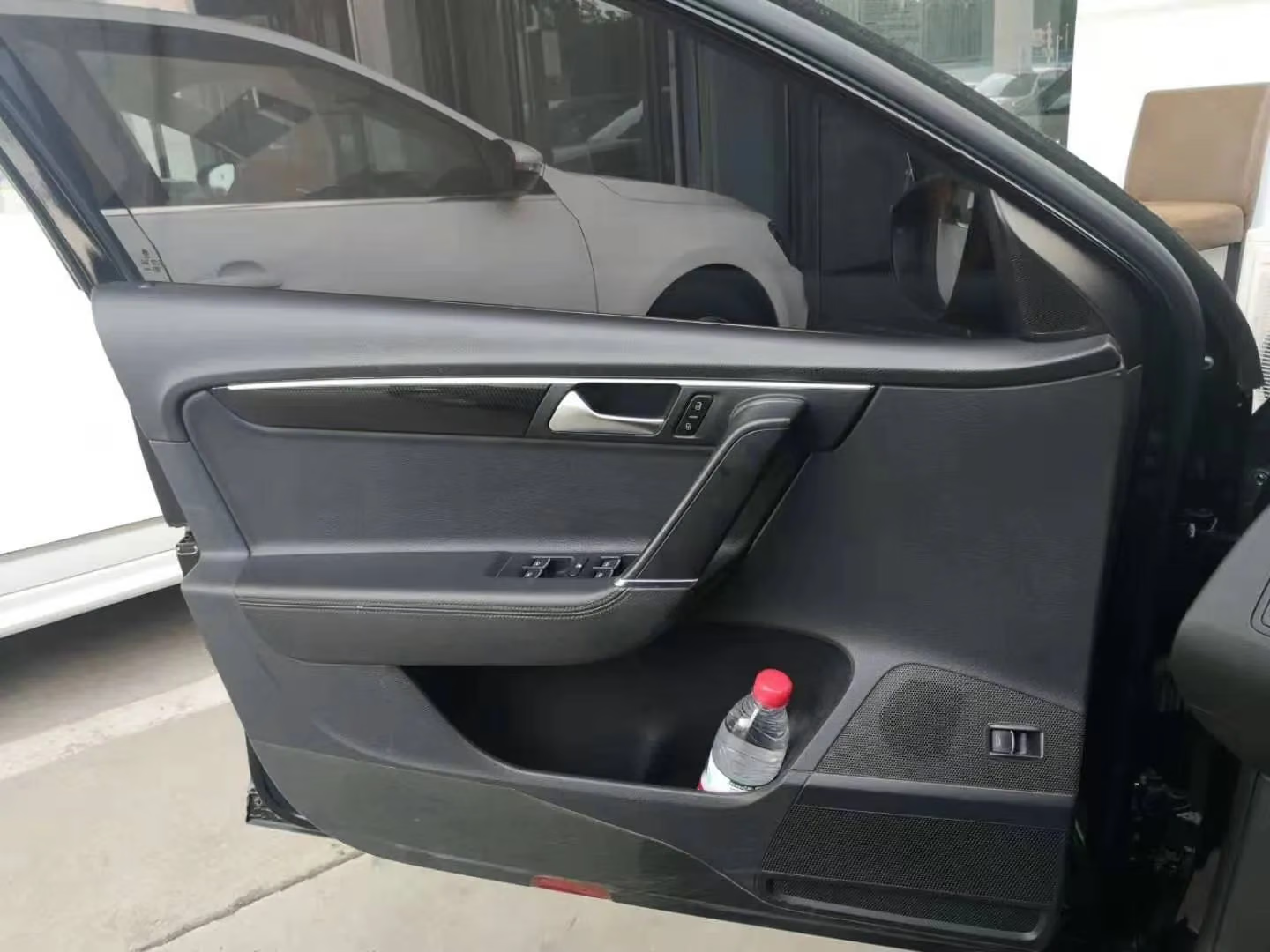
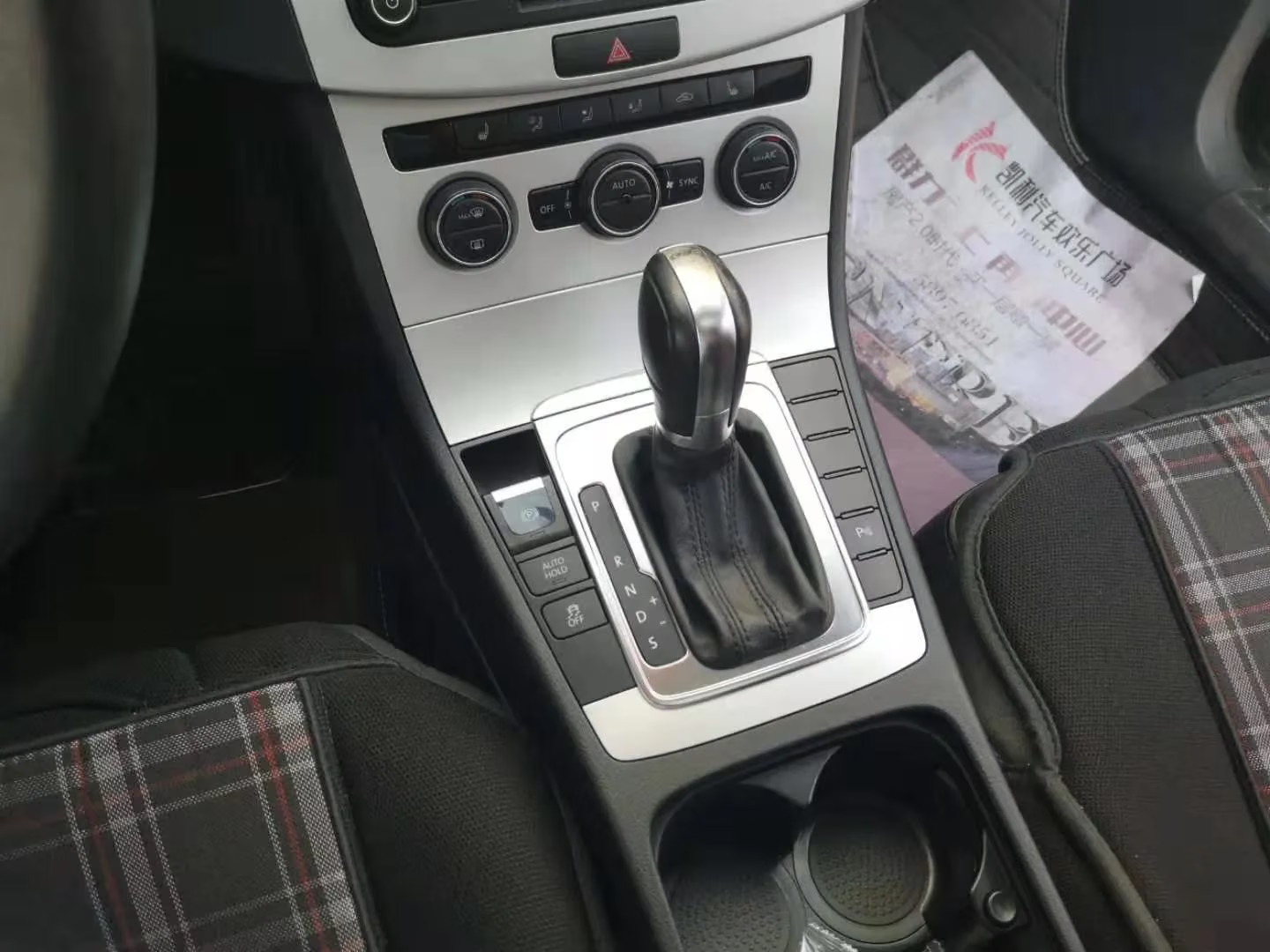
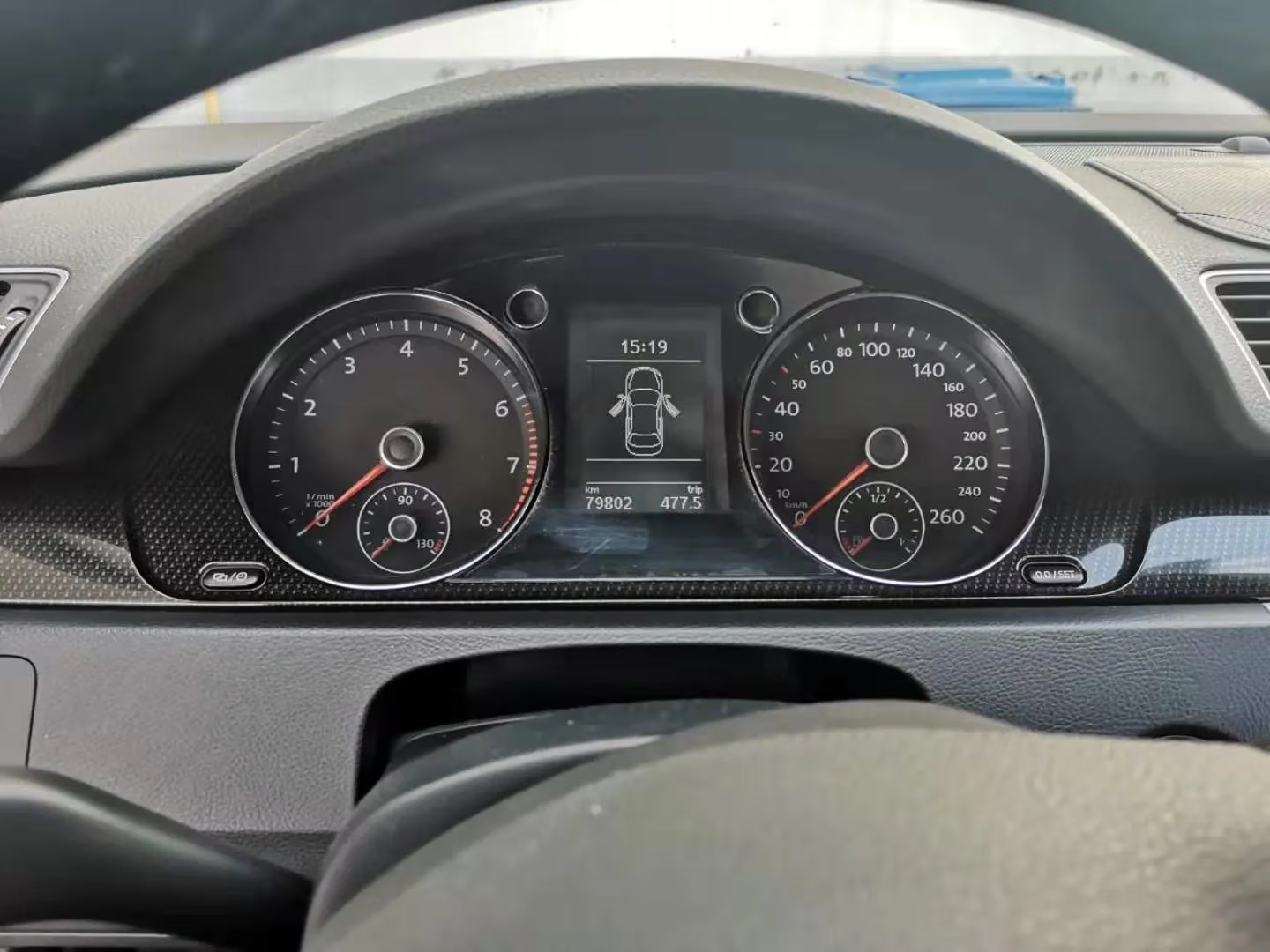
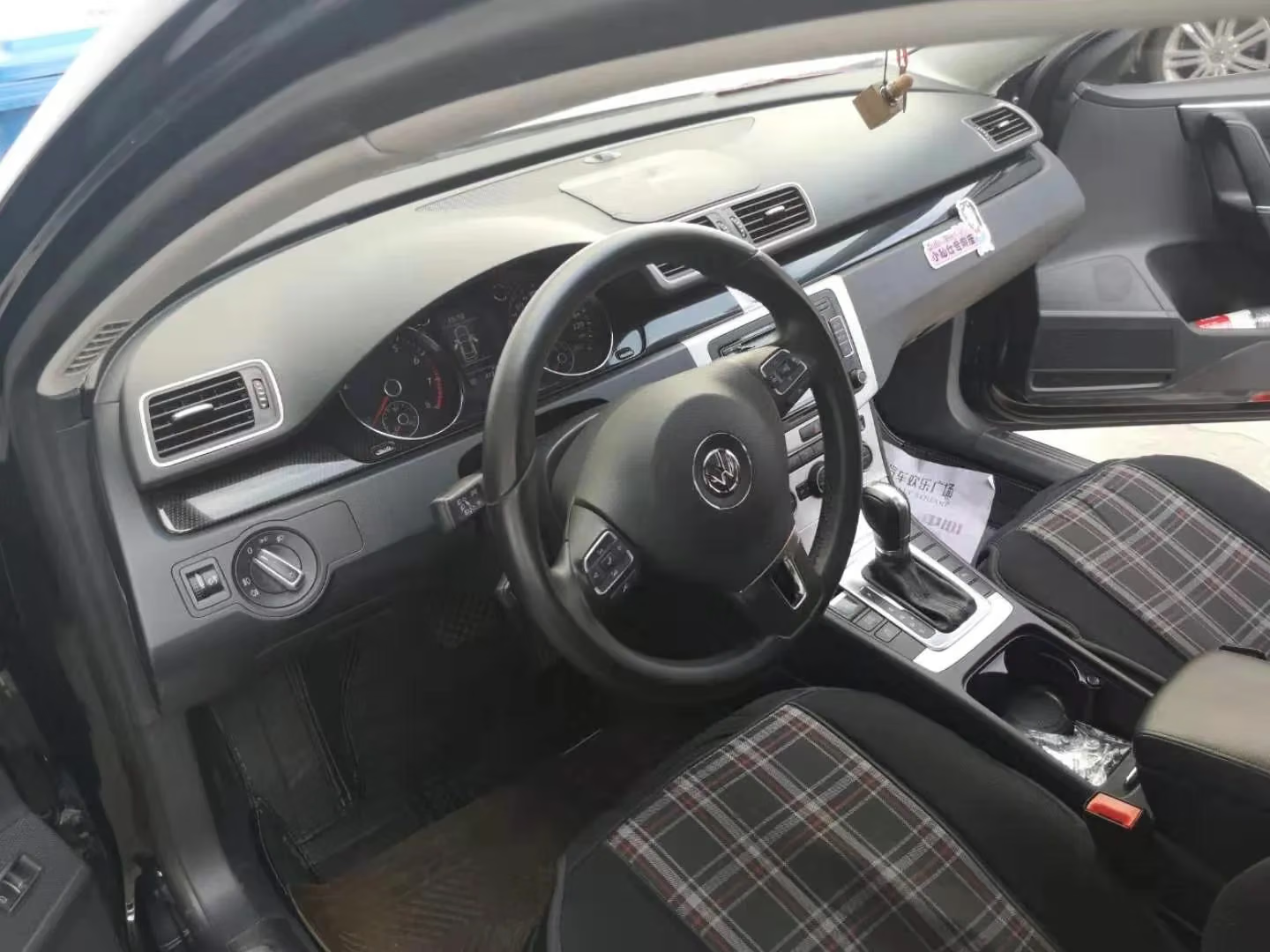
It’s a Magotan B7L, a 7th-generation Magotan manufactured around December 2013 (the latest model is the Magotan B8.5, with letters at the end). Before I took it over, the actual odometer reading was about 80,000 km. It was maintained at the 4S dealership its whole life and had no major issues. It’s a 2013 Magotan Deluxe 2.0TSI, and I bought it for 105,000 RMB. After registration, insurance, and maintenance, the total came to about 110,000 RMB.
The first thing I did after buying it was install a flip-out reverse camera — the Volkswagen badge flips open to reveal a camera for the reverse-view image.
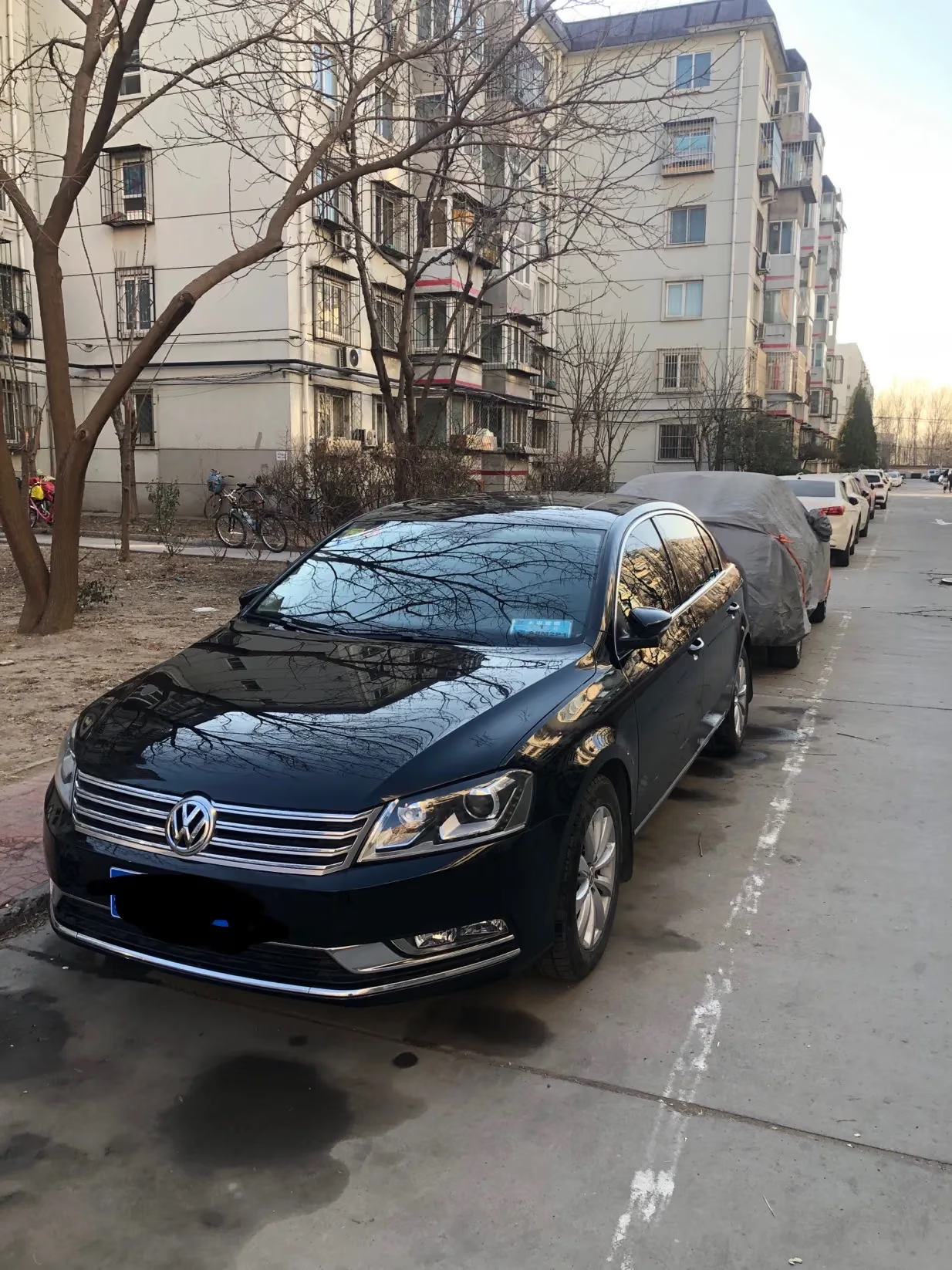
After driving it to Beijing, I wash and wax it on free weekends, and it looks like new.
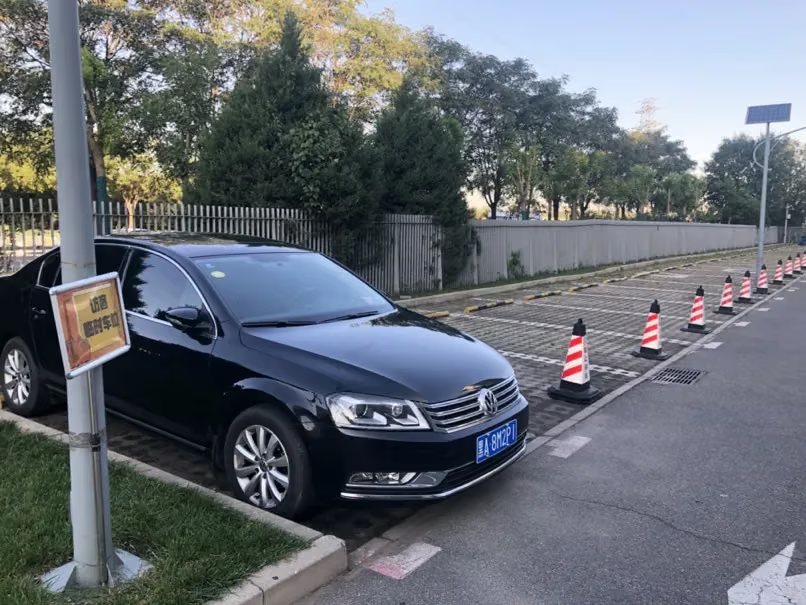
Let me tell you about the buying process. The original owner initially thought I wouldn’t buy his car, so he didn’t take it seriously. Later, he found that I was trading without even looking at the car, so he got serious and brought all the documents. We finished the various insurance by 4 p.m. The next day I had the car fully serviced and bought 1 million RMB of commercial insurance, then drove back to Beijing. During this, I thank my classmate Yao Zhiqiang, who helped handle all the procedures like the license plate registration neatly for me. This middle-school classmate of mine works at a FAW-Volkswagen 4S dealership called Chengjie in Pingfang, Harbin, so having someone there makes things fast and easy. With him at the 4S dealership, there was no reason not to choose Volkswagen. The original owner also gave me a set of winter tires, which is great.
Some minor issues with the car after buying it:
- The windshield was chipped by a stone. I bought a glass repair kit on Tmall and fixed it myself.
- The plastic buckle on the rear seat broke. I bought a new one online for a few dozen RMB, installed it, and it works perfectly.
- Tires: since the original owner gave me a set of winter tires, the original 4 Dunlop tires could still handle 5,000 km without problems. Recently I switched to the winter tires and sold the original Dunlops for 200 RMB.
- Replaced the spark plugs, engine oil, air filter, brake fluid, and windshield washer fluid.
No other problems at all. The car’s DSG wet dual-clutch transmission is still under warranty (10 years or 160,000 km).
When I go home for the Spring Festival in 2020, I’ll fix the oil leak around the engine oil dipstick, and replace the brake pads and rotors. After the new year, I’ll look into buying a new set of Continental tires.
Although I don’t drive this car much in Beijing, it brings me a lot of joy. When I have time, I wipe the car down and buy some car-care products. DIY-fixing whatever I can myself gives me a great sense of accomplishment.
Health
In 2019, I gave my 30-year-old teeth a major overhaul, visiting the Beijing Stomatological Hospital more than 20 times before finally getting my teeth fixed up properly. I have a physical exam every year and see a doctor promptly when there’s a problem. In 2019, medical insurance saved me at least 5,000+ RMB, and this year’s medical expenses came to 20,000+ RMB.
Five-Year Plan
2019 marks the wrap-up of the first “Five-Year Plan”. Since the 2018 five-year plan was about 70% complete, this year is still about settling down and focusing, aiming to reach 100% before starting a new plan.
Starting in 2020, I’ll draw up a new “Five-Year Plan”, striving to complete the following by the end of 2025:
- Buy a small one-bedroom, one-living-room, one-bathroom property in Harbin or another city, with a parking space, paid in full
- Invest in opening a car wash for my wife’s parents, so they don’t have to go out and work for others
- (If possible) Found a university with 30+ majors and laboratories, dedicated to tackling the 35 key technologies that “choke China’s neck”! Even if we can’t solve the bottleneck technologies, we must work to cultivate talent for these cutting-edge fields — I must build a better motherland
This article introduces the 34 cutting-edge technologies that are currently bottlenecking China.
Lithography Machines (光刻机)
The lithography machine used to make chips: its precision determines the upper limit of chip performance. At the 12th Five-Year Plan science and technology achievements exhibition, the best lithography machine produced in China had a processing precision of 90 nanometers, equivalent to the level of the Pentium 4 CPU released in 2004. Abroad, they’ve already achieved a dozen-odd nanometers.
Inside the lithography machine are two workpiece stages that move in sync, one carrying the mask and one carrying the wafer. The two must remain synchronized at all times, with an error below 2 nanometers. When the two stages go from static to motion, the acceleration is similar to a missile launch. During operation, it’s like two large aircraft flying side by side from takeoff to landing, with a knife extending from one aircraft carving characters on a grain of rice on the other, without damaging it.
Source: “These ‘details’ keep China from catching up with top-tier lithography machines” (Science and Technology Daily, April 19)
Chips
Low-speed optical chips and electrical chips can now be made domestically, but high-speed ones still depend entirely on imports. The most advanced chips produced abroad have a mass-production precision of 10 nanometers, while ours is only 28 nanometers — a gap of two generations. According to reports, in multiple fields including computer systems, general electronic systems, communication equipment, memory devices, and display and video systems, the domestic share of Chinese-made chips is 0%.
Source: “ZTE’s ‘chip’ disease, China’s heart disease”
Operating Systems
Ordinary people see the prosperity of China’s IT industry and think the technology gap is small, but that’s not the case. Three American companies monopolize the operating systems of phones and personal computers. Data shows that in 2017, Android had an 85.9% market share and Apple’s iOS had 14%. Other systems had only 0.1% — and that 0.1% is basically Microsoft’s Windows and BlackBerry. Without Google paving the way, smartphones wouldn’t be so widespread. The price Chinese phone makers pay for using Android for free is that they could be ‘cut off’ at any time.
Source: “Losing the first-mover advantage: the pain of a great power without self-developed operating systems”
Aircraft Engine Nacelles
The compartment on an aircraft that houses the engine, commonly called the ‘house’, is one of the most important core components of the aircraft propulsion system, accounting for about 1/4 of the cost of the entire engine. The nacelle needs to enclose the engine to reduce flight drag; its intake also needs anti-icing and de-icing capabilities; in flight, it must protect the engine so it works normally without interference; on the ground, it must allow easy maintenance and repair of the engine. If the nacelle is damaged, it could cause a serious engine accident in flight. The larger the nacelle, the harder the technology. Our country is still blank in this important field. Reviewing all public information, China has no dedicated institution independently developing nacelles, and related universities don’t seem to have set up relevant disciplines either.
Source: “Home without a house: the nacelle dilemma of domestic aircraft engines”
Tactile Sensors
Tactile sensors are a core component of industrial robots. The stringent requirements for precision and stability have stopped most Chinese companies from venturing into tactile sensors. Currently, most domestic sensor companies produce gas, temperature, and other types of sensors. In an industry with more than 100 companies, almost no sensor manufacturer produces tactile sensors. Japanese array sensors can distribute 100 sensitive elements in a 10 cm × 10 cm substrate, priced at 100,000 RMB, while domestic products are mostly single-point type, generally 100 RMB each.
Source: “Sensors overlooked: the dulled ‘domestic touch’ of robots”
Vacuum Evaporation Coaters
The ‘heart’ of the OLED panel manufacturing process. Japan’s Canon Tokki monopolizes the high-end market and holds the throat of this industry. Industry estimates of its annual output are usually between a few and a dozen or so units. ‘Money can’t buy one’ is exactly what it is. Canon Tokki can control the error of evaporating organic light-emitting materials onto substrates within 5 micrometers (1 micrometer is about 1% of the diameter of a hair). No other company’s coater can achieve this precision. Currently, there are no companies producing coating machines in China, and we have little say in this field.
Source: “The shortage of vacuum evaporation coaters: a shadow over high-end displays”
Smartphone RF Components
On a phone’s motherboard, 1/3 of the space is RF circuits. The trend in phones is to be thinner and lighter, with lower power consumption, more frequency bands, and larger bandwidth, which challenges RF chips. RF chips convert digital signals into electromagnetic waves. A 4G phone needs to support a dozen or so frequency bands with information bandwidth of tens of megahertz. In 2018, the RF chip market was $15 billion; the high-end market is basically monopolized by three companies — Skyworks, Qorvo, and Broadcom — with Qualcomm also holding a place. The gap is even larger for filters, another key RF component. The high-end filters used in phones, a market of several billion dollars, belongs entirely to foreign RF giants like Qorvo. China is the world’s largest phone producer, but it can’t make high-end phone RF components. This requires solid accumulation of materials, process, and design experience.
Source: “RF components: the phone’s embarrassment of relying on others”
iCLIP Technology
iCLIP is an emerging experimental technique and one of the most critical technologies for developing innovative drugs. Its invention lets people determine where RNA (ribonucleic acid) and proteins ‘meet’ without precision observation instruments, and can even read out the ‘code’ of the binding sites. iCLIP is difficult — like finding one person in a sea of millions, you have to locate one or a few specific binding sites among billions of base pairs; you can imagine the precision required. Foreign research teams have launched a ‘technology race’ in this field, publishing research papers in cycles of a few months. But domestic labs rarely have mature experience.
Source: “‘Targets’ hard to find: domestic innovative drugs are at a loss”
Heavy-Duty Gas Turbines
Gas turbines are widely used in ships, trains, and large power plants. Our country has the capability to independently produce light-duty gas turbines, but heavy-duty gas turbines still basically rely on imports. The major heavy-duty turbine makers internationally are mainly four: GE of the US, Mitsubishi of Japan, Siemens of Germany, and Ansaldo of Italy. Their cooperation with China comes with harsh conditions: design technology is not transferred, core hot-section component manufacturing technology is not transferred either, and only non-core components are licensed for local manufacture. Without self-sufficiency, an important part of our energy security remains under others’ control, with the risk of being ‘choked’.
Source: “‘Weakness at the vital gate’: the blade tragedy of heavy-duty gas turbines”
LiDAR
LiDAR is a sensor with its own light source that actively emits laser light to perceive the surrounding environment, much like bats navigate using ultrasound. It’s an essential component of self-driving cars and determines the level of evolution of the autonomous driving industry. But in this field, domestic products have almost no say. Among the autonomous vehicles currently on the road, virtually all that involve LiDAR use the products of America’s Velodyne, whose LiDAR is the industry standard with over 80% market share.
Source: “LiDAR’s dimness makes autonomous driving agonize”
Airworthiness Standards
For an aircraft engine to obtain a flight release certificate, it must pass a very strict set of ‘airworthiness’ standard system verifications, covering design, manufacture, verification, and management. Internationally, the FAA and the European Union Aviation Safety Agency (EASA) have the greatest influence and the highest recognition in airworthiness certification. Although China’s regulatory requirements are basically consistent with the FAA’s, the lack of domestic aircraft engine models and actual engineering practice means our airworthiness regulations lack corresponding technical support. Airworthiness verification of actual models has become a hurdle blocking us from other countries’ airspace.
Source: “Airworthiness standards: another hard hurdle for domestic aircraft engines”
High-End Capacitors and Resistors
Capacitors and resistors are the golden supporting actors of the electronics industry. China is the largest market for basic electronic components, consuming trillions of resistors and capacitors a year. But the best consumer-grade capacitors and resistors come from Japan. The capacitor market is over $20 billion a year, and resistors are on the order of $10 billion. For so-called high-end capacitors and resistors, the most important thing is that units within the same batch should be as consistent as possible. Japan does this best; the gap with domestic companies is large. Domestic companies’ products are mostly mid-to-low-end, relatively weak in process, materials, and quality control.
Source: “Without these tricks, we can’t reach high-end capacitors and resistors”
Core Industrial Software
China’s core industrial software field is basically still a ‘no man’s land’. The absence of industrial software has brought trouble to intelligent manufacturing. When an industrial system becomes complex to a certain degree, computer-aided industrial software is needed to replace human brain computation. For example, EDA industrial software, the ‘essential tool’ for chip design and production. Compared with mainstream American EDA tools, domestic EDA has no difference in design principles, but there’s a notable gap in software performance, mainly manifested in insufficient support for advanced technology and processes, with a ‘generational gap’ versus advanced foreign EDA tools. The three EDA giants — Cadence, Synopsys, and Mentor — take 70% of the industry’s annual global revenue. Developing our own industrial operating systems plus our own industrial software system is a matter of urgency.
Source: “Core industrial software: China’s ‘no man’s land’ in intelligent manufacturing”
ITO Targets
ITO targets are not only used to make liquid crystal displays, flat panel displays, plasma displays, touch screens, e-paper, and OLEDs, but also for solar cells, anti-static coatings, and EMI-shielding transparent conductive coatings, with a broad global market. The thickness of ITO films varies by functional requirement, generally from 30 to 200 nanometers. On the size front, domestic ITO target companies have rarely made breakthroughs, and downstream flat panel display manufacturers have to rely on others. Sintering large-format ITO targets requires large sintering furnaces. Foreign companies can make single targets 1,200 mm wide and nearly 3,000 mm long; domestic ones can only make targets up to 800 mm wide. In terms of output efficiency, Japanese equipment can produce 30 to 50 tons a month, while our annual output is only 30 tons — and importing one piece of equipment costs 10 million RMB, which is astronomical for domestic small businesses.
China consumes over 1,000 tons of ITO targets a year, with about half imported, used to produce high-end products.
Source: “Can’t sinter large targets: flat panel display manufacturing lives at others’ mercy”
Core Algorithms
China has been the world’s largest robot application market for 5 consecutive years, but high-end robots still rely on imports. Because the core algorithms aren’t mastered, key indicators of domestic industrial robots such as stability, failure rate, and ease of use are far inferior to the products of the ‘Big Four’ of industrial robotics: FANUC (Japan), ABB (Switzerland), Yaskawa (Japan), and KUKA (Germany). The gap in core algorithms is too large, causing poor stability and persistently high failure rates in domestic robots. The algorithm gap is not only reflected in the core controller but also slows down the response speed of servo systems.
For a robot to complete every movement, the core controller, servo drives, and servo motors must work together. For a single servo system, domestic robots have high dynamic and static precision, but high-end robots generally have more than 6 servo systems at once, and traditional control methods struggle to achieve good control results.
Source: “Imprecise algorithms make domestic industrial robots a bit ‘dumb’”
Aerospace Steel
Whether taking off or landing, the landing gear is the only component supporting the aircraft. Especially during landing, the load it bears comes not only from the fuselage weight but also the enormous vertical impact of the aircraft. Therefore, the material strength of the landing gear must be excellent, relying only on special steel. The most widely used material currently is America’s 300M steel, which uses vacuum heat treatment technology to avoid hydrogen penetration; the parts have bright surfaces and are free from defects such as oxidation, decarburization, carburization, and grain boundary oxidation, improving surface quality. However, the domestic ultra-high-strength steel used for landing gear sometimes has problems such as spot defects, sulfide inclusions, coarse grains, internal cracks, and hydrogen penetration during heat treatment — all related to insufficient purity during the smelting process. So there’s still a considerable gap between our high-purity smelting technology and the US’s, with a lot of room for improvement.
Source: “Aerospace steel not up to par: domestic large aircraft lose their footing at takeoff and landing”
Milling Cutters
With the rapid construction of high-speed rail in recent years, rail maintenance has increasingly worried industry experts. If maintenance isn’t done properly, it not only shortens the service life but also poses high-risk hazards. The dual-power electrically driven milling-grinding maintenance robot equipment independently developed in China — the milling-grinding machine, called the ‘first-aid vehicle’ for rails — can ‘escort’ the rails. But the milling cutters, the most core component of the milling-grinding machine, still need to be imported. The cutter material is an ultra-hard alloy. We already understand its metal composition, but we just don’t know how they proportion and synthesize it — like trying to figure out a family’s secret traditional Chinese medicine recipe and the exact ratios of the herbs, which remain unclear.
Source: “‘Cosmetic surgery’ for high-speed rail tracks: domestic milling cutters can’t handle the job”
High-End Bearing Steel
As an indispensable core component of mechanical equipment, bearings support rotating bodies, reduce friction coefficients, and ensure rotational precision. Aircraft, cars, high-speed rail, high-precision machine tools, and instruments all need bearings. This imposes high requirements on precision, performance, lifespan, and reliability. Our bearing manufacturing process is close to the world’s top level, but the material — high-end bearing steel — is almost entirely imported. The R&D, manufacturing, and sales of high-end bearing steel are basically monopolized by the world’s bearing giants: America’s Timken and Sweden’s SKF. A few years ago, they set up bases in Yantai and Jinan, Shandong, purchasing China’s low-end materials, applying their core technology to make high-end bearings, and selling them back to the Chinese market at ten times the price. Adding rare earth elements during steelmaking can make already good steel even ‘stronger’. But how to add it is the core secret of the world’s bearing giants.
Source: “High-end bearing steel: a hard-to-fill shortcoming of Chinese manufacturing”
High-Pressure Piston Pumps
Hydraulic systems are one of the key components of equipment manufacturing; every engineering field with mechanical equipment relies on hydraulic systems. The high-pressure piston pump is the core element of high-end hydraulic equipment, called the ‘heart’ of hydraulic systems. By 2017, China’s hydraulic industry had become the world’s second largest, but the industry is big yet not strong — especially high-pressure piston pumps rated above 35 MPa, which depend on imports for over 90%. Compared with foreign brands, domestically produced hydraulic piston pumps have a considerable gap in technological advancement, working reliability, service life, variable mechanism control functions, and dynamic and static performance indicators, basically equivalent to the level of foreign products in the early 1990s.
Source: “High-pressure piston pumps: a thorn stuck in the throat of China’s equipment manufacturing industry”
Aircraft Design Software
Since the 1980s, the world’s aviation industry has entered a new stage of digital design, and now it has reached a level of dependence where design is impossible without software. Designing an aircraft requires at least a dozen or so specialized software packages, all products of European and American countries. Domestic design institutions not only have to invest huge sums to buy the software, but they also wear a steel ring — once the ‘binding spell’ is recited, the entire aviation industry would be paralyzed. According to media reports, when designing the J-10 fighter, the entire metal component of the main landing gear’s primary load-bearing structure was commissioned from abroad. After it was made, problems arose in the landing gear retraction, with a 5 mm error, so they had to reorder. That tiny error alone delayed the J-10’s maiden flight by 8-9 months. Without fully digital software support, even the slightest error can become a nightmare for manufacturing.
Source: “The dilemma of aviation software: domestic aircraft design wears a ‘binding spell’”
Photoresists
Although China has become a major semiconductor-producing country in the world, the overall industrial chain of the panel industry is still relatively backward. Currently, photoresists for LCDs are almost entirely imported, with the core technology still monopolized by Japanese companies such as TOK, JSR, Sumitomo Chemical, and Shin-Etsu Chemical. Take BOE, which has certain competitive strength internationally: it has built 17 panel display production bases, 16 of which are already in operation. But the photoresists BOE uses for high-end panels are still provided by foreign companies. The main components of photoresist include polymer resin, color paste, monomers, photoinitiators, solvents, and additives. There are numerous technical challenges in development, requiring adjustment in areas such as oligomer structure design and screening, determination and optimization of synthesis processes, screening and control of reactive monomers, color paste fineness control and stability, product formula design and optimization, production process optimization and stability, matching of end-use conditions, and tolerance adjustment. Therefore, independent R&D and production is technically very difficult.
Source: “The Chinese semiconductor industry loses its luster because of photoresist”
High-Pressure Common Rail Systems
The electronically controlled diesel high-pressure common rail system is equivalent to the ‘heart’ and ‘brain’ of a diesel engine, and its quality seriously affects the use of the engine. The diesel engine industry is an important equipment foundation driving a country’s economic growth and social operation. China is the world’s main market and producer of diesel engines, yet in the domestic market for electronically controlled diesel high-pressure common rail systems, German, American, and Japanese companies hold the vast majority of the share. Compared with products from advanced foreign companies, domestic high-pressure common rail systems still have a certain gap in performance, functionality, quality, and consistency, and their cost advantage isn’t obvious either.
Source: “High-pressure common rail systems not up to scratch: domestic diesel engines get hurt”
Transmission Electron Microscopes
Cryo-electron microscopes can capture high-definition 3D ‘color photos’ of microstructures and are a powerful tool for life science research. The production capacity of transmission electron microscopes is one of the foundations of cryo-EM manufacturing capability. Currently, there are only 3 manufacturers of transmission electron microscopes in the world: JEOL, Hitachi, and FEI. No domestic company produces transmission electron microscopes. The tools matched with cryo-EM use must be original; when parts break, there’s no one to repair them, and you can only wait for the parts to be shipped before replacing them. For Chinese cryo-EM users, this experience may continue for quite some time.
Source: “Our 3D high-definition protein photos rely on imported transmission electron microscopes”
Main Bearings for Tunnel Boring Machines
The main bearing, known as the ‘heart’ of the full-face tunnel boring machine (TBM), bears the main load during the machine’s operation and is a key component of the cutter head drive system, working in extremely harsh conditions. Compared with traditional rolling bearings with diameters of only a few hundred millimeters, TBM main bearings generally have diameters of several meters, making them the most structurally complex type of bearing, requiring hundreds of manufacturing processes. In terms of whole-machine manufacturing capability, domestic TBMs are close to the world’s most advanced level, but the most critical main bearings are all imported. Germany’s Rothe Erde, IMO, FAG, and Sweden’s SKF dominate the market.
Source: “Our own TBMs still have to use other people’s main bearings”
Microspheres
Microspheres have diameters one-thirtieth the thickness of a hair. In a phone screen, every square millimeter uses a hundred microspheres to hold up the two glass panels — like a skeleton — and then liquid crystal is filled into the gap between the two glass panels. Without them, the LCD screen you’re staring at right now couldn’t be produced. Without microspheres, chip production, food safety testing, disease diagnosis, biopharmaceuticals, environmental monitoring… many industries would fall into difficulty. In microelectronics alone, China imports microspheres worth tens of billions of RMB every year. In 2017, LCD panel shipments from mainland China reached 33% of the global total, with an industry scale of about $100 billion, ranking first in the world. But the key material in these panels — spacer microspheres and conductive gold balls — can only be provided by one or two companies in Japan worldwide. These materials, like chips, have our neck choked.
Source: “Microspheres: the unbearable lightness for national industry”
Underwater Connectors
Besides ships and remote sensing satellites, seabed observation networks have become the third type of marine observation platform — through them, humans can go deep underwater to observe and understand the ocean. If the various cable-based observation platforms are compared to arms and legs, underwater connectors are like joints, playing an irreplaceable role in the construction, operation, and maintenance of seabed observation network systems. Currently, our underwater connector market is basically monopolized by foreign countries. If these connectors were to become embargoed items, the entire construction and operation of seabed observation networks would be forced to halt.
Source: “Lacking domestic underwater connection tools, seabed observation networks depend on others”
Key Materials for Fuel Cells
Foreign fuel cell vehicles have achieved mass production, but our vehicle fuel cells are still in the technology verification stage. The current state of our vehicle fuel cells: almost no component manufacturers, no companies producing automotive fuel cell stacks, and only a very small number of commercially operating fuel cell vehicles. Several key materials determine the lifespan and performance of fuel cells. It’s not that our country lacks these materials entirely — some laboratory achievements have even reached international levels. But without mass production lines, the fuel cell industrial chain remains blocked. Key materials have long depended on foreign countries; once a sales ban hits, our fuel cell industry would lose its foundational support.
Source: “Missing three key materials, fuel cell commercialization can’t become a reality”
High-End Welding Power Supplies
China is a major maritime country with more than 3 million square kilometers of sea area, and is vigorously developing high-end marine resource development and maritime rights-protection equipment. Once underwater equipment develops faults such as cracks, it needs to be repaired with welding equipment known as the ‘sewing machine’ of industrial manufacturing. Deep-sea welding relies on underwater robots. Although our country is the world’s largest welding power supply manufacturing base, with annual capacity exceeding 10 million units, high-end welding power supplies are still basically monopolized by foreign countries. Our underwater robot welding technology has been hard to improve because high-end welding power supply technology is controlled by others. Foreign fully digital control technology for welding power supplies is relatively mature, while domestic ones are still mainly based on analog control.
Source: “Domestic welding power supplies ‘misfire’: robots lack the strength for underwater work”
Lithium Battery Separators
As the ‘heart’ of new energy vehicles, domestic lithium-ion batteries (hereinafter referred to as lithium batteries) don’t ‘beat’ steadily enough yet. Among the four core materials of batteries, the cathode and anode materials and the electrolyte have all been localized — only the separator remains a short board. High-end separator technology has a fairly high barrier: it requires not only huge capital investment, but also a strong R&D and production team, mature process technology, and a high-level production line. High-end separators still rely heavily on imports.
Source: “One separator, two worlds: domestic lithium batteries still need to clear the clouds”
Components for Medical Imaging Equipment
Currently, most components of domestic medical imaging equipment rely on imports, and it will take at least 10 to 20 years to reach the existing level of others. In traditional medical imaging (CT, MRI, etc.), China’s earliest patents lag an average of 20 years behind the US. In terms of the number of patents, the US has 10 times more than us. This means the entire industry is completely in the hands of foreign companies — all the intellectual property, all the original achievements, all the scientific research accumulation are abroad, and China holds only a small part.
Source: “Clumsy detectors blur medical imaging”
Ultra-Precision Polishing
How important is ultra-precision polishing in modern manufacturing? The fields where it’s applied directly answer that question: integrated circuit manufacturing, medical devices, auto parts, digital accessories, precision molds, and aerospace. ‘It is the soul of technology.’ The US and Japan firmly hold the initiative in the global market, and their material composition and manufacturing process have always been a mystery. In other words, buying and using their products doesn’t mean you can imitate or even replicate them.
Source: “The road to the peak of ultra-precision polishing is long and hard”
Epoxy Resins
Carbon fiber can be lighter than aluminum yet stronger than steel, and it also has properties like high-temperature resistance, corrosion resistance, fatigue resistance, and creep resistance. One of its key composite auxiliary materials is epoxy resin. But currently, the epoxy resin used in high-end carbon fiber produced in China is entirely imported. Our country can now produce higher-end carbon fiber like T800, but Japan’s Toray mastered this technology back in the 1990s. Compared with carbon fiber, the lag of our high-end epoxy resin industry behind the international level is even more serious.
Source: “Epoxy resins lacking toughness: domestic carbon fiber lacks drive”
High-Strength Stainless Steel
The steel used for rocket engines must have multiple properties, among which high strength is an important indicator that must be met. However, the strength and rust resistance of stainless steel are contradictory, like fish and bear’s paw — hard to have both. If rocket engine materials rust severely, it will have a major impact. Achieving both high strength and rust resistance entirely through the material itself is a worldwide problem. Currently, most of our aerospace materials are what foreign countries used in the 1960s and 1970s. Developed countries strictly control impurity content during production, remelting if purity doesn’t meet standards, but domestic manufacturers often lack this rigorous attitude.
Source: “The unremovable ‘rust disease’ of rocket engines”
Database Management Systems
The two most popular database management systems in the world are Oracle and MySQL, both products of Oracle Corporation. Competitors also include IBM and Microsoft products. Several American companies — Oracle, IBM, Microsoft, and Teradata — hold most of the market share. Domestic database management systems also have some market share, but it’s just a sliver; their stability and performance can’t convince the market, and enterprises like banks, telecoms, and power companies that demand extreme reliability won’t consider domestic products.
Source: “Database management systems: China is still looking for the ‘right way to open them’”
Scanning Electron Microscopes
The scanning electron microscope is a high-end electron-optical instrument widely used in research fields and industrial sectors such as materials, biology, medicine, metallurgy, chemistry, and semiconductors, and is known as the ‘microscopic camera’. Currently, the scanning electron microscopes used in our scientific research and industrial sectors rely heavily on imports. Of the several hundred scanning electron microscopes we purchase each year for over $100 million, most are made in the US, Japan, Germany, the Czech Republic, and other countries. Domestic scanning electron microscopes account for only about 5%–10%.
Source: “Scanning electron microscopes with ‘weak eyesight’: industrial manufacturing can’t see the finest details”
Maybe even President Xi would be moved to tears reading my second five-year plan.
I think compared to the billionaire Xu Jiayin building cars, it would be more meaningful for him to invest in my idea of founding a university — it concerns the fate of the nation’s future. However, I’m still a working-class person struggling to make ends meet; talking about this feels a bit like armchair strategy, and my words carry little weight.
Actually, I clearly know the 3rd plan is a bit far-fetched, but I can’t be without dreams. What if it comes true?
I think we often hear people around us say China is inferior to foreign countries in this way or that, but we can’t easily articulate exactly where. After reading these 34+ bottleneck technologies, you’ll know where our country’s shortcomings are and where our generation needs to work hard. Our greatest tragedy is not knowing exactly where the specific gaps between us and other powerful nations are. I believe after reading this article you’ll gain something.
Summary
Every time I write a year-end summary, others give me envious looks. I want to say I’m just barely getting by, struggling near the subsistence line. Without consideration (对价), I can only face life’s harshness head-on. In 2020, I have to keep fighting — not only for the country and the people’s aspiration for a better life, but also for my own poetry and distant places.
Youth is still here, and the years are still fine.